Plant Overview
Known as "Sea Island Cotton" or the source of the world-famous "Pima Cotton," Gossypium barbadense is the aristocrat of the fiber world. Native to the tropical regions of South America, this plant is responsible for the softest, most luxurious fabrics on Earth. While many think of cotton as a strictly industrial crop, its vibrant yellow blossoms and architectural leaves make it a surprisingly beautiful addition to a sunny conservatory or a warm summer garden.
🔍 How to Identify
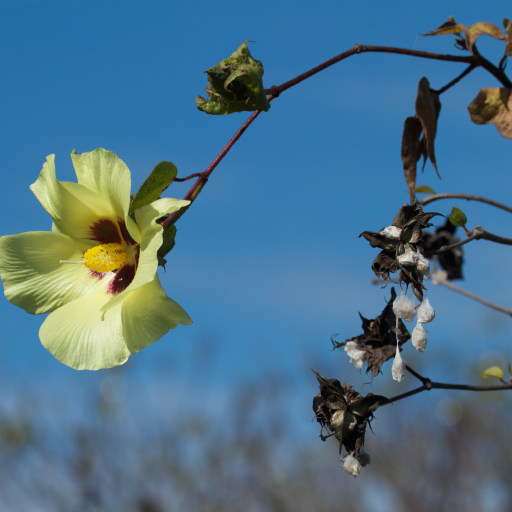
- 🌸 The Blossom: Look for large, trumpet-shaped flowers that are creamy yellow with a distinct, dark purple or reddish spot at the base of each petal.
- 🍃 The Foliage: The leaves are deeply "palmate" (hand-shaped), usually divided into 3 to 5 pointed lobes, and have a smooth, slightly glossy texture compared to other cotton varieties.
- ☁️ The Fiber: Once the flower fades, it develops into a "boll." When ripe, this pod bursts open to reveal exceptionally long, silky white fibers that feel noticeably smoother than standard upland cotton.
🏡 In Your Garden
- ☀️ Sun Worshipper: This plant is a true child of the tropics; it requires intense full sun and long, hot summers to produce its famous bolls. If you live in a cooler climate, it thrives best in a large pot that can be moved indoors before the first frost.
- 🪴 Thirsty but Drainage-Dependent: While it loves consistent moisture during its flowering stage, its roots are prone to rot if kept in soggy soil. Use a sandy, loamy mix that allows water to pass through quickly.
- ✂️ Growth Habit: Left to its own devices in a frost-free zone, it can grow into a large, sprawling shrub. Gardeners usually prune it to maintain a manageable height and encourage more flowering branches.
⚠️ Safety & Toxicity
- 🐾 Mildly Toxic: The seeds of the cotton plant contain a natural compound called gossypol. While the fluffy fiber is harmless, the seeds should never be ingested by humans, dogs, or cats.
- 🤢 Ingestion Risks: If pets consume large quantities of the seeds or the plant material, it can lead to digestive upset or more serious cardiac issues in rare cases. It is best kept as an ornamental curiosity rather than a snack for curious animals.
✨ Fun Fact
Most "Egyptian Cotton" sheets aren't actually grown in Egypt from local seeds; they are historically derived from Gossypium barbadense plants brought from the Americas! Its fibers are so long and strong that they can be spun into much finer threads than any other cotton species.

Detailed Care Instructions
To grow Gossypium barbadense, also known as Pima cotton, follow these steps:
- Choose a suitable area: Gossypium barbadense needs full sun exposure for at least 6-8 hours a day, so select a spot in your garden or outdoor space that receives ample sunlight.
- Prepare the soil: Gossypium barbadense thrives in well-draining soil with a pH level between 5.5 and 7.5. Amend the soil by adding organic matter like compost or aged manure to improve fertility and drainage.
- Start seeds indoors (optional): Alternatively, you can directly sow the seeds outdoors, but starting them indoors can give them a head start. Plant the seeds in seed trays, covering them lightly with soil. Keep the trays in a warm and well-lit area until seedlings emerge.
- Transplant seedlings (if applicable): Once the seedlings have developed their first set of true leaves and outdoor temperatures have warmed up, transplant them into the prepared soil. Space the seedlings about 12-24 inches apart to allow proper air circulation and growth.
- Watering: Gossypium barbadense prefers consistent soil moisture. Water the plants regularly, ensuring the soil remains evenly moist but not waterlogged. During dry spells, you may need to water more frequently.
- Fertilization: Apply a balanced, slow-release fertilizer formulated for flowering plants or use compost around the base of the plants to provide nutrients. Follow the instructions on the fertilizer package for application rates.
- Weed control: Keep the area around the Gossypium barbadense plants weed-free by regularly removing any competing plants. Mulching around the base of the plants can help suppress weeds.
- Pruning (if necessary): Gossypium barbadense plants may benefit from occasional pruning to remove dead or overcrowded branches. This can improve airflow and minimize disease risks.
- Pest and disease management: Monitor the plants regularly for common cotton pests like aphids, whiteflies, and bollworms. Use organic insecticides or insecticidal soaps as necessary. Also, watch for signs of diseases such as powdery mildew or fungal infections and treat them promptly with appropriate fungicides.
- Harvesting: The cotton bolls will ripen after approximately 160-180 days. Harvest them by handpicking the mature bolls once they turn brown. Then, remove the cotton fibers from the seeds by gently pulling or using a cotton gin, if available.
Remember that Gossypium barbadense may require specific care based on your location's climate and growing conditions. Therefore, it's always advisable to consult local gardening resources or experts for more personalized advice.

Place in a bright room that is sun drenched almost all day. Or directly in a south-facing window.

To properly water this plant, first, make sure the soil is dry to the touch before watering. When watering, aim to saturate the soil evenly and deeply, making sure not to waterlog the area around the roots. Be sure to allow for proper drainage and avoid getting the leaves wet during waterings. Additionally, be mindful of the plant's surrounding environment, as excessive heat or dry conditions may increase water needs.
To fertilize this plant, you should apply a balanced fertilizer with equal amounts of nitrogen, phosphorous, and potassium. Fertilize the plant once a month during the growing season, starting in late spring and continuing until early fall. Avoid fertilizing in the winter months. Be sure to follow the manufacturer's instructions for application rates and methods. Additionally, organic fertilizers such as compost or manure can also be used to provide nutrients to the plant.
The ideal soil for Gossypium Barbadense plant would be well-drained with a slightly acidic to neutral pH. It should be rich in organic matter and nutrients, such as nitrogen, phosphorus, and potassium. The soil should also have good water retention capacity, but not be waterlogged. An ideal soil texture would be loamy with a good balance of sand, silt, and clay. Avoid using soils with high salinity or alkalinity, as these can have a negative impact on the plant's growth and health.
To propagate this plant, you will need to collect seeds from a mature plant. Make sure the seeds are dry and free from any debris before planting. You can plant the seeds in moist soil and keep them warm and well-watered until they germinate. Once the plant has grown large enough, you can transplant it into a larger pot or into your garden. Be sure to give the plant plenty of light and water it regularly to ensure healthy growth. With proper care, your propagated Gossypium Barbadense plant can thrive and produce beautiful flowers and cotton.
Common pests of the sea island cotton include Spider mites, aphids, thrips, larvae. Make a habit of checking your sea island cotton frequently for pests so that any infestations can be caught and managed early.








