Plant Overview
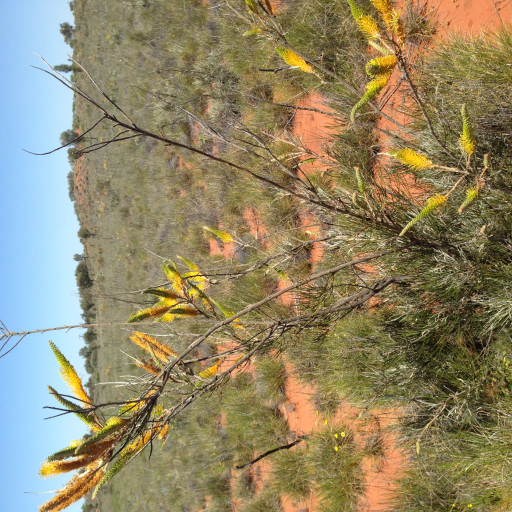
Known affectionately as the Flame Grevillea or Honey Grevillea, this striking Australian native is a true desert showstopper. In the wild, its brilliant orange flower spikes stand tall like glowing torches against the dusty landscape of the outback. It is a favorite among nectar-loving birds and has a long history as a natural "sweet treat" for Indigenous Australians.
🔍 How to Identify
- 🔥 The "Bottle-Brush" Blooms: The most iconic feature is the long, terminal flower spikes that transition from lime green to a vibrant, fiery orange.
- 🌿 Silvery Foliage: The leaves are long, slender, and often divided into narrow segments, covered in fine hairs that give the plant a shimmering, silvery-green appearance.
- 🏗️ Upright Growth: Unlike some low-creeping grevilleas, Eriostachya grows as a hardy, upright shrub or small tree, often reaching heights of 3 to 6 feet in garden settings.
🏡 In Your Garden
- 🏖️ Sand Lover: This plant is a specialist in "starving" soils. It evolved in sandy environments, meaning it thrives in well-drained, gritty soil and will actually struggle if the soil is too rich or contains too much phosphorus.
- ☀️ Sun Worshipper: To get those iconic orange spikes, it needs a position in full, baking sun. It is incredibly drought-tolerant once established, making it perfect for low-water or "Xeriscape" gardens.
- 🐦 Pollinator Magnet: If you plant this, expect a party of honeyeaters and bees. The flowers produce copious amounts of sweet nectar, acting as a high-energy fueling station for local wildlife.
⚠️ Safety & Toxicity
- 👐 Skin Sensitivity: Like many members of the Proteaceae family, some people may experience contact dermatitis (skin irritation) when handling the foliage or flowers. It is best to wear gloves while pruning.
- 🐾 Pet Safety: While not considered highly toxic to cats or dogs, the nectar is very high in sugar, and the "scratchy" foliage can cause mild stomach upset if ingested.
- 💧 Phosphate Warning: This plant is "toxic" to itself if given standard fertilizers. Always use a specific "Native" or "Low Phosphorus" fertilizer, as high phosphorus can kill the plant's specialized root system.
✨ Fun Fact
Indigenous Australians traditionally used the Flame Grevillea as a natural lollipop! They would either suck the nectar directly from the flowers or soak the heavy flower spikes in a bowl of water to create a sweet, honey-flavored drink known as "bush lemonade."

Detailed Care Instructions

Place in a bright room that is sun drenched almost all day. Or directly in a south-facing window.

Some plants require more regular watering than others, which should be done every few days. It's critical to maintain the soil moist all of the time. The water requirements of the same plant placed in pots with varying sizes will differ. Because the water in the smaller pot evaporates faster than the water in the larger pot, it will require more watering. Regardless of pot size, the surface should constantly be maintained moist.








