Plant Overview
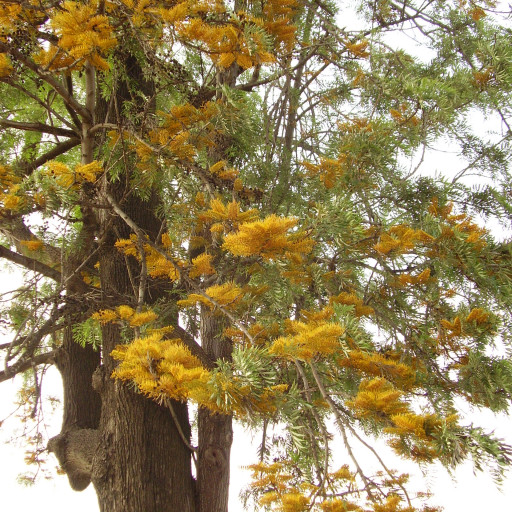
Known as the Silk Oak or Silver Oak, Grevillea robusta is an Australian giant that dresses itself in molten gold every spring. Despite its common name, it isn't a true oak at all—it belongs to the Protea family. This tree is a survivor, famous for its ability to grow rapidly and its prehistoric-looking, feathery foliage that adds a touch of the "Land Down Under" to any landscape.
🔍 How to Identify
- 🌿 Fern-like Foliage: The leaves are deeply lobed and bi-pinnate, looking remarkably like giant fern fronds. They are dark green on top with a distinct, shimmering silvery-white underside.
- 🔥 Toothbrush Flowers: It produces spectacular, 5-inch long flower spikes that are golden-orange. These blooms are "toothbrush-shaped," meaning the individual flowers all point upward on one side of the stem.
- 🏗️ Towering Silhouette: In the wild, it is a massive, upright tree with a straight trunk and a conical crown, though young plants are often sold as delicate, feathery indoor ornamentals.
🏡 In Your Garden
- 🚜 Aggressive Roots: The Silk Oak is a "pioneer" species with a very powerful and deep root system. While this makes it drought-tolerant, it means you must plant it far away from underground pipes, septic tanks, and home foundations.
- 🧪 Phosphorus Sensitivity: Like many Australian natives, this tree has specialized "proteoid" roots. It is highly sensitive to phosphorus; using standard high-phosphate fertilizers can actually burn the roots and kill the plant.
- 💨 Brittle Wood: While it grows fast, its wood can be somewhat brittle. In high-wind areas, large branches may snap, so it is best used as a specimen tree in the middle of a lawn rather than overhanging a driveway or roof.
⚠️ Safety & Toxicity
- 🧤 Skin Irritant: The leaves and sap contain chemical compounds (resorcinols) that can cause contact dermatitis. If you are pruning this tree, it is wise to wear gloves to avoid an itchy, red rash.
- 🐾 Pet Safety: It is generally considered non-toxic to pets if they brush past it, but ingestion of the sap or leaves may cause mild stomach upset or mouth irritation.
✨ Fun Fact
In the late 19th century, the Silk Oak was a massive fad in Europe as a "tabletop" plant. Because the juvenile leaves are so delicate and lace-like, Victorians used them to decorate dining rooms, often unaware that the plant was actually a forest giant capable of reaching 100 feet tall!

Detailed Care Instructions
To grow Grevillea Robusta, also known as the silky oak, follow these steps:
- Climate: Determine if your climate is suitable for growing Grevillea Robusta. It thrives in warm temperate to subtropical regions, where temperatures do not drop below freezing.
- Sunlight: Choose a location with full sun exposure, as Grevillea Robusta requires at least 6-8 hours of direct sunlight daily.
- Soil: Ensure the soil is well-draining and of good quality. Grevillea Robusta prefers slightly acidic to slightly alkaline soil. Improve the soil by adding organic matter like compost.
- Watering: Water the plant regularly, especially during dry periods. Grevillea Robusta prefers moist soil but can tolerate brief periods of drought once established.
- Mulching: Apply a layer of mulch around the base of the plant to retain moisture, suppress weeds, and regulate soil temperature.
- Pruning: Prune young trees to encourage a strong, well-branched structure. Remove dead or damaged branches and shape the tree as desired, keeping in mind its natural form.
- Fertilizing: Fertilize the plant annually in spring with a slow-release, balanced fertilizer. Follow the instructions on the fertilizer packaging for application rates.
- Propagation: Grevillea Robusta can be propagated through seed or cuttings. Seeds should be collected when mature and sown in a well-draining potting mix. Cuttings can be taken from semi-hardwood stems and rooted in a propagation medium.
- Pests and diseases: Monitor the plant for any signs of pests or diseases, such as aphids or root rot. Treat accordingly using organic insecticides or fungicides.
- Maintenance: Regularly check for signs of growth, water as needed, and keep the plant debris-free. Monitor for any potential issues and address them promptly to ensure healthy growth.
Remember, it may take several years for Grevillea Robusta to reach its full potential, so be patient and persistent in its care.

Place in a window with dappled sun or a spot in the middle of a room. Or directly in a window facing west or east.

To water this plant effectively, you should first assess the soil moisture level by sticking your finger into the soil up to your knuckle. If the soil feels dry, it is time to water. Pick a time of day when the temperature is cool, such as early morning or late afternoon, to prevent the water from evaporating too quickly. Be sure to water the soil directly around the plant's base, rather than the leaves or stem. Slowly pour the water until the soil is moist but not saturated, as overwatering can lead to root rot. This plant prefers well-draining soil, so ensure that excess water can drain away from the roots. During periods of drought or high temperatures, you may need to water more frequently.
To fertilize this plant, you should use a balanced fertilizer with a ratio of 10-10-10. Apply the fertilizer in early spring and again in mid-summer, following the package instructions for the appropriate amount to use based on the size of the plant. Water the plant well before and after fertilizing to help the nutrients absorb properly. Avoid fertilizing in late fall or winter as this can stimulate new growth that may be damaged by cold weather.
The ideal soil for this plant is well-draining and sandy to loamy. It should have a pH close to neutral, around 6.5 to 7.5. The soil should be rich in organic matter and capable of retaining moisture without becoming waterlogged. It is best to avoid using heavy clay soils or those that are prone to waterlogging. To improve soil quality, it can be amended with compost or other organic matter. This type of soil will promote healthy root growth and overall plant health.
To propagate this plant, take a healthy branch cutting approximately 6-8 inches long with a sharp, sterile pruning tool. Remove any leaves or side shoots from the bottom 2-3 inches of the cutting. After dipping the cut end in rooting hormone, plant the cutting in a well-draining potting mix and keep the soil moist by misting it regularly. Place the pot in a bright location but out of direct sunlight, and cover it with a plastic bag to create a mini greenhouse environment. Keep the plastic bag on for 2-4 weeks or until new growth appears. After 4-6 weeks, the roots should be established enough to withstand transplanting into a larger pot or into the garden.
Common pests of the australian silky-oak include Scale insect, mealybugs, larvae. Make a habit of checking your australian silky-oak frequently for pests so that any infestations can be caught and managed early.








