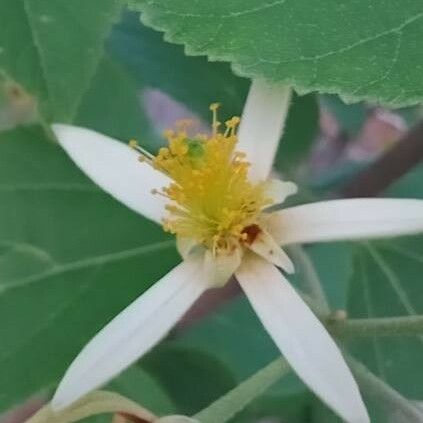
Plant Overview
Known often as the Smooth-leaved Crossberry, Grewia laevigata is an elegant, hardy shrub that bridges the gap between wild woodland beauty and garden reliability. Its common name comes from the distinct, four-lobed fruits that look like tiny, fleshy crosses. In many cultures across its native range in Asia and Africa, it is respected for its tough fibers and its ability to thrive where other plants might wither under the sun.
🔍 How to Identify
- 🍃 The Leaves: Glossy, lance-shaped, and notably smooth (hence laevigata). If you look closely at the base, you’ll see three distinct veins branching out—a classic "Grewia" signature.
- 🌸 The Flowers: Delicate, star-shaped blooms that appear in shades of creamy white or pale yellow. They feature prominent, fuzzy stamens that look like a tiny burst of fireworks in the center.
- 🍒 The Fruit: Small, fleshy drupes that start green and ripen into a deep brownish-black. They are often "twin-lobed" or "four-lobed," resembling a small cross or a set of knuckles.
🏡 In Your Garden
- 🦋 Wildlife Magnet: This plant is a five-star hotel for local biodiversity. The nectar-rich flowers are a favorite for honeybees and butterflies, while the berries provide a vital food source for fruit-eating birds.
- 💪 Resilient Roots: Once established, this shrub is remarkably drought-tolerant. It prefers well-draining soil and can handle a bit of neglect, making it ideal for low-maintenance "wild" corners of your garden or as a sturdy privacy screen.
- ✂️ Growth Habit: It has a sprawling, multi-stemmed habit. If left unpruned, it can become a bit "leggy," so a light trim after the fruiting season helps maintain a lush, bushy shape.
⚠️ Safety & Toxicity
- ✅ Generally Safe: Grewia laevigata is not known to be toxic to humans or common household pets like cats and dogs.
- 🍽️ Foraging Note: While many species in the Grewia genus produce edible berries (often slightly sweet or acidic), always ensure a 100% positive identification before tasting any wild fruit.
- 🧤 Garden Safety: The wood is quite tough and the stems can be flexible; no major thorns to worry about, though the fine hairs on some young stems might cause very mild irritation to those with sensitive skin.
✨ Fun Fact
The bark of many Grewia species is incredibly rich in mucilage and strong fibers. Historically, these fibers were stripped and twisted to create high-quality cordage, used for everything from hunting bows to building sturdy fences!

Detailed Care Instructions
To water this plant, it is important to provide adequate moisture to its roots. You can do this by following a few simple steps:
- Check the soil moisture level regularly. Look for visible signs of moisture such as dampness or cracks in the soil. Avoid watering the plant if the soil is still moist.
- Water the plant deeply once a week during the growing season. Provide enough water to soak the soil at the base of the plant.
- Avoid watering the plant from above as this can cause the leaves to rot. Instead, use a watering can or hose to water the soil directly.
- Reduce watering in the winter months when the plant is dormant. Check the soil moisture level regularly and only water if the soil is completely dry.
- Ensure proper drainage by planting the Grewia Laevigata in well-draining soil. If the soil is too compact or heavy, it can lead to waterlogging and root rot.
By following these simple watering guidelines, you can help your Grewia Laevigata grow healthy and strong.
The best type of soil to use for the Grewia Laevigata plant would be a well-draining soil that is rich in organic matter. The soil should have good moisture retention capability and be able to drain out excess water to prevent waterlogging. It is recommended to use a soil pH level that is slightly acidic, ranging from 5.5 to 6.5. It is best to avoid soils that are heavy, compacted or have poor drainage as it can lead to root rot and stunted growth. The Grewia Laevigata plant prefers a soil that is loamy, well-drained, and has adequate nutrients to support its growth.








