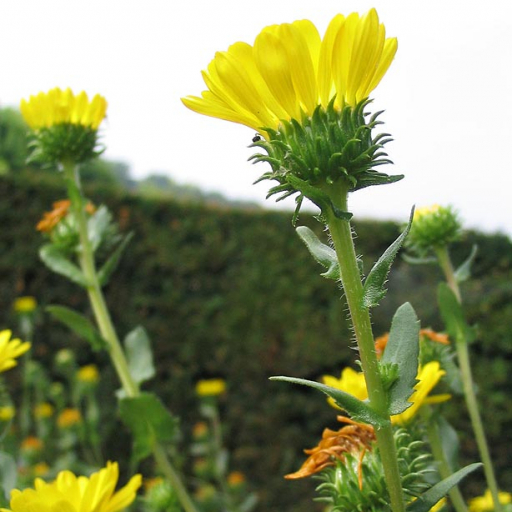
Plant Overview
Known as the "Great Valley Gumweed," Grindelia camporum is a resilient California native that looks as if it has been dipped in milky glue. This hardy perennial is famous for its glistening, resinous flower buds that indigenous tribes once used as a natural adhesive and healing balm. Thriving in the heat of late summer, it brings a bright, cheerful pop of yellow to sun-scorched landscapes where other plants might struggle to survive.
🔍 How to Identify
- 💧 The "Gum": The most iconic feature is the thick, milky-white resin that coats the flower buds before they open, giving them a sticky, "frosted" appearance.
- 🌼 The Blooms: Once open, the flowers are vibrant yellow, daisy-like composites with many narrow petals surrounding a yellow center.
- 🍃 The Foliage: The leaves are stiff, light green, and oblong with sharply toothed (serrated) edges, often clasping the stem directly without a stalk.
🏡 In Your Garden
- 🏜️ Drought Champion: This plant is a "set it and forget it" favorite for xeriscaping. Its deep taproot allows it to endure extreme heat and poor, clay-heavy, or alkaline soils with almost no supplemental water once established.
- 🐝 Pollinator Magnet: While the sticky resin might look like a trap, it is actually a beacon for native bees and butterflies, providing an essential nectar source during the parched mid-summer months.
⚠️ Safety & Toxicity
- 🛡️ Safe Status: Great Valley Gumweed is generally non-toxic and has a long history of use in herbal tinctures and salves for skin irritations.
- 🧤 Sticky Situation: The resin is incredibly tenacious and can be difficult to wash off your skin or garden tools. If you have sensitive skin, the resin might cause mild irritation, so wearing gloves during pruning is a smart move.
- 🐾 Pet Safety: It is not known to be toxic to cats or dogs; however, the extremely bitter taste of the resin usually prevents curious pets from chewing on it.
✨ Fun Fact
The sticky resin isn't just for show—it acts as a sophisticated botanical sunscreen! This "gum" reflects harsh UV rays and creates a moisture barrier, allowing the plant to stay hydrated even in the blistering 100°F heat of the California Central Valley.

Detailed Care Instructions








