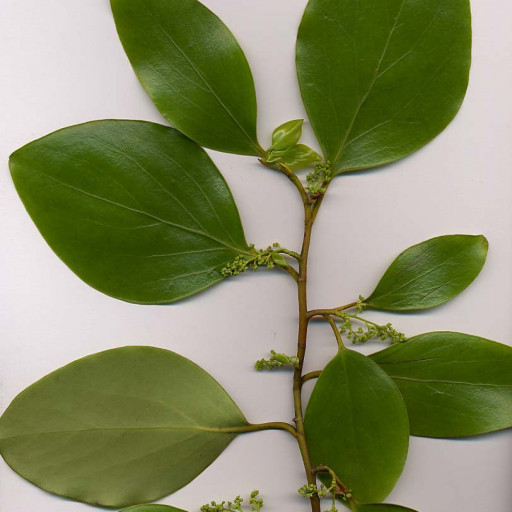
Plant Overview
Known affectionately as the New Zealand Broadleaf or "Kapuka," this evergreen beauty is the ultimate coastal superstar. Often used to create lush, "instant" privacy screens, its foliage looks as though it has been individually polished to a high shine. In its native New Zealand, it is a symbol of resilience, frequently found clinging to rocky shores where other plants would wither from the salt-laden winds.
🔍 How to Identify
- 🍃 Lustrous Leaves: The leaves are broad, leathery, and oval, sporting a vibrant "Granny Smith" apple-green color that stays bright year-round.
- 🌿 Wavy Edges: If you look closely, the leaf margins are often slightly undulating or wavy, giving the plant a soft, textured appearance.
- 🌼 Subtle Blooms: In late spring, it produces tiny, inconspicuous yellowish-green flowers. While they aren't showy to humans, they are a magnet for early-season pollinators.
🏡 In Your Garden
- 🌊 Salt-Air Specialist: This plant is famous for its ability to thrive in seaside locations. It acts as a natural windbreak, shrugging off salt spray that would scorch the leaves of more delicate species.
- 🪴 Drainage is Key: While it is a tough survivor, it has a "weak heart" for soggy feet. It requires well-drained soil and will quickly decline in heavy, waterlogged clay.
- ✂️ Pruning Versatility: It is a favorite for topiary and formal hedging because it responds so well to the shears. You can keep it as a tight 3-foot border or let it soar into a 20-foot screen.
⚠️ Safety & Toxicity
- ✅ Low Risk: Griselinia littoralis is generally considered non-toxic and safe for domestic gardens.
- 🐾 General Caution: While not inherently poisonous, the small purple berries produced by female plants should not be consumed by children or pets, as they may cause mild stomach upset if eaten in large quantities.
✨ Fun Fact
🌳 The Tree Climber: In the dense rainforests of New Zealand, this plant often begins its life as an "epiphyte." It starts growing high up in the forks of giant forest trees, eventually sending long, rope-like roots down to the ground to establish itself as a freestanding tree!

Detailed Care Instructions
To grow Griselinia Littoralis, commonly known as New Zealand broadleaf or kapuka, you can follow these steps:
- Choose the right location: Griselinia Littoralis prefers a sheltered spot in full sun or partial shade. It does best in well-draining soil, although it can tolerate a wide range of soil types.
- Prepare the soil: If your soil is heavy clay or poorly draining, amend it with organic matter such as compost to improve drainage and nutrient content. Griselinia Littoralis can also grow well in coastal areas with sandy soils.
- Planting: Plant the young Griselinia Littoralis sapling in the prepared soil at a depth equal to the depth of the container it came in. Ensure that the planting hole is wide enough to accommodate the roots without bending them, and firm the soil gently around the sapling.
- Watering: Water the sapling thoroughly after planting to help settle the soil around the roots. Provide regular watering until the plant becomes established, and then water it during dry spells or when the soil feels dry to the touch.
- Mulching: Apply a layer of organic mulch around the base of the plant to conserve moisture, suppress weed growth, and protect the roots from temperature fluctuations.
- Pruning: Griselinia Littoralis can be pruned to shape it and control its size. It responds well to pruning and can be trimmed to form hedges or topiaries. Prune in late winter or early spring before new growth begins.
- Fertilizing: Apply a balanced fertilizer in early spring to provide necessary nutrients for healthy growth. Follow the instructions on the fertilizer packaging for the correct application rate.
- Protect from frost: If you live in an area prone to frost, you may need to protect your Griselinia Littoralis plants during winter. Covering them with frost cloth or horticultural fleece can help prevent damage from freezing temperatures.
- Pest and disease control: Griselinia Littoralis is generally pest and disease resistant. However, keep an eye out for common garden pests like aphids, scale insects, and caterpillars. If necessary, treat infestations with the appropriate organic pest control methods.
By providing proper care and maintaining ideal growing conditions, your Griselinia Littoralis plant should thrive and grow well.

Place in a bright room that is sun drenched almost all day. Or directly in a south-facing window.

To water this plant, you should first assess the moisture level of the soil by sticking your finger into the soil about an inch. If it feels dry, water the plant generously, making sure the water reaches the roots. However, avoid overwatering the plant as it can lead to root rot. It is best to water this plant deeply but infrequently, allowing the soil to dry out slightly between waterings. You may also want to consider watering the plant early in the morning or late in the evening to prevent evaporation and ensure the plant has time to absorb the water before the heat of the day.
To fertilize this plant, you should use a slow-release and balanced fertilizer with equal amounts of nitrogen, phosphorus, and potassium. Use a light amount of the fertilizer every 3-4 weeks during the growing season. Be sure to avoid over-fertilizing as it can cause damage to the roots. Water the plant well after applying fertilizer.
The optimal soil for the plant in question is a well-draining mixture that is rich in organic matter. It should be slightly acidic, with a pH between 6.5 and 7.5. The soil should also be able to retain moisture without becoming waterlogged, as the plant does not tolerate soggy conditions. A good soil mix would feature a blend of peat moss, compost, and either sand or perlite to aid in drainage. Prior to planting, it is recommended to amend the soil with an all-purpose fertilizer to provide necessary nutrients.
To propagate this plant, you will need to take stem cuttings that are approximately 6 inches long. Remove the lower leaves and dip the cut end of the stem in rooting hormone. Place the cutting in a container filled with well-draining soil and cover with a plastic bag to create a greenhouse effect. Keep the soil moist and place the container in a bright, but not direct, light. The cutting should root within a few weeks and can be transferred to a larger pot or planted outdoors once it has established roots.
Common pests of the new zealand broadleaf include Aphids, larvae. Make a habit of checking your new zealand broadleaf frequently for pests so that any infestations can be caught and managed early.








