Plant Overview
Known as the Velvety Bamboo or Mexican Timber Bamboo, Guadua velutina is a majestic giant native to the tropical lowlands of Mexico. Unlike the delicate bamboo found in indoor pots, this is a structural powerhouse, historically prized for its incredible strength and density. Its name comes from the soft, fuzz-like texture found on its young shoots, giving this massive plant a surprisingly tactile and "velvety" start to life.
🔍 How to Identify
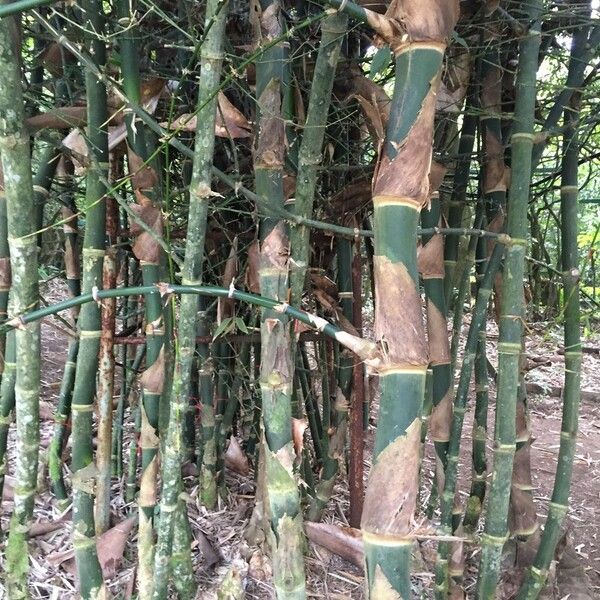
- 🎋 The Culms (Stems): Deep green, thick-walled stalks that can reach impressive heights. When young, they are covered in a fine, silver-grey "velutinous" hair that disappears as the plant matures.
- 🔘 The Nodes: Look for distinctive white rings at the joints. The lower branches of this species are notorious for developing sharp, defensive thorns, making the base of the plant look quite formidable.
- 🍃 The Foliage: Long, lance-shaped leaves that form a dense, feathery canopy. The leaves tend to hang slightly, creating a "weeping" effect that softens the plant's massive industrial stature.
🏡 In Your Garden
- 🏗️ Space Requirements: This is a "clumping" bamboo (sympodial), which means it won't invade your entire yard like running varieties. However, because it is a timber bamboo, the "clump" itself can become enormous. It needs a large landscape to accommodate its footprint and height.
- 💧 Environmental Needs: It thrives in heat and high humidity. While it is quite hardy once established, it hates being "root-bound." If you start it in a container, move it to the ground quickly; its powerful root system needs deep, fertile soil to support the weight of its heavy canes.
⚠️ Safety & Toxicity
- 🛡️ Status: Non-toxic but physically defensive.
- 🌵 Details: Guadua velutina is not poisonous to pets or humans if touched or accidentally nibbled. However, the sharp spines on the lower branches can cause painful scratches. It is best planted away from walkways or areas where children play to avoid "run-ins" with its natural armor.
✨ Fun Fact
In its native regions of Mexico, this plant is often referred to as "vegetable steel." It is so structurally sound that it is a primary material for sustainable architecture, used to build everything from sturdy bridges to eco-friendly luxury villas!

Detailed Care Instructions








