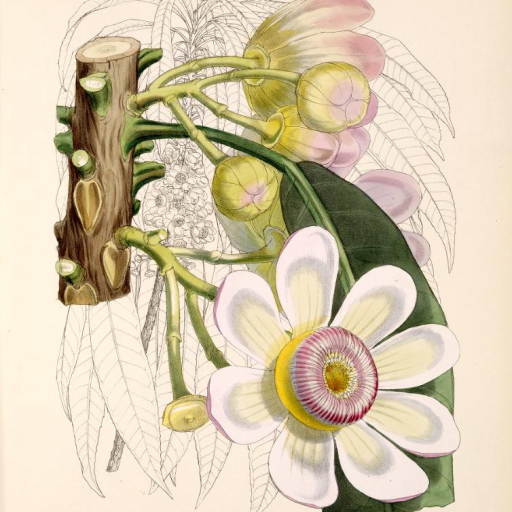
Plant Overview
Often called the Heaven Lotus or Membrillo, Gustavia superba is a dramatic understory tree that looks like it stepped straight out of a prehistoric rainforest. Known for its massive, glossy leaves and stunning, sea-anemone-like flowers, it creates an instant tropical "jungle" vibe. In its native Central and South American haunts, it is celebrated both for its beauty and its strangely flavored, edible fruit.
🔍 How to Identify
- 🍃 Giant Foliage: The leaves are enormous, sometimes reaching 3 feet in length. They grow in tight clusters at the ends of branches, creating a lush, umbrella-like canopy.
- 🌸 Waxy Blooms: The flowers are magnificent, featuring thick, creamy-pink petals and a dense "fringe" of hundreds of yellow-tipped stamens in the center.
- 🌳 Growth Habit: It typically grows as a "pachycaul" tree—meaning it has a thick, relatively unbranched trunk that gives it a primitive, palm-like silhouette.
🏡 In Your Garden
- ☁️ Humidity is Key: This isn't a "set and forget" houseplant. It craves high humidity and consistent moisture. If the air gets too dry, those spectacular leaf tips will quickly turn brown and crispy.
- 🌤️ Understory Living: Because it naturally grows beneath taller trees, it prefers bright, filtered light rather than harsh, direct afternoon sun, which can scorch its oversized leaves.
- 🥘 Thirsty Roots: It hates drying out completely. Think of it as a rainforest native; it prefers "heavy" soil that stays damp but is rich enough to provide the nutrients needed to fuel its massive leaf production.
⚠️ Safety & Toxicity
- ✅ Generally Safe: Gustavia superba is not known to be toxic to humans or common household pets.
- 🥭 Edible Context: The fruit is technically edible and is a traditional food source for some indigenous groups, though most people find the oily, yellowish pulp to be an "acquired taste."
- 🐾 Pet Caution: While not poisonous, the large, woody seeds and fibrous leaves could cause digestive upset or pose a choking hazard if chewed by curious dogs or cats.
✨ Fun Fact
The flowers of the Gustavia don't just look pretty—they are incredibly fragrant, though the scent is polarizing. Some describe it as a sweet, heavy perfume, while others find it slightly "foxy" or musky, which is a clever evolutionary trick to attract its primary pollinators: large bees and bats!

Detailed Care Instructions
To grow Gustavia Superba, also known as the "Moujean tea" or "Yellow fruit tree," follow these steps:
- Climate and Location: Gustavia Superba plants prefer warm, tropical climates and thrive in full sunlight. Ensure the location provides protection from strong winds.
- Soil: Choose a well-draining soil that is rich in organic matter. Gustavia Superba can tolerate slightly acidic to neutral soil. You can mix equal parts of garden soil, compost, and sand for a suitable growing medium.
- Propagation: Gustavia Superba can be propagated through seeds or cuttings. Seeds can be collected from ripe fruits and sown immediately in a nursery pot. If you have access to a mature plant, take softwood cuttings in spring or semi-hardwood cuttings in summer, preferably with a root hormone for better success.
- Planting: If using seeds, sow them about 1/4 inch deep in the soil. Keep the soil moist but not waterlogged. If using cuttings, plant them similar to the depth they were in the original container, ensuring good contact with the soil.
- Watering: Gustavia Superba requires regular watering, especially during dry periods. However, avoid overwatering as it may lead to root rot. Water the plant deeply and allow the top inch of soil to dry out before the next watering.
- Fertilization: Feed the plant with a balanced, slow-release fertilizer once every three to four months during the growing season to promote healthy growth. Follow the instructions on the fertilizer packaging for proper dosage.
- Pruning: Regular pruning helps shape the plant and promotes bushy growth. Remove dead, damaged, or diseased branches, and trim back excessive growth to maintain a desired size.
- Pests and Diseases: Gustavia Superba is relatively pest and disease resistant. However, be vigilant for common issues such as aphids, mealybugs, and fungal diseases. Treat affected areas with appropriate insecticides or fungicides if necessary.
- Support: Gustavia Superba is a small to medium-sized tree that may benefit from staking or support while young. Use a stake or bamboo pole to steady the plant until it establishes a strong root system.
- Patience: Gustavia Superba is a slow-growing tree, and it may take several years to reach maturity. Be patient and provide consistent care to help it thrive.
Remember, specific care requirements may vary depending on your climate and growing conditions. Observing the plant closely and making adjustments as needed is key to successful growth.

Place in a window with dappled sun or a spot in the middle of a room. Or directly in a window facing west or east.

Gustavia Superba is a tropical plant and requires specific watering needs. Make sure to water it regularly but do not overwater as it can cause root rot. Before watering, check the soil moisture by inserting your finger about an inch into the soil. If it feels dry, then it's time to water.
When watering, pour water slowly and evenly around the base of the plant until it begins to drip out the bottom. Use a watering can or a hose with a gentle spray attachment to avoid damaging the plant. If the plant is in a pot, make sure there are drainage holes at the bottom to allow excess water to flow out.
In the winter months, reduce the watering frequency as the plant's growth slows down. Avoid watering during the night or in cold temperatures as it can lead to waterlogged soil and root rot.
It's also essential to maintain the humidity around the plant. Mist the leaves regularly or place a tray of water near the plant to increase the humidity level. Alternately, you can use a humidifier to maintain ideal humidity levels.
Overall, by following these watering tips, you can help to keep your Gustavia Superba plant healthy and thriving.
To fertilize the plant, use a balanced liquid fertilizer with equal parts nitrogen, phosphorus, and potassium. Dilute the fertilizer according to the manufacturer's instructions and apply it to the soil once a month during the growing season. Do not over-fertilize as it can damage the roots and foliage of the plant. Alternatively, you can use a slow-release fertilizer pellet at the beginning of the growing season. Water the plant well after applying fertilizer.
The ideal soil for the plant in question is a well-draining, nutrient-rich soil that is slightly acidic with a pH of around 6.0 to 7.0. It should have good water retention properties to provide moisture for the roots, while also allowing excess water to drain away to prevent waterlogging. The soil should be loose and fluffy to allow for good air circulation, which is important for healthy root growth. Adding organic matter such as compost or peat moss to the soil can help improve its texture and nutrient content. It is important to avoid using heavy, compacted or clay-based soils that may not provide adequate drainage and can lead to root rot.
To propagate this plant, first identify a healthy parent plant with strong roots and stems. Take a clean, sharp cutting from the stem, making sure it has several nodes and is at least a few inches long. Remove any leaves from the lower part of the stem to avoid rotting.
Fill a small pot with well-draining soil and make a planting hole. Dip the cut end of the stem in rooting hormone and place it in the hole. Gently press the soil around the stem and water it thoroughly.
Cover the pot with a clear plastic bag or a plastic wrap to create a mini greenhouse and keep the cutting moist. Place the pot in an area with indirect sunlight and keep the soil moist but not waterlogged.
After a few weeks, check the cutting for roots by gently tugging on it. If it resists, roots have formed and it is ready to be moved to its own pot. Remove the plastic covering and move it to a spot with more light.
Continue to water the plant regularly and watch it grow into a healthy mature plant.








