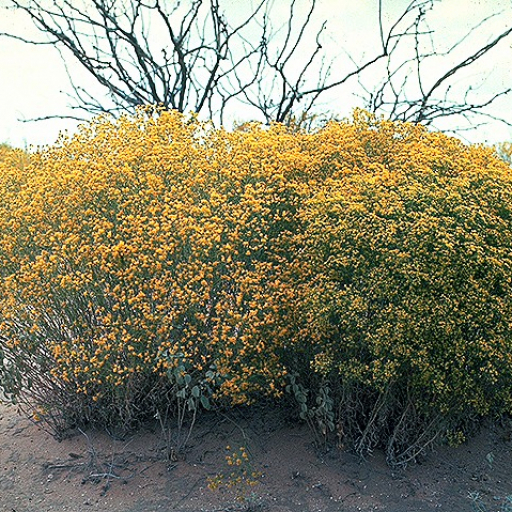
Plant Overview
Known colloquially as "Matchbrush" or "Kindlingweed," the Broom Snakeweed is a rugged desert perennial that paints the American West in gold during late summer. Historically, its wiry stems were bundled together to sweep out dwellings, while its resinous nature made it a go-to fire starter for pioneers. Today, it stands as a symbol of resilience, thriving in harsh, sun-baked soils where little else survives.
🔍 How to Identify
- 🌿 The Form: Grows in a rounded, bushy mound with hundreds of thin, upward-reaching stems that look like a bundle of brittle sticks or an old-fashioned broom.
- 🌼 The Bloom: Tiny, bright yellow composite flowers cluster densely at the branch tips; from a distance, the plant looks like it has been dipped in gold.
- 💧 The Texture: Its narrow, thread-like leaves are coated in a sticky resin that gives the plant a glossy appearance and a sharp, turpentine-like scent when crushed.
🏡 In Your Garden
- 🏜️ Tough Love: This plant is a "pioneer species" that loves poor, rocky, or sandy soil. It actually performs poorly in rich, pampered garden beds, as it prefers the challenge of the desert.
- 🌱 The Taproot: It develops a very deep, aggressive taproot early in its life. Because of this, it hates being moved—once you plant it, avoid transplanting it, or the plant will likely wither.
- 🧹 Natural Indicator: In wilder landscapes, a sudden abundance of Broom Snakeweed is often a sign of overgrazed land. It fills the gaps where native grasses have been depleted, acting as nature’s way of holding the soil together.
⚠️ Safety & Toxicity
- 🚫 Livestock Warning: While beautiful, this plant contains saponins and is highly toxic to cattle, sheep, and goats, often causing respiratory issues or pregnancy complications if eaten.
- 🐾 Pets & Humans: It is generally ignored by dogs and cats due to its extremely bitter taste and resinous texture. However, the sticky sap can cause mild skin irritation or "contact dermatitis" in sensitive individuals.
✨ Fun Fact
✨ Survivalist's Friend: It earned the nickname "Matchbrush" because the dried flower heads are so flammable due to their high resin content that they can be used to start a campfire even in damp conditions!

Detailed Care Instructions
To successfully grow Gutierrezia Sarothrae, also known as snakeweed or broom snakeweed, follow these steps:
- Select a suitable location: Gutierrezia Sarothrae prefers full sun exposure, so choose a spot in your garden that receives at least six to eight hours of direct sunlight each day. The soil should be well-draining and of average fertility.
- Prepare the soil: Before planting, loosen the soil to a depth of 6 to 8 inches and remove any weeds or debris. Adding organic matter, such as compost or well-rotted manure, can improve the soil structure and fertility.
- Planting: Dig a hole that is as deep and wide as the root ball of your Gutierrezia Sarothrae plant. Carefully place the plant in the hole, ensuring that the top of the root ball is level with the soil surface. Fill the hole with soil and gently press down to secure the plant.
- Watering: After planting, thoroughly water the Gutierrezia Sarothrae to settle the soil. Once established, this plant is drought-tolerant and requires minimal watering. In general, water deeply once every 7-10 days during dry periods.
- Mulching: Apply a layer of organic mulch, such as wood chips or straw, around the base of the plant. This will help to conserve moisture, suppress weed growth, and insulate the roots from extreme temperatures.
- Pruning: Gutierrezia Sarothrae generally doesn't require regular pruning. However, if the plant becomes overgrown or straggly, you can trim it back in early spring to promote bushier growth and maintain a desired shape.
- Fertilization: Snakeweed is adapted to nutrient-poor soils and doesn't typically require fertilization. However, if you notice weak or stunted growth, a light application of a balanced slow-release fertilizer in early spring might help.
- Protection from pests and diseases: Gutierrezia Sarothrae is relatively resistant to pests and diseases. However, occasional infestations of aphids or spider mites may occur. Monitor your plant regularly and take appropriate measures, such as handpicking or using insecticidal soap, if needed.
- Winter care: Gutierrezia Sarothrae is cold hardy and can tolerate freezing temperatures. However, in areas with severe winters, it's a good idea to provide some winter protection by applying a layer of mulch around the base of the plant.
- Propagation: Gutierrezia Sarothrae can be propagated from seeds or stem cuttings. Collect seeds in late summer or early fall when they are fully matured, sow them in well-draining soil, and keep them moist until germination. Stem cuttings can be taken in spring or early summer and rooted in a sandy soil mix.

Place in a bright room that is sun drenched almost all day. Or directly in a south-facing window.

Gutierrezia Sarothrae plant generally requires moderate watering, and it is important to let the soil dry somewhat between each watering session. When watering the plant, it is best to avoid getting water on the leaves, as this can encourage mildew growth. Instead, direct the water towards the base of the plant to moisten the soil. During the hot summer months, it may be necessary to increase watering frequency, as the plant can become quite dry. However, it is still important to avoid overwatering, as this can lead to root rot. To ensure that the plant is receiving the right amount of water, it is recommended to check the soil moisture level by sticking a finger into the soil at least a couple of inches deep. If the top inch of soil is dry, this is a good indication that it is time to water the plant. Overall, Gutierrezia Sarothrae plant is relatively easy to care for, and with proper watering and attention, it can thrive and produce beautiful blooms.
To fertilize this plant, you should first conduct a soil test to determine its nutrient needs. Once you have the results, you can apply a slow-release, balanced fertilizer in the spring. It's important to follow the manufacturer's instructions when applying the fertilizer, as over-fertilization can harm the plant. Additionally, be sure to water the plant thoroughly after fertilizing to help distribute the nutrients evenly throughout the soil.
Gutierrezia Sarothrae is a plant that is native to North America. It is adaptable to a variety of soil types including sandy soils, clay soils, loamy soils, and rocky soils. The plant prefers to grow in soils that are well-drained and have a pH that ranges from slightly acidic to slightly alkaline. The use of a well-draining soil mix that has a good balance of nutrients is important for optimal growth of the Gutierrezia Sarothrae plant. It is recommended to mix the soil with organic matter to improve the soil's nutrient content and to promote healthy root growth. Additionally, it is important to avoid using heavy or compacted soils as they can restrict root growth and cause water stagnation. Overall, the best soil for the Gutierrezia Sarothrae plant is a well-draining soil mix that is enriched with organic matter.
Propagation of this plant can be done through seed collection and the use of stem cuttings. The best time to collect seeds is in late fall to early winter, when the plant has finished flowering and the seed heads have dried. Seeds can be placed in a container with potting soil and kept moist until they germinate.
To propagate through stem cuttings, select a healthy stem from the plant and cut it at a 45-degree angle. Remove any leaves from the bottom half of the stem and dip the cut end in rooting hormone. Place the cutting in a container with a well-draining potting mix and mist the plant daily until it roots.
It is important to note that this plant prefers dry, sandy soils and full sun. Propagated plants should be transplanted to their permanent location in the fall or early spring, after the threat of frost has passed.








