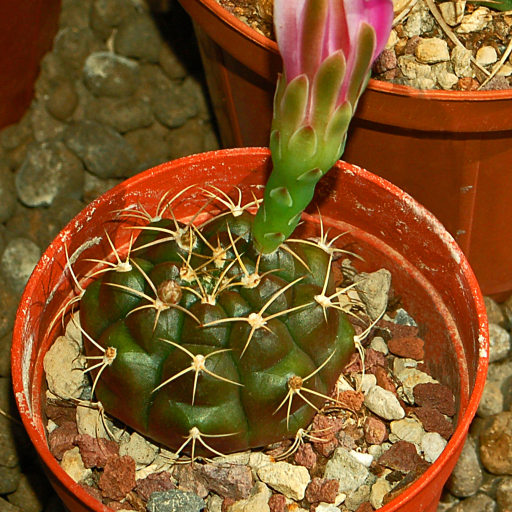
Plant Overview
Often called the "Spider Cactus" due to its distinctive curving spines, Gymnocalycium anisitsii is a darling of the succulent world. Originating from the rocky, shaded landscapes of Bolivia and Paraguay, this little cactus is a master of patience, waiting for the perfect moment to burst into waxy, elegant blooms. It is a favorite for beginners because it is far more forgiving of a little extra shade than its desert-dwelling cousins.
🔍 How to Identify
- 🌵 The Body: A globular, multi-ribbed stem that typically stays small (about 4 inches wide). It often produces "offsets" or babies around its base, eventually forming a charming cluster.
- 🕷️ Spidery Spines: It features clusters of 5 to 7 yellowish-brown spines that curve back toward the plant's body, mimicking the legs of a resting spider.
- 🌸 Naked Buds: The flower buds are completely smooth and lack the hair or wool found on most other cacti. They open into stunning, funnel-shaped flowers that range from pure white to a delicate, pale pink.
🏡 In Your Garden
- ⛅ The "Bright Shade" Rule: Unlike many cacti that crave blistering heat, this species prefers filtered light. In the wild, it often grows under the protection of shrubs. Direct afternoon sun can scorch its skin, turning the vibrant green into a stressed reddish-brown.
- 💤 The Winter Nap: This plant requires a "dry rest" during the winter. By keeping the soil almost completely dry and the temperature cool (but not freezing) from November to March, you mimic its natural cycle, which is essential for it to produce flowers in the spring.
⚠️ Safety & Toxicity
- 🐾 Pet Safe: Good news for pet owners! Gymnocalycium anisitsii is considered non-toxic to cats, dogs, and horses.
- 📌 Mechanical Injury: While not poisonous, the spines are still sharp. Even though they curve inward, they can easily snag skin or paws, so keep it on a shelf out of the direct path of curious toddlers or zoomy pets.
✨ Fun Fact
The genus name Gymnocalycium literally translates from Greek as "naked calyx." While most cacti have woolly or prickly flower tubes to protect them from insects and the sun, this genus shows off its smooth, sleek scales with no "clothing" at all!

Detailed Care Instructions
To grow Gymnocalycium anisitsii plant (also known as Moon Cactus or Ruby Ball Cactus), you can follow the following steps:
- Choose the right container: Select a well-draining container or pot with drainage holes to prevent waterlogging. The size should be appropriate to allow root growth.
- Soil: Use a well-draining cactus mix or succulent soil. You can make your own by mixing regular potting soil with sand or perlite in a 2:1 ratio.
- Planting: Gently remove the plant from its nursery pot and place it in the new container. Make sure not to damage the roots. Do not bury the plant too deep; just enough to keep it stable.
- Sunlight: Place the Gymnocalycium anisitsii in a location where it can receive bright, indirect sunlight. It can tolerate some direct sunlight but avoid prolonged exposure, as it may scorch the plant.
- Watering: Water the plant when the soil is completely dry. Allow the soil to dry out between watering, as overwatering can lead to root rot. During winter, reduce the frequency of watering.
- Humidity: Gymnocalycium anisitsii prefers low humidity. Keep it away from humid environments or overly damp conditions.
- Temperature: It thrives in average room temperatures ranging from 60-80°F (15-27°C). Protect the plant from extreme cold temperatures.
- Fertilization: Use a balanced cactus fertilizer during the growing season (spring and summer). Follow the instructions on the fertilizer packaging for proper application.
- Pruning: Gymnocalycium anisitsii generally does not require pruning. However, if you notice any dead or damaged parts, gently remove them using clean pruning shears.
- Propagation: You can propagate Gymnocalycium anisitsii through offsets or seeds. To propagate through offsets, gently separate them from the main plant and let them callous over for a few days before planting them in well-draining soil.
Remember to handle the plant with care, as the Gymnocalycium anisitsii lacks spines and can be easily damaged. With proper care, your Gymnocalycium anisitsii should grow well and thrive.

Place in a bright room that is sun drenched almost all day. Or directly in a south-facing window.

To water this plant, it is important to first assess the soil moisture level. Check the top layer of soil by pressing your finger about an inch deep into the soil. If the soil feels dry, it is time to water it.
When watering, it is best to use a watering can with a narrow spout to direct the water to the plant's roots. Water should be poured onto the soil slowly, ensuring that it is absorbed into the soil without flowing over the edges of the pot.
Be careful not to water the plant too often, as this can lead to over-watering and root rot. Generally, it is recommended to water every two to three weeks during the growing season and less frequently during the dormant season.
It is also important to note that this plant prefers well-draining soil and should never be left standing in water. Any excess water should be allowed to drain out of the pot before returning it to its usual location.
To fertilize this plant, use a balanced fertilizer with an NPK ratio of 10-10-10. Fertilize the plant once a month during its growing season, which is spring and summer. Mix the fertilizer with water according to the instructions on the package and apply it to the soil around the base of the plant. Be sure not to over-fertilize as this can damage the plant.
For optimal growth and health of this particular plant species, it is recommended to use a soil that is well-draining and has good aeration. It should be a sandy and slightly acidic soil mixture, with a pH range of 6.0-7.5. This will help the roots to absorb nutrients effectively, and also prevent waterlogging which can lead to root rot. A suitable potting mix can be a combination of peat moss, perlite, and coarse sand. It is also important to ensure the soil is kept moist but not waterlogged, and the plant is placed in a location with plenty of bright, indirect sunlight.
To propagate this plant, select a healthy and mature stem segment. This should be done during the active growing season. Allow the segment to dry for a few days to a week before planting. Prepare soil by mixing perlite and sand with potting soil to make it well-draining. Place the dried stem in the soil, moisten it a little, and keep it in bright but indirect light. It will take several weeks for the plant to start rooting. Watering should be done sparingly, only when the soil is completely dry. After a few months, the plant can be moved to a larger pot with fresh soil. Over time, the propagated plant will grow and develop into a mature, healthy plant.
Common pests of the chin cactus include Mealybugs, spider mites, thrips. Make a habit of checking your chin cactus frequently for pests so that any infestations can be caught and managed early.








