Plant Overview
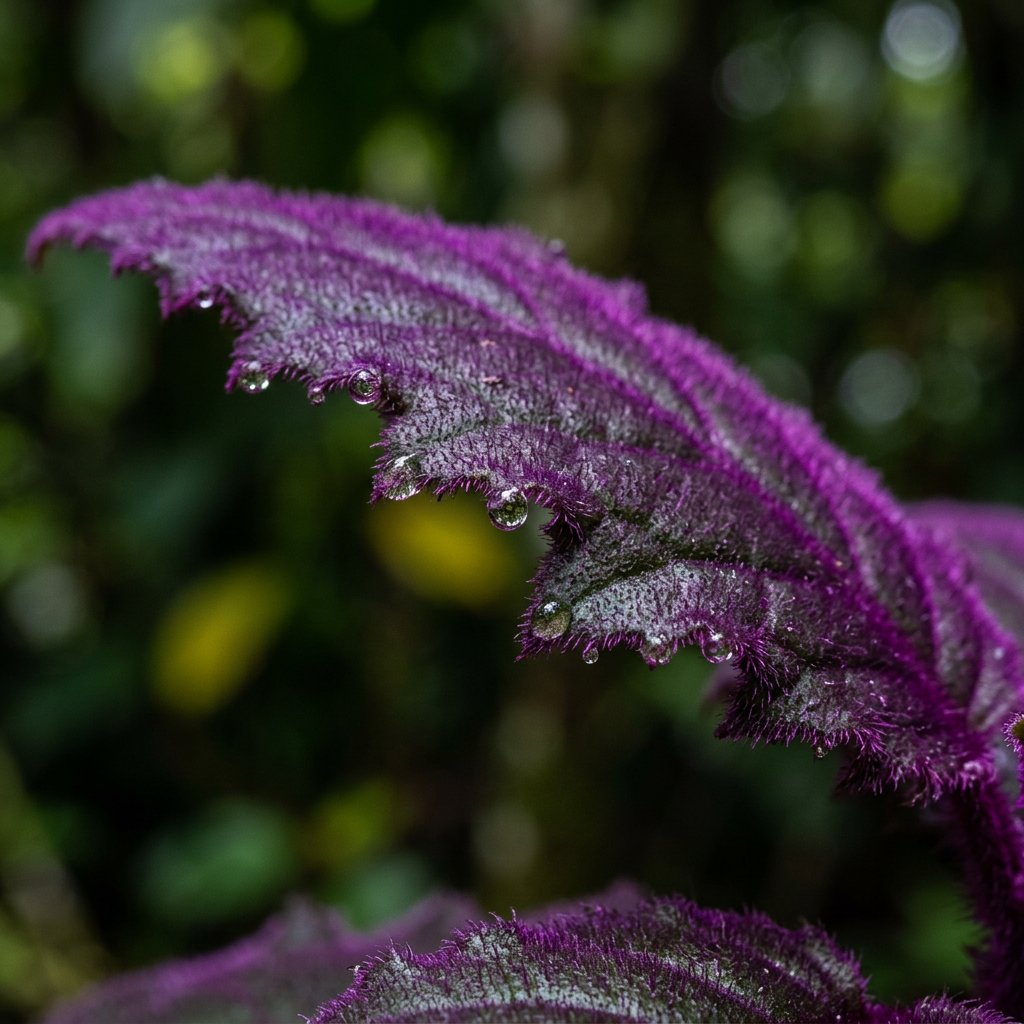
Often called the "Purple Passion" or "Velvet Plant," this Indonesian native looks like something plucked straight from a disco-era fantasy. Its leaves are covered in thousands of tiny, iridescent purple hairs that shimmer when they catch the light, making it one of the most tactile plants in the botanical world. While it starts as a compact upright plant, it eventually matures into a cascading vine, perfect for adding a pop of neon color to high shelves.
🔍 How to Identify
- 🌿 Velvety Texture: The most striking feature is the dense coating of violet-purple hairs over dark green, lance-shaped leaves.
- 🍃 Jagged Margins: The leaves have a distinctive "toothed" or serrated edge, giving the plant a wild, untamed appearance.
- 🌼 Contrast Blooms: In the right conditions, it produces small, thistle-like flowers in a shocking bright orange, providing a stark (if smelly) contrast to the purple foliage.
🏡 In Your Garden
- ☀️ Light for Luster: The vibrant purple "fur" is actually a defense mechanism against sun. To keep that deep neon glow, the plant needs very bright, indirect light; in low light, the hairs will thin out, and the plant will fade to a dull green.
- 💧 The "No-Wet" Rule: Because the leaves are so hairy, they trap moisture easily. You should always water at the base of the plant; getting water on the foliage can quickly lead to leaf rot or unsightly fungal spots.
- ✂️ Pinch and Prune: This is a short-lived perennial that tends to get "leggy" (long and bare) after a couple of years. Regularly pinching off the growing tips encourages a bushier shape and provides easy cuttings for propagation.
⚠️ Safety & Toxicity
- ✅ Pet & Child Safe: Gynura aurantiaca is widely classified as non-toxic to cats, dogs, and humans. It is a great choice for households with curious pets.
- 🖐️ Physical Irritation: While not poisonous, the tiny hairs can occasionally cause very mild skin irritation for people with extremely sensitive skin if the plant is handled frequently.
✨ Fun Fact
🧦 The Stinky Secret: Despite its beautiful purple-and-orange aesthetic, most experienced growers snip the flower buds off as soon as they appear. Why? The blossoms emit a pungent odor frequently compared to "dirty gym socks" or rotting organic matter to attract their preferred insect pollinators!

Detailed Care Instructions
| Color | Orange-Yellow |
| Soil Ph | 6.5 To 7.5 (Neutral) |
| Lighting | Part Sun |
| Soil Type | Soil-Based Potting Mix |
| Bloom Time | November To February (Buds Usually Removed) |
| Difficulty | Medium |
| Plant Type | Herbaceous Evergreen Perennial |
| Hibernation | Cold Period |
| Mature Size | 1 To 2 Feet Tall; 2- To 4-Foot Spread |
| Native Area | Java |
| Temperature | 15°C - 18°C |
| Sun Exposure | Part Shade |
| Hardiness Zones | 10 To 12 (Usda) |
To grow Gynura Aurantiaca, also known as purple passion plant, you can follow these steps:
- Choose a suitable location: Gynura Aurantiaca thrives in bright, indirect light. Place the plant in a spot near a window where it can receive bright, filtered sunlight. Avoid direct sunlight as it can scorch the leaves.
- Select the right pot: Gynura Aurantiaca prefers well-draining soil, so choose a pot with drainage holes to prevent waterlogging. A pot with a diameter of 8-10 inches is usually sufficient for this plant.
- Use well-draining soil: Prepare a potting mix using a combination of regular potting soil, perlite, and peat moss. This mix provides good drainage while retaining some moisture.
- Planting: Gently place the Gynura Aurantiaca plant in the pot, ensuring the root ball is well-covered with soil. Press it gently to remove any air pockets. Avoid planting it too deep, as it can lead to rotting. Leave some space at the top of the pot for watering.
- Watering: Water the plant thoroughly when the top inch of soil feels dry. Avoid overwatering, as it can cause root rot. Allow excess water to drain from the pot, and empty the saucer to prevent water accumulation.
- Humidity: Gynura Aurantiaca appreciates a humid environment. You can use a humidifier or place the pot on a tray filled with water to increase humidity around the plant.
- Temperature and humidity: Keep the plant at a temperature range of 60-75°F (15-24°C) during the day and slightly cooler at night. Avoid placing it in excessively cold or hot areas.
- Pruning: To encourage bushier growth, pinch off the tips of the plant regularly. This helps promote branching and fuller foliage.
- Fertilization: Use a balanced, water-soluble houseplant fertilizer during the growing season (spring and summer) to provide essential nutrients to the Gynura Aurantiaca. Follow the instructions on the fertilizer packaging for dosage and frequency.
- Propagation: Gynura Aurantiaca can be propagated through stem cuttings. Take a 4-6 inch piece from the top of the plant, remove the lower leaves, and place it in a jar of water or directly into moist soil. Keep it in a warm and bright location until new roots form.
With proper care and attention, your Gynura Aurantiaca plant should grow and thrive. Remember to monitor its watering needs, provide sufficient light, and maintain a suitable temperature and humidity level.

Place in a window with dappled sun or a spot in the middle of a room. Or directly in a window facing west or east.

1. Know the watering needs: It is important to know the watering needs of the plant. Generally, Gynura Aurantiaca requires moist but well-drained soil.
2. Water on a schedule: Set a schedule for watering the plant. This can depend on factors like the size of the pot, humidity levels, and the temperature. Check the soil regularly and water when it feels dry or almost dry.
3. Use room temperature water: Always use room temperature water to water the plant. Cold water can shock the roots and damage the plant.
4. Water at the base: When watering, try to water at the base of the plant. This helps to avoid getting the leaves and stem wet, which can cause fungal diseases.
5. Avoid overwatering: Overwatering can be detrimental to the plant's health. If the soil feels wet or there is standing water around the plant, then it is likely that it has been overwatered. Cut back on watering and allow the soil to dry out between waterings.
6. Choose the right pot: Choosing the right pot with proper drainage is also important to avoid waterlogging. Always repot the plant when the roots start to outgrow the pot.
7. Monitor growth and adjust watering: Monitor the growth and health of the plant and adjust watering accordingly. Increase watering during active growth periods and reduce it during dormancy.
8. Use a humidifier: Gynura Aurantiaca thrives in humid environments, so using a humidifier or placing a water tray near the plant can help to increase humidity levels and keep the plant healthy.
To fertilize this plant, you should use a balanced, water-soluble fertilizer every two weeks during the growing season. Make sure to dilute the fertilizer to half strength before applying it to the soil. However, avoid fertilizing the plant during the dormant season.
The ideal soil for the plant in question should have good drainage and be loose and light in texture. It should have a pH level of about 5.5 to 6.5, slightly acidic to neutral. The soil should contain adequate amounts of organic matter to provide the necessary nutrients for healthy growth. A mixture of peat moss and perlite or vermiculite is usually suitable for this plant. However, it is worth noting that the soil type may vary depending on the region of growth and the specific requirements of the plant.
To propagate this plant, you will need a healthy parent plant from which to take cuttings. Begin by selecting a stem that is approximately 4-6 inches long and has at least 3-4 leaves on it. Using a clean pair of scissors or pruning shears, cut the stem at a 45-degree angle just below a node (the part where a leaf joins the stem).
Remove the bottom 1-2 leaves from the stem, leaving only the upper leaves intact. Dip the cut end of the stem into a rooting hormone powder, if desired, and then plant it in a pot filled with moist, well-draining soil. Firm the soil around the stem to hold it in place and gently water the soil until it is evenly moist.
Cover the pot with a clear plastic bag or plastic wrap to create a mini greenhouse that will help to retain moisture and humidity around the cutting. Place the pot in a warm, bright location out of direct sunlight. Check the soil every few days and water as needed to keep it moist.
In about 2-3 weeks, the cutting should begin to develop roots and new growth. Once the new plant has established roots and at least 2-3 new leaves, it can be gradually acclimated to brighter light and normal growing conditions.
Common pests of the velvet plant include Mealybugs, spider mites, aphids, thrips, whiteflies. Make a habit of checking your velvet plant frequently for pests so that any infestations can be caught and managed early.








