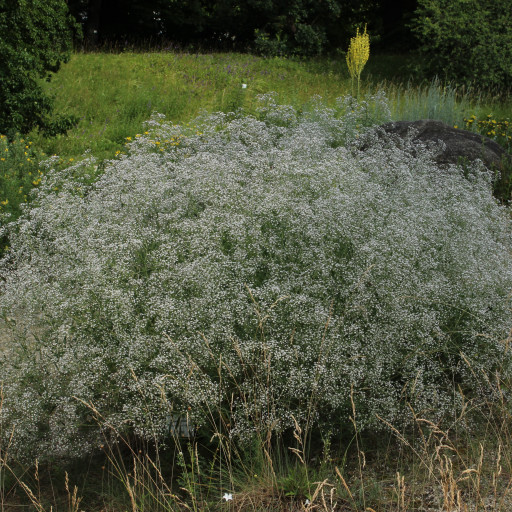
Plant Overview
Known as the "Mist of the Garden," Gypsophila paniculata is the unsung hero of the floral world. While most people recognize it as the delicate white filler in wedding bouquets, this hardy perennial is a powerhouse in the landscape, creating a romantic, hazy effect that softens the edges of any garden bed. Its genus name literally translates to "gypsum-loving," a nod to its preference for calcium-rich soils.
🔍 How to Identify
- 🌸 The Blooms: Thousands of tiny, five-petaled white (or occasionally pale pink) flowers held on intricate, wiry stems that create a cloud-like appearance.
- 🍃 The Foliage: Narrow, lance-shaped leaves with a distinct gray-green or glaucous tint, usually appearing mostly at the base of the plant.
- ☁️ Growth Habit: It forms a large, rounded, airy mound that can reach up to 3 feet in height and width, looking almost like a puff of smoke from a distance.
🏡 In Your Garden
- 🏜️ Drainage is Key: This plant thrives in "sweet" (alkaline) soil and absolutely demands sharp drainage. In heavy clay or soggy winter soil, the roots will rot quickly.
- ⚓ The Taproot Rule: It develops a very deep, thick taproot to help it survive drought. This makes it incredibly hardy, but it also means it hates being moved. Choose its "forever home" carefully, as transplanting an established plant is rarely successful.
- ✂️ Post-Bloom Refresh: Once the first heavy flush of flowers fades, shearing the plant back by half can often stimulate a second, smaller bloom later in the season.
⚠️ Safety & Toxicity
- 🐾 Mildly Toxic: Gypsophila contains saponins, which can cause gastrointestinal upset (vomiting or diarrhea) in cats and dogs if ingested.
- 🧴 Skin Irritation: Some people may experience minor skin irritation or "contact dermatitis" when handling the stems, especially when the plant is dried. It is best to wear gloves during heavy pruning.
✨ Fun Fact
In the Victorian "Language of Flowers," Baby's Breath represents everlasting love and purity. This symbolic meaning, combined with its ability to stay beautiful even after drying, is why it has remained the world’s most popular wedding flower for over a century.

Detailed Care Instructions
To grow Gypsophila Paniculata, also known as baby's breath, follow these steps:
- Choose a suitable location: Gypsophila Paniculata prefers a sunny spot with well-draining soil. Ensure the selected area receives at least 6 hours of direct sunlight daily.
- Soil preparation: Prepare the soil by loosening it using a garden fork or tiller. Remove any weeds, rocks, or debris from the area. The soil should be well-draining as baby's breath doesn't tolerate waterlogged conditions.
- Soil amendment: Add organic matter like compost or well-rotted manure to enrich the soil and improve its nutrient content. Mix it thoroughly into the soil.
- Sow or plant seeds: You can sow baby's breath seeds directly into the prepared soil in early spring or late fall. Alternatively, you can start with nursery-bought seedlings. If using seeds, sprinkle them thinly over the soil surface and cover lightly with a thin layer of soil.
- Watering: Keep the soil moist but not overly wet. Water the plants regularly, especially during dry spells or hot weather. Avoid overwatering, as it can lead to root rot.
- Mulching: Apply a layer of organic mulch, such as straw or wood chips, around the plants to help retain soil moisture and suppress weed growth.
- Pruning: After the plant has finished flowering, cut back the stems to about 6 inches from the ground. This will encourage new growth and potentially lead to a second flowering later in the season.
- Fertilizing: Baby's breath doesn't require heavy fertilization but can benefit from a balanced, slow-release fertilizer applied once or twice during the growing season.
- Support: Provide support like stakes or a trellis if you are growing taller varieties to prevent them from flopping over in strong winds or heavy rain.
- Pests and diseases: Gypsophila Paniculata is generally resistant to pests and diseases. However, keep an eye out for aphids, slugs, or powdery mildew. If detected, treat them using appropriate organic methods.
Remember to check the specific care requirements for the variety of Gypsophila Paniculata you are growing, as some variations may have specific needs.

Place in a bright room that is sun drenched almost all day. Or directly in a south-facing window.

To water this plant, you should first check the soil moisture level by sticking your finger about an inch deep into the soil. If it feels dry, it's time to water. Use a watering can or hose with a gentle spray nozzle to water around the base of the plant, being careful not to wet the leaves. Water thoroughly until water begins to drain out of the bottom of the pot or onto the soil. Wait until the soil dries out slightly before watering again, as this plant prefers well-draining soil that is not too wet. Avoid overwatering, as this can lead to root rot and other issues. Additionally, give this plant enough sunlight and fertilize it occasionally to promote healthy growth.
- Choose a well-draining soil that is rich in organic matter.
- When planting, mix some slow-release fertilizer granules into the soil around the roots.
- During the growing season, feed the plant every two weeks with a balanced liquid fertilizer.
- Water the plant deeply after fertilizing to ensure the nutrients are absorbed.
- In late fall, stop fertilizing to allow the plant to go dormant for the winter.
- Resume fertilizing in the spring when new growth appears.
Gypsophila Paniculata plant prefers well-draining soil that is rich in nutrients and organic matter. It requires soil with a neutral pH level that ranges from 6.5 to 7.5. The soil should be moist but not waterlogged as the plant cannot tolerate waterlogged soil. A sandy loam or loamy soil texture is ideal for this plant. It is best to avoid heavy clay or rocky soils as they will not allow for proper drainage. The Gypsophila Paniculata plant can thrive in varying soil types, from sandy to slightly acidic soil. Soil that has been enriched with compost or aged manure is also ideal for this plant.
One way to propagate this plant is by taking stem cuttings. Choose healthy, mature stems that are about 4-6 inches long and contain several nodes. Make a clean cut about ½ inch below a node, and remove any leaves from the lower half of the cutting. Dip the cut end in rooting hormone, and plant it in a well-draining potting mix. Water the cutting and cover it with a plastic bag to create a mini-greenhouse. Keep the soil moist and place the cutting in a bright, warm location, but out of direct sunlight. Check the cutting regularly for signs of new growth and remove any dead or yellowing leaves. Once the cutting has rooted and new growth is visible, it can be transplanted into a larger pot or directly into the garden.
Common pests of the baby's breath include Spider mites, aphids, larvae. Make a habit of checking your baby's breath frequently for pests so that any infestations can be caught and managed early.








