Plant Overview
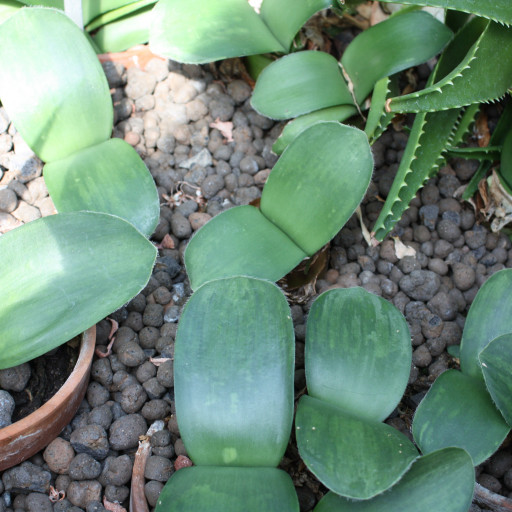
Often called the "Paintbrush Lily" or "Shaving Brush Plant," Haemanthus albiflos is a quirky architectural wonder from South Africa. Unlike many of its bulbous cousins that go dormant and disappear, this evergreen beauty keeps its thick, tongue-shaped leaves all year round. It is a favorite for indoor gardeners who want something prehistoric-looking that is nearly impossible to kill.
🔍 How to Identify
- 👅 The Foliage: It features pairs of wide, leathery, tongue-shaped leaves that grow opposite each other. The leaf edges are often fringed with tiny, soft white hairs.
- 🖌️ The Bloom: The flower head is a dense cluster of white tubular florets with prominent, gold-tipped stamens, making it look exactly like a paintbrush dipped in yellow pollen.
- 🍒 The Berries: After flowering, the plant can produce bright, fleshy red berries that add a splash of color to the base of the plant during the winter months.
🏡 In Your Garden
- ☁️ Shadow Seeker: This plant is a rare "shade-loving" bulb. In the wild, it grows under the canopy of coastal forests, meaning it thrives in low-light spots where other flowering plants might struggle.
- 🏺 Snug Fit: It has a very shallow root system and actually prefers to be "pot-bound." You should avoid repotting it frequently; it blooms much more reliably when its roots are a bit crowded.
- 💧 Thirst Indicators: Because the leaves are thick and succulent, they store water efficiently. If the leaves begin to look slightly wrinkled or limp, it’s the plant’s way of asking for a drink.
⚠️ Safety & Toxicity
- 🚫 Toxic Status: Mildly to moderately toxic.
- 🐾 The Risks: Like many members of the Amaryllis family, it contains alkaloids (such as lycorine) that can cause stomach upset, drooling, and vomiting in cats, dogs, and humans if ingested. It is best kept on a high shelf away from curious pets and toddlers.
✨ Fun Fact
While most bulbs require a "rest period" in total darkness to flower, the Haemanthus albiflos is one of the few species in its genus that stays green and active throughout the entire year, earning it the nickname "The Evergreen Haemanthus."

Detailed Care Instructions
| Humidity | Normal |
| Lighting | Part Sun |
| Difficulty | Medium |
| Temperature | 18°C - 25°C |
| Hardiness Zones | 9B - 11B |
Here are some steps to grow Haemanthus Albiflos plant:
- Choose a suitable planting location: Haemanthus Albiflos prefer bright, indirect light. Select a spot that receives a few hours of morning or evening sunlight but is protected from intense midday sun. The plant can be grown indoors near a window or outdoors, depending on your climate.
- Prepare the soil: The plant prefers well-draining soil with a slightly acidic pH. You can amend the soil with organic matter like compost or peat moss to improve drainage.
- Planting: Plant the bulbs in the prepared soil, making sure to bury them with the neck or tip protruding slightly above the soil surface. The bulbs should be placed about 4-6 inches apart to allow room for growth. Water thoroughly after planting.
- Watering: Water the plant regularly to keep the soil consistently moist but not waterlogged. During the growing season, water more frequently, reducing watering in the dormant season. Avoid letting the soil dry out completely.
- Feeding: Provide a balanced, water-soluble fertilizer during the growing season, following the package instructions for dosage. Monthly fertilization with half-strength fertilizer is usually sufficient.
- Temperature and humidity: Haemanthus Albiflos prefer average room temperatures between 65-75°F (18-24°C). They can tolerate slightly cooler temperatures in the winter. Maintain moderate humidity levels by misting the plant or using a humidifier.
- Pruning: Remove any dead or yellowing leaves to maintain a neat appearance. You can also remove the spent flower stalks after blooming.
- Dormancy: Haemanthus Albiflos goes through a dormant period typically in late fall or winter. During this time, the plant will naturally stop growing and may shed leaves. Reduce watering and stop fertilizing during this period. Keep the dormant plant in a cool, dry location until the next growing season.
By following these steps, you can successfully grow a Haemanthus Albiflos plant in your home or garden.

Place in a window with dappled sun or a spot in the middle of a room. Or directly in a window facing west or east.

To water the plant, it is important to first assess the soil moisture level by inserting a finger or a moisture meter into the soil. If the soil is dry up to the depth of the first joint of the finger or the moisture meter reads low, it is time to water the plant.
The plant should be watered thoroughly until water drains out of the drainage holes at the bottom of the pot. While watering, it is important to avoid getting water on the leaves or flowers as this can cause damage or rot. After watering, the excess water should be drained out of the saucer or pot to prevent root rot.
The plant should be watered less frequently during the dormant period in winter when growth and flowering slow down. During the growing season in spring and summer, the plant may need more frequent watering, especially if it is in a warm and dry environment.
In general, it is important not to overwater or underwater the plant as this can lead to stress and damage. Regular and consistent watering, along with proper drainage, can help to keep the plant healthy and thriving.
To fertilize this plant, use a balanced fertilizer with an N-P-K ratio of 10-10-10. Mix the fertilizer with water according to the package instructions. Apply the fertilizer solution to the soil around the plant, taking care not to get any on the leaves. Fertilize the plant once a month during the growing season, which is typically from spring to early fall. Avoid fertilizing during the winter months when the plant is dormant.
Haemanthus Albiflos plant prefers well-draining soil that is rich in organic matter. It should be a slightly acidic to neutral soil with a pH level between 6.0-7.5. The soil should not be too compact as it may hinder the growth of the plant. A mixture of sand, peat moss, and loam would be ideal for this plant. The soil should be kept slightly moist but not waterlogged, as too much water may cause root rot. It is also important to ensure that the plant is not kept in direct sunlight for extended periods of time, as it prefers partial shade to full shade.
One way to propagate this plant is through bulb division. This involves gently removing the plant from its pot and carefully separating the bulbs into smaller sections. Each section should have at least one healthy bulb and a few leaves. The sections can then be potted in well-draining soil, with the top of the bulb just above the soil surface. It is important to keep the soil moist but not waterlogged, and to place the potted sections in a warm, bright location with indirect sunlight.
Another method of propagation is through seed collection. The plant produces small, round seeds that can be collected once the fruit has ripened and begun to split open. The seeds should be sown in a well-draining soil mixture and kept moist. It may take several weeks for the seeds to germinate, and they should be kept in a warm, bright location with indirect sunlight until they start to grow.
It is important to note that this plant may take several years to produce flowers from seed, so bulb division may be a faster and more reliable method of reproduction.
Common pests of the the paintbrush plant include Mealybugs, larvae. Make a habit of checking your the paintbrush plant frequently for pests so that any infestations can be caught and managed early.








