Plant Overview
Often called the Palo de Brasil, this rugged and resilient tree is famous for the vibrant crimson dye hidden deep within its heartwood. Throughout history, it has been more than just a plant; it was a source of royal pigments and a staple in traditional folk medicine. Its twisted, sculptural trunk makes it a living piece of art in any arid landscape or sun-drenched garden.
🔍 How to Identify
- 🪵 The Trunk: The bark is smooth and greyish, but the most striking feature is its deeply fluted, gnarled, and "muscular" trunk. It often looks like several smaller trunks have been braided or fused together.
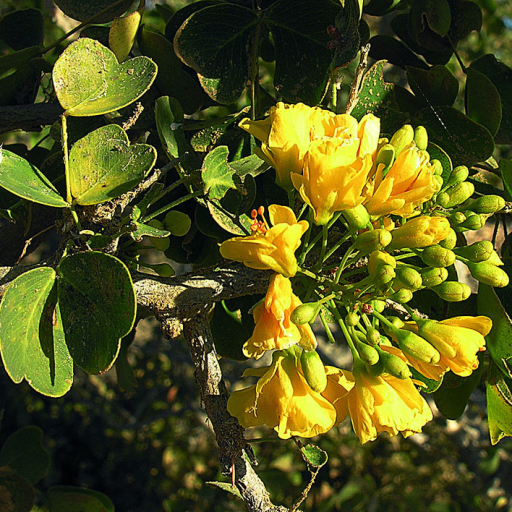
- 🍃 The Foliage: It features small, distinct heart-shaped leaflets (obcordate) arranged in pairs. These give the canopy a delicate, feathery appearance that provides dappled shade.
- 🌼 The Blooms: During the flowering season, the tree produces small, fragrant clusters of bright yellow flowers that act as a magnet for local pollinators.
🏡 In Your Garden
- ☀️ Sun & Heat: This is a true desert-dweller. It thrives in intense, direct sunlight and is exceptionally drought-tolerant once established. It is a "set it and forget it" choice for xeriscaping or rock gardens.
- 🏜️ Soil & Drainage: It "hates wet feet." Because it grows slowly, it cannot easily recover from root rot caused by standing water. Always use rocky, well-draining soil and avoid heavy clay.
- 🪴 Container Growth: While it can become a large shrub or small tree in the wild, it is a favorite for bonsai enthusiasts because its twisted trunk gives it an "ancient" look even when it is young.
⚠️ Safety & Toxicity
- ✅ General Status: Haematoxylum brasiletto is generally considered non-toxic to touch and is not known to be hazardous to pets or children who might brush against it.
- 🍵 Medicinal Use: While the heartwood is widely used in traditional Mexican medicine for heart and kidney health, you should never consume home-prepared extracts without professional guidance. High concentrations of tannins can lead to digestive discomfort.
✨ Fun Fact
🎨 The Name of a Nation: The name of the country Brazil is actually derived from this group of trees! The Portuguese word brasa means "ember," referring to the glowing red dye extracted from the wood. This tree was once so valuable for dyeing royal fabrics that it was treated like "red gold" by early explorers.

Detailed Care Instructions
To grow a Haematoxylum brasiletto plant, here are some steps you can follow:
- Obtain seeds or a young plant: You can purchase Haematoxylum brasiletto seeds or young plants from a reputable nursery or online supplier. Ensure that the seeds or plant you acquire are high-quality and disease-free.
- Select the right location: Choose a location for planting that receives full sun to partial shade. Haematoxylum brasiletto prefers well-draining soil, so make sure the soil is loamy and not overly moist.
- Prepare the soil: Before planting, prepare the soil by loosening it with a garden fork or tiller. Remove any weeds or debris from the area.
- Planting the seeds or transplanting the plant: If you have seeds, follow the instructions on the packet for planting depth and spacing. Water gently after planting and keep the soil moist until germination. If you have a young plant, dig a hole slightly larger than the root ball, place the plant in the hole, backfill with soil, and gently press down to ensure the plant is secure.
- Watering: Haematoxylum brasiletto prefers consistent moisture, especially when young. Water the plant regularly, ensuring the soil remains evenly moist but not waterlogged. Once established, it can tolerate some periods of drought.
- Mulch and weed control: Apply a layer of organic mulch around the base of the plant to help conserve moisture, suppress weeds, and protect the root system. Keep the area around the plant free from weeds, as they can compete for nutrients and water.
- Pruning: Prune Haematoxylum brasiletto regularly to maintain its shape and promote healthy growth. Remove any dead, damaged, or diseased branches. Pruning also encourages bushier growth.
- Fertilization: Haematoxylum brasiletto generally does well without excessive fertilization. However, you can provide a balanced slow-release fertilizer once or twice a year in early spring and late summer, following the package instructions.
- Protect from pests and diseases: Monitor the plant for any signs of pests or diseases like aphids, mealybugs, or root rot. If necessary, treat with appropriate organic or chemical insecticides or fungicides. Regularly inspect the plant to catch any issues early.
- Harvesting: Haematoxylum brasiletto is typically grown for its valuable dyewood. Keep in mind that harvesting the wood requires proper permits and regulations in many countries. Research local guidelines before considering harvesting the wood.
Remember to consult local gardening resources or experts for specific and region-based guidance on growing Haematoxylum brasiletto plants.

Place in a bright room that is sun drenched almost all day. Or directly in a south-facing window.

Watering Haematoxylum Brasiletto plant can be done by following these steps:
1. Assess the soil moisture: Before watering, check the moisture level of the soil by inserting your finger about an inch deep into it. If the soil feels dry to the touch, it's an indication that the plant needs watering.
2. Watering frequency: Haematoxylum Brasiletto plants generally prefer moderate watering. Provide water to the plant once a week during the growing season (spring and summer) and reduce the frequency to every two weeks during the dormant period (fall and winter).
3. Watering method: Instead of just pouring water over the plant, use a gentle and controlled approach. Direct a small stream of water around the base of the plant, allowing it to slowly penetrate the soil. This will help prevent water runoff and ensure adequate moisture absorption by the roots.
4. Water quantity: Aim to thoroughly moisten the soil around the plant, ensuring that the water reaches the roots. Add enough water to allow it to penetrate the root zone, but avoid overwatering, as excessive moisture can lead to root rot.
5. Soil drainage: Haematoxylum Brasiletto plants thrive in well-draining soil. Make sure the container or planting location has adequate drainage holes to prevent water from accumulating at the root level. Excess water should be able to freely drain out.
6. Observing plant's response: Pay attention to the plant's reaction after watering. If the leaves appear droopy or if there are signs of root rot (such as yellowing leaves, wilting, or foul odor), it may indicate overwatering. On the other hand, if the plant shows signs of dehydration (e.g., wilted leaves or dry soil), it may need more frequent watering.
Remember that individual plant care may vary depending on environmental conditions, pot size, and specific requirements. Regularly monitor your Haematoxylum Brasiletto plant and adjust your watering schedule accordingly to promote healthy growth.
To fertilize the Haematoxylum Brasiletto plant, follow these instructions:
- Choose a balanced fertilizer: Select a slow-release balanced fertilizer with equal nitrogen (N), phosphorus (P), and potassium (K) ratios. This will provide all the necessary nutrients for the plant's overall growth and development.
- Timing: Apply fertilizer during the plant's active growth phase, which typically occurs in spring or early summer. This will ensure optimal nutrient uptake and utilization by the plant.
- Dilution: Follow the manufacturer's instructions on how to dilute the fertilizer. Use the recommended ratio of fertilizer to water to prevent overfeeding the plant, as excess nutrients can harm its growth.
- Application method: Apply the diluted fertilizer evenly around the base of the plant, avoiding direct contact with the stems or leaves. This will help prevent potential burns or damage to the plant.
- Watering: After applying the fertilizer, thoroughly water the plant to allow the nutrients to penetrate the soil and reach the plant's roots. This will aid in the absorption of the fertilizer and distribution of nutrients.
- Frequency: Fertilize the Haematoxylum Brasiletto plant once every few months or as recommended by the fertilizer manufacturer. Avoid over-fertilizing, as it can lead to nutrient imbalances or fertilizer burn.
Remember, it's essential to observe the health and growth of the plant to determine whether additional fertilization is necessary. Regularly inspect the leaves, stems, and overall appearance of the plant for any signs of nutrient deficiencies or excesses. Adjust the fertilizing schedule accordingly to ensure the plant remains healthy and thriving.
When it comes to Haematoxylum brasiletto plant, it thrives best in a specific type of soil that provides optimal growing conditions. The soil should ideally be well-draining and rich in organic matter. A loamy soil, which is a balanced combination of sand, silt, and clay, would work exceptionally well.
Additionally, the soil should be slightly acidic to neutral with a pH ranging from 6.0 to 7.0. This helps promote efficient nutrient uptake by the plant's roots.
It is advisable to amend the soil with organic matter such as compost or well-rotted manure to improve its fertility, water retention, and drainage. This enhances the overall health and vigor of the Haematoxylum brasiletto plant.
Moreover, the soil should have good moisture-retention capabilities while allowing excess water to drain away. Soggy or waterlogged soil can lead to root rot and other detrimental conditions for the plant.
In terms of texture, the soil should ideally be crumbly, allowing the roots to penetrate easily and enabling air circulation within the soil. This will facilitate proper root development and prevent soil compaction.
Regularly monitoring the soil moisture levels and ensuring it remains moist but not excessively wet is crucial for the plant's well-being. Mulching the soil surface with organic material helps in conserving moisture, regulating soil temperature, and suppressing weed growth.
In summary, Haematoxylum brasiletto plant prefers a well-draining, loamy soil that is slightly acidic to neutral in pH. Amending the soil with organic matter and maintaining the appropriate moisture level will contribute to the plant's growth and success.
Haematoxylum brasiletto is a plant species that can be propagated in several ways. Here is a detailed guide on how to propagate this plant:
- Seeds:
- Collect mature seeds from the plant's fruits.
- Soak the seeds in water overnight to soften the seed coat.
- Fill seedling trays or small pots with well-draining soil mix.
- Sow the seeds about 1/4 inch deep and cover lightly with soil.
- Water the seeds gently, ensuring the soil is evenly moist.
- Place the trays or pots in a warm, bright location but avoid direct sunlight.
- Keep the soil consistently damp until germination, which usually takes 3-4 weeks.
- Once the seedlings are large enough, transplant them into individual pots or a suitable outdoor location.
- Collect mature seeds from the plant's fruits.
- Stem cuttings:
- Select a healthy H. brasiletto plant and identify a young, non-flowering stem.
- Using clean, sharp pruning shears, cut a 6-8 inch long section of the stem.
- Remove the lower leaves, leaving only a few leaves at the tip.
- Dip the cut end of the stem in a rooting hormone powder to promote faster root development (optional).
- Fill a small pot with a well-draining rooting medium, such as a mix of perlite and peat moss.
- Make a hole in the soil with a pencil or a similar tool.
- Insert the cutting into the prepared hole, ensuring that at least half of the stem is buried.
- Firmly press the soil around the stem to provide stability.
- Water the cutting thoroughly until excess water drains from the bottom of the pot.
- Place the pot in a warm, bright location, but avoid exposing it to direct sunlight.
- Mist the cutting regularly to maintain humidity and prevent drying out.
- It may take a few weeks for new roots to form. Once the cutting has established a good root system, transplant it into a larger pot or the desired planting location.
- Select a healthy H. brasiletto plant and identify a young, non-flowering stem.
- Layering:
- Identify a healthy, low-growing branch of the H. brasiletto plant.
- Choose a spot along the branch that can be brought in contact with the soil.
- Wound the bottom side of the branch by gently scrapping the bark or making a small cut.
- Apply a rooting hormone to the wounded area (optional).
- Dig a small hole in the ground near the branch, ensuring it is deep enough to accommodate the wounded section.
- Bury the wounded section of the branch in the hole, making sure it stays in contact with the soil.
- Secure the branch in place using a U-shaped wire or a small stake if needed.
- Water the area thoroughly and regularly to keep the soil moist.
- After several months, check if the branch has developed sufficient roots by gently tugging on it. If there is resistance, it indicates successful rooting.
- Once rooted, cut the newly propagated plant from the parent plant, and transplant it to its permanent location.
By following these propagation methods, you can successfully propagate Haematoxylum brasiletto and create new plants.
- Identify a healthy, low-growing branch of the H. brasiletto plant.








