Plant Overview
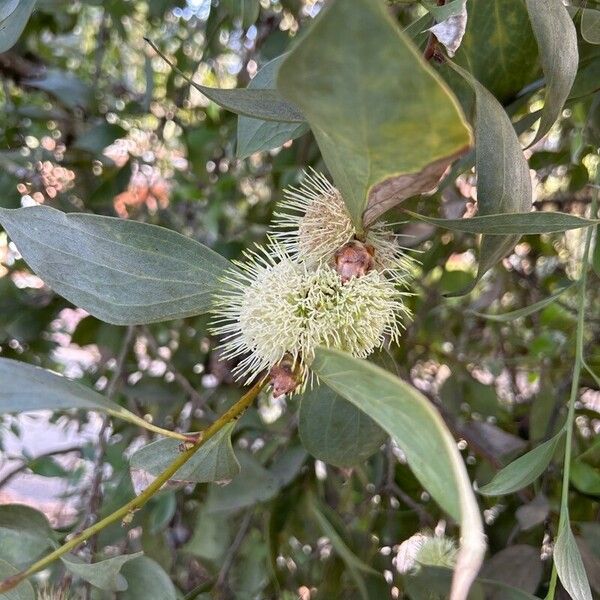
Known affectionately as the Sea Urchin Hakea, this Western Australian native is a showstopper that looks like it belongs on a coral reef rather than in a garden. It is famous for its "pincushion" flowers that burst into bloom during the cooler months, providing a vital nectar source when most other plants are dormant. With its architectural silhouette and dusty blue foliage, it’s a favorite for those looking to add a touch of "alien" beauty to their landscape.
🔍 How to Identify
- 🪸 The "Sea Urchin" Blooms: The most striking feature is the globose flower clusters. They emerge as pale cream or pinkish-maroon "pincushions" with long, protruding styles that look exactly like the spines of a sea urchin.
- 🍃 Elliptical Foliage: Unlike many Hakeas with needle-like leaves, petiolaris has broad, leathery, blue-grey (glaucous) leaves. They often feature prominent veins and a distinct leaf stalk (petiole), which gives the plant its scientific name.
- 🥜 Woody Seed Pods: After flowering, the plant produces large, woody, beak-shaped follicles. These pods are incredibly tough and can remain on the branch for years until triggered to open.
🏡 In Your Garden
- ☀️ Drainage is Non-Negotiable: Coming from rocky granite outcrops, this plant has zero tolerance for "wet feet." It requires sandy or gravelly soil and thrives in elevated positions or sloped gardens where water can escape quickly.
- 🕊️ Nectar Oasis: If you want to attract birds, this is your primary tool. Honeyeaters and wattlebirds are obsessed with the deep nectar wells in the sea urchin blooms.
- ✂️ Pruning for Shape: Left to its own devices, it can become a bit "leggy" or sparse. A light prune after flowering helps maintain a dense, bushy habit, making it an excellent screening plant or windbreak.
⚠️ Safety & Toxicity
- ✅ Non-Toxic: Hakea petiolaris is not known to be poisonous to humans, cats, or dogs. It is generally considered a safe addition to family gardens.
- 🌵 Physical Caution: While not "spiny" like some of its cousins, the leaves are very stiff and the woody seed pods are quite hard. Plant it away from narrow pathways where the rigid branches might poke passersby.
✨ Fun Fact
The seeds of the Sea Urchin Hakea are "serotinous." This means they are locked away in their woody pods like a biological time capsule, usually only opening to release the seeds after a bushfire or when the branch supporting them dies.

Detailed Care Instructions

Some plants require more regular watering than others, which should be done every few days. It's critical to maintain the soil moist all of the time. The water requirements of the same plant placed in pots with varying sizes will differ. Because the water in the smaller pot evaporates faster than the water in the larger pot, it will require more watering. Regardless of pot size, the surface should constantly be maintained moist.







