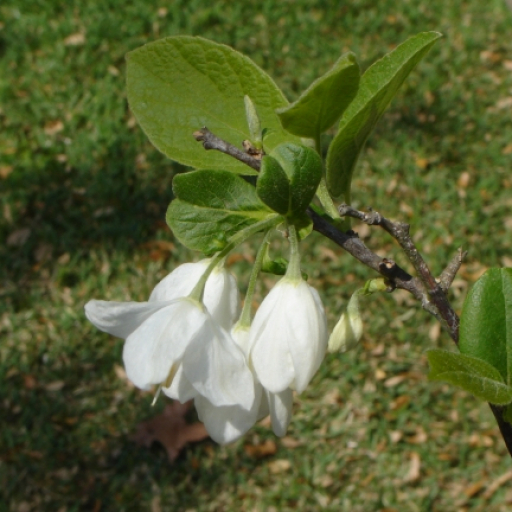
Plant Overview
Known as the Two-wing Silverbell, this Southern belle is a showstopper in early spring when its branches drip with delicate, snowy white blossoms. Native to the moist woodlands and swampy edges of the Southeastern United States, it brings a fairytale-like aesthetic to any landscape. While it looks fragile, it is a hardy woody plant that serves as a vital bridge between the tall canopy trees and the garden floor.
🔍 How to Identify
- 🔔 The Flowers: Hanging clusters of 2 to 6 white, bell-shaped blossoms. Unlike some other silverbells, these petals are deeply lobed, giving them a more "open" look.
- 🕊️ The Fruit: The most distinctive feature is the woody, nut-like fruit which possesses exactly two prominent wings (hence the name diptera).
- 🪵 The Bark: On younger trees, the bark is reddish-brown with white vertical stripes, eventually maturing into gray-brown ridges and furrows.
🏡 In Your Garden
- 💧 Hydration and Soil: This tree is an "acid-lover." It thrives in moist, well-drained, acidic soil rich in organic matter. If your soil is too alkaline (high pH), the leaves may turn yellow and sickly.
- 🌤️ The "Edge" Effect: In the wild, it grows as an understory tree. In your garden, it prefers a spot with dappled sunlight or morning sun with afternoon shade to protect its delicate leaves from scorching.
- 🌱 Root Sensitivity: Like many silverbells, it has a sensitive root system. It is best to choose a permanent "forever home" for it, as it reacts poorly to being transplanted once established.
⚠️ Safety & Toxicity
- ✅ Status: Non-toxic.
- 🐾 Details: The Two-wing Silverbell is generally considered safe for humans, dogs, and cats. It does not possess any known irritants or poisonous compounds, making it a "worry-free" addition to family gardens.
✨ Fun Fact
The scientific name diptera comes from the Greek words dis (two) and pteron (wing). It shares this name with the entire biological order of "true flies" (like houseflies and mosquitoes), which also only have two wings!

Detailed Care Instructions
To grow Halesia diptera, also known as the two-winged silverbell tree, you can follow these steps:
- Climate and location: Ensure that you live in a suitable climate for Halesia diptera. This tree typically grows best in USDA hardiness zones 6 to 9. Choose a location that receives partial shade or filtered sunlight throughout the day.
- Soil: Halesia diptera prefers well-draining soil that is rich in organic matter. Prepare the planting area by loosening the soil and incorporating compost or aged manure.
- Planting: Dig a hole that is slightly larger than the root ball of the Halesia diptera sapling. Place the sapling in the hole, ensuring that the top of the root ball is level with or slightly above the soil surface. Backfill the hole with soil, gently firming it around the sapling's roots.
- Watering: Provide enough water to keep the soil moist but not waterlogged. During the first few months after planting, regularly water the tree to help establish its root system. Afterward, water during periods of drought to ensure healthy growth.
- Mulching: Apply a layer of organic mulch around the base of the tree, leaving a gap around the trunk. Mulch helps retain moisture, control weeds, and insulate the roots.
- Fertilizing: Generally, Halesia diptera does not require frequent fertilization. However, if you notice poor growth or yellowing leaves, you can apply a balanced slow-release fertilizer during the spring.
- Pruning: Minimal pruning is typically required for Halesia diptera. However, if needed, prune dead or damaged branches in late winter or early spring before new growth appears.
- Pests and diseases: Common pests such as aphids and Japanese beetles may occasionally bother Halesia diptera. Monitor the tree regularly and take appropriate measures if pests are present. Additionally, ensure good air circulation around the tree to prevent the occurrence of fungal diseases.
- Patience: Halesia diptera is a slow-growing tree, so be patient as it establishes itself and matures over time. It may take several years for the tree to reach its full size and bloom profusely.
By following these steps and providing proper care, you can successfully grow Halesia diptera in your garden or landscape.

Place in a bright room that is sun drenched almost all day. Or directly in a south-facing window.

Halesia diptera is a flowering plant that requires regular watering to thrive. When watering this plant, it is important to ensure that the soil is evenly moist, but not waterlogged, as this can lead to root rot.
To water Halesia diptera, fill a watering can or bucket with room-temperature water and gently pour it onto the soil around the base of the plant. Be sure to water deeply enough to penetrate the root zone, but avoid getting water on the leaves or flowers.
In general, it is best to water Halesia diptera in the morning or early afternoon, as this allows the foliage to dry out completely before nighttime, which can help prevent the development of fungal diseases.
During hot, dry weather, Halesia diptera may require more frequent watering to keep the soil evenly moist. However, be sure to avoid overwatering, as this can lead to waterlogged soil and damage the plant.
Overall, providing regular, consistent watering is key to keeping Halesia diptera healthy and thriving.
To fertilize this plant, use a slow-release fertilizer high in nitrogen and phosphorus during the growing season. Apply the fertilizer around the base of the plant and work it into the soil. Be sure to water thoroughly after fertilizing to ensure proper absorption. Avoid overfertilizing as it can lead to excessive growth and weakened roots.
Halesia Diptera prefers soil that is well-draining, loose, fertile, and moist. The pH of the soil should be slightly acidic, preferably around 5.5 to 6.5. It is recommended to mix in compost or peat moss with the soil to increase its organic content. The soil should also have good aeration for the roots to breathe properly. Avoid compacted or heavy soils, as they can hinder the plant's growth. Additionally, adding a layer of mulch to the top of the soil can help retain moisture and regulate the temperature of the roots.
The propagation of this plant can be achieved through several methods. The most common method is through seed propagation. Seeds should be collected in the fall when the plant's seed pods have dried out. The seeds should be sown in well-draining soil mix and kept moist until germination occurs.
Another method of propagation is through softwood cuttings taken in the early summer. The cuttings should be taken from new, healthy growth and dipped in rooting hormone before being planted in a well-draining potting mix.
The plant can also be propagated through layering. In this method, a low-growing stem is bent down and buried in soil, leaving the tip exposed. Over time, the buried stem will develop roots and can be cut from the parent plant to create a new individual.
It should be noted that Halesia Diptera is a slow-growing plant and may take several years to reach a mature size, regardless of the propagation method used.








