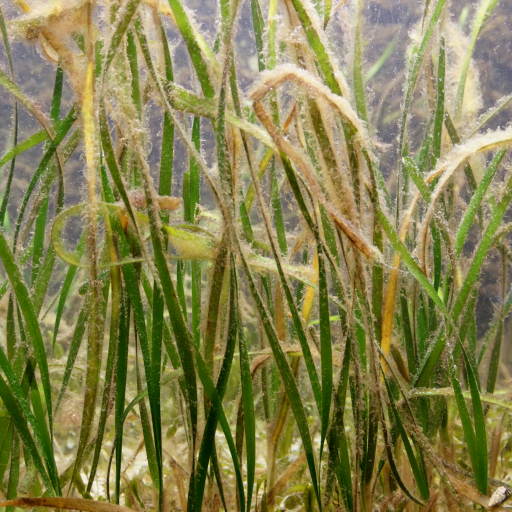
Plant Overview
Often called "Shoal Grass," Halodule wrightii is the unsung hero of the coastline, acting as the "pioneer" of the seafloor. It is usually the first species to colonize bare, sandy patches in shallow tropical waters, transforming barren underwater deserts into lush, emerald meadows. These underwater lawns serve as a critical nursery for baby sea creatures and a favorite grazing spot for gentle manatees.
🔍 How to Identify
- 🌿 Leaf Shape: The leaves are incredibly thin and flat, resembling blades of land grass, usually reaching about 4 to 10 inches in length.
- 🔱 The Tip Test: If you look at a leaf tip under a magnifying glass, you’ll see two or three tiny, pointed teeth—this is the primary way to tell it apart from other seagrasses.
- ⚓ Root System: It anchors itself with a slender, creeping horizontal stem called a rhizome, which sends down small roots to grip the shifting sand.
🌊 Habitat & Ecology
- 🏖️ Shallow Dweller: As its name suggests, it thrives in "shoals"—very shallow waters where it can soak up the maximum amount of sunlight for photosynthesis.
- 🛡️ Coastal Protector: By weaving its roots into the seabed, Shoal Grass prevents coastal erosion by "locking" the sand in place, even during heavy storm surges.
- 🦀 The Underwater Nursery: These meadows are bustling neighborhoods, providing essential hiding spots for juvenile shrimp, blue crabs, and snapper from larger predators.
⚠️ Safety & Toxicity
- ✅ Status: Completely non-toxic.
- 🐢 Ecological Impact: It is a vital food source for Green Sea Turtles and Manatees. For humans, the only "danger" is the delicate nature of the plant; walking through seagrass beds can easily crush the runners and destroy years of growth, so it's best viewed from a snorkel mask!
✨ Fun Fact
Unlike seaweed, which is an alga, Shoal Grass is a true "angiosperm" or flowering plant. This means it has roots, veins, and even produces tiny flowers underwater, proving that even the ocean has its own secret garden.

Detailed Care Instructions
To grow Halodule Wrightii plants, also known as shoalgrass, you can follow these steps:
- Find a suitable location: Shoalgrass thrives in sandy and brackish water environments. It is commonly found along shorelines, estuaries, and other coastal areas. Ensure the area you select receives plenty of sunlight.
- Prepare the soil: Shoalgrass prefers sandy or silty substrate. If your soil is too compact, mix in some sand to improve drainage and oxygenation.
- Acquire seeds or plant cuttings: You can obtain Halodule Wrightii seeds or plant cuttings from specialized nurseries or online suppliers. Planting in the spring or early summer tends to yield the best results.
- Planting seeds: Spread the seeds evenly over the prepared soil. Lightly press them into the substrate, ensuring they are in good contact with the soil. Use a net or mesh to protect the seeds from being washed away by tidal action.
- Planting cuttings: The preferred method for Halodule Wrightii is through plant cuttings. Collect healthy and mature shoots from existing plants, ensuring they have several nodes. Plant the cuttings directly into the soil, leaving one node exposed above the surface.
- Watering and maintenance: Keep the area consistently moist but avoid overwatering. Regularly check the water salinity, aiming for a level similar to the natural habitat of the shoalgrass. Monitor the plants for any signs of pests or diseases and take appropriate action if needed.
- Monitor and protect: Regularly check on the progress of your plants. Protect them from heavy wave action, trampling, and other disturbances. If necessary, use sandbags or other barriers to shield the plants from excessive movement.
- Allow for natural growth: As shoalgrass grows, it will spread and form a dense mat. Avoid excessive grooming or pruning, as the plants will naturally control their density.
- Provide proper lighting: Ensure the plants receive ample sunlight. If necessary, trim back overhanging vegetation that may shade the shoalgrass.
- Maintain water quality: Monitor the water quality, including salinity, temperature, and pH. Limit the use of chemicals or pollutants in the area to support the growth of Halodule Wrightii.
Remember that successfully growing Halodule Wrightii requires replicating its natural habitat as closely as possible. Regular monitoring, protection, and careful maintenance will help ensure the growth and success of the plant.

To properly water this plant, it is important to ensure that it receives enough moisture without being overwatered. This can be achieved by watering it regularly, but not too frequently. It is important to monitor the soil moisture level and water only when the top few inches are dry. When watering, it is best to do so thoroughly and deeply, allowing the water to reach all parts of the plant's roots. It is also important to use a well-draining soil that does not retain too much water. Avoid waterlogging the plant as this can cause root rot and other issues. Additionally, it is recommended to use a watering can or hose with a gentle spray to avoid damaging the plant's delicate leaves.
To fertilize this variety of submerged aquatic vegetation, apply a slow-release fertilizer with a balanced ratio of nitrogen, phosphorus, and potassium. The fertilizer should be added to the soil around the plant roots, avoiding direct contact with the leaves or stems. Follow the manufacturer's instructions for application rates based on the size of the planting area, and avoid over-fertilization which can harm the plant and cause excessive growth of unwanted algae. It is also recommended to perform regular water testing to monitor nutrient levels and adjust fertilization accordingly.
The ideal soil for this plant consists of a mix of sand and organic matter. The sand should be of a medium to coarse texture, with good drainage capacity. The organic matter should be well decomposed and should not contain any excessive amounts of nitrogen or other nutrients. The pH level of the soil should be between 6.5 and 7.5. The plant requires soil that is not too acidic or too alkaline, as extreme pH levels can negatively impact its growth. It is also important to ensure that the soil is not waterlogged, as the plant does not tolerate standing water. Regularly checking the moisture levels of the soil and adjusting irrigation accordingly is critical for successful growth of this plant.
To propagate this plant, first, carefully dig up a healthy mature specimen from its natural habitat or purchase a plant from a nursery. Remove any dead or damaged leaves and gently rinse the roots to remove excess soil.
Next, cut the plant into several sections, ensuring that each section has at least one healthy-looking leaf and some roots.
Plant each section in a container filled with a sandy substrate and place it in an area with ample sunlight and warm temperatures.
Provide regular water and nutrients to help the plant establish itself, and within a few weeks, new roots and shoots should begin to appear.
Continue to care for the growing plant until it reaches a mature size, and then it can be transplanted into its permanent location.








