Plant Overview
Known in its native Brazil as the Mangabeira, this hardy tree produces the "Mangaba," a fruit so delicious its name literally translates to "good fruit for eating" in Tupi-Guarani. Often found in the sun-drenched Cerrado and coastal regions, it is beloved for its fragrant blossoms and sweet, slightly acidic fruit used in everything from gourmet ice cream to traditional juices. Its weeping, elegant branches give it a graceful silhouette that belies its incredible resilience to harsh environments.
🔍 How to Identify
- 🌿 The Foliage: Look for elliptic, glossy green leaves that grow in opposite pairs along drooping, "weeping" branches that give the tree a relaxed appearance.
- 🌸 The Blooms: It produces fragrant, star-shaped white flowers that closely resemble jasmine and release a heavy, sweet scent to attract nocturnal pollinators.
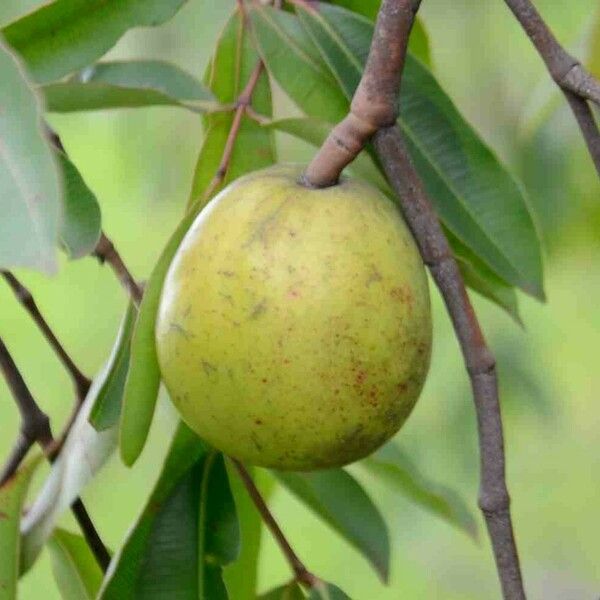
- 🟡 The Fruit: The Mangaba fruit is a round or oval berry that turns yellow with reddish spots or streaks when ripe, feeling soft and slightly yielding to the touch.
🏡 In Your Garden
- ☀️ Sun & Soil: This tree is a specialist of poor, sandy, and acidic soils. It thrives in intense full sun and is remarkably drought-tolerant once established, making it a rugged choice for tropical or subtropical landscapes.
- 🌱 Root Sensitivity: The Mangabeira develops a deep, aggressive taproot very early in its life. Because of this, it hates being moved; it is best to plant it in its "forever home" as a sapling, as transplanting an older tree often leads to failure.
⚠️ Safety & Toxicity
- 🥛 Latex Caution: The tree is part of the Apocynaceae family and contains a thick, white milky latex in its bark and unripe fruit. While not "poisonous" in a traditional sense, this sap can cause skin irritation or sticky messes for those with sensitive skin.
- 🐾 Pet & Child Safety: The ripe fruit is safe and highly nutritious. However, the seeds and the sticky, unripe pulp should not be consumed in large quantities as they can cause mild stomach upset in curious pets or small children.
✨ Fun Fact
During World War II, when traditional rubber supplies from Asia were cut off, the Hancornia speciosa became a vital strategic resource. Its latex was harvested across Brazil to produce "northeastern rubber" for the Allied war effort.

Detailed Care Instructions
To grow Hancornia Speciosa, also known as the Mangabeira or Brazilian Cherry Tree, you can follow these steps:
- Climate: Hancornia Speciosa plants are native to tropical regions, so they require a warm and humid climate. They thrive in USDA hardiness zones 9 to 11.
- Soil: The plant prefers well-draining soil with a pH level between 5.5 and 7.5. It is adaptable to various soil types, but a rich and loamy soil is ideal.
- Sunlight: Hancornia Speciosa requires full sun exposure for at least six hours a day. Ensure that the plant receives ample direct sunlight.
- Planting: Start by obtaining a healthy Hancornia Speciosa sapling from a reputable nursery or propagate it from seeds. Dig a hole large enough to accommodate the root ball and plant the sapling, making sure that the top of the root ball is level with the soil surface.
- Watering: Initially, provide regular, deep watering to help establish the plant's root system. Once established, reduce the frequency but ensure the soil remains moist. However, avoid overwatering, as it can lead to root rot.
- Fertilizing: Apply a balanced slow-release fertilizer during the growing season to provide essential nutrients to the plant. Follow the instructions on the fertilizer package for appropriate dosage.
- Pruning: Prune the plant to remove dead or damaged branches and to maintain its shape. Regular pruning also encourages healthy growth and enhances the tree's appearance.
- Pest and disease control: Monitor the plant regularly for pests like aphids, scales, or mealybugs. If necessary, use an appropriate insecticide or employ organic pest control methods. Generally, the Hancornia Speciosa tree is relatively resistant to diseases.
- Mulching: Apply organic mulch around the base of the plant to help retain moisture, regulate soil temperature, and suppress weed growth.
- Patience: Hancornia Speciosa trees are slow-growing, so it requires patience to see significant growth. Provide the necessary care, and over time, the tree will grow and flourish.
Remember to check for any local regulations or restrictions before planting Hancornia Speciosa, especially if you live in a non-native region.

To water this plant, it is important to assess the moisture level of the soil first. Stick your finger about an inch deep into the soil and see if it feels dry. If it does, it is time to water the plant. Use a watering can or hose to water the soil around the base of the plant, making sure to avoid getting water on the leaves. Water deeply and thoroughly, until water starts to come out of the drainage holes of the pot. Allow any excess water to drain away, and do not let the plant sit in standing water. It is important not to overwater this plant, as it prefers well-draining soil and can be prone to root rot if the soil is too wet. During the growing season, water the plant once a week, and reduce watering frequency during the winter months.
To fertilize the Hancornia Speciosa plant, apply a balanced fertilizer with equal amounts of nitrogen, phosphorus, and potassium, along with micronutrients. Feed the plant every two weeks during the growing season and reduce frequency during the dormant period. Avoid over-fertilizing as it can damage roots and foliage. Always follow the instructions on the fertilizer label and water the plant after applying the fertilizer.
It is recommended to use a well-draining soil mixture that is rich in organic matter such as compost or leaf mold. The soil should have a pH between 6.0-7.5 and be moist but not waterlogged. It is also advisable to add perlite or sand to the soil mixture for improved drainage. Avoid using heavy clay soils or soils with high salinity levels as they can be detrimental to the plant's growth and health.
To propagate this plant, you will need to take stem cuttings. Choose a healthy stem that is at least 6 inches long and has at least 2-3 nodes. Cut the stem below a node with a sterilized pruning shear.
Remove the leaves from the bottom two-thirds of the stem, leaving at least two leaves at the top. Dip the bottom end of the stem in rooting hormone powder to promote root growth.
Prepare a well-draining potting mix with equal parts of peat moss, perlite, and sand. Take a small pot with drainage holes and fill it with the potting mix. Make a hole in the center of the potting mix with a pencil.
Insert the bottom end of the stem cutting into the hole and firm the soil around it. Water the soil thoroughly and place the pot in a warm and bright location. Keep the soil moist, but don't overwater.
The cutting should root in about 4-6 weeks. You can transplant it to a larger pot or in the garden after it has developed a good root system and starts growing new leaves at the top.








