Plant Overview
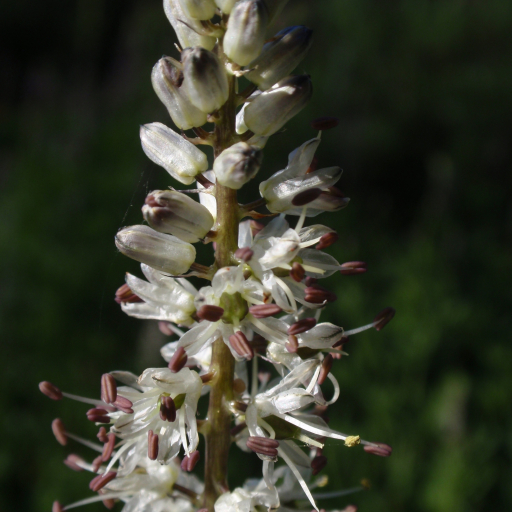
Commonly known as the White Rush Lily, Hastingsia alba is a slender, elegant perennial that haunts the wet mountain meadows and bogs of the Pacific Northwest. While it looks like a delicate wildflower, it is surprisingly hardy, often found growing in harsh, mineral-rich "serpentine" soils where other plants struggle to survive. Its tall, creamy-white flower spikes act as glowing beacons for pollinators in damp, sunny landscapes.
🔍 How to Identify
- 📏 The Stalk: It features a tall, leafless flowering stem (scape) that can reach up to 3 feet in height, rising far above the foliage.
- 🌸 The Blooms: Densely packed clusters of tiny, star-shaped white flowers. Each flower has six "tepals" (petals) with a faint green or yellowish stripe down the center.
- 🍃 The Foliage: Long, narrow, grass-like leaves that grow in a basal clump at the bottom of the plant, often appearing folded or channeled.
🏡 In Your Garden
- 💧 Wet Feet Enthusiast: Unlike many lilies that rot in soggy soil, the White Rush Lily thrives in "wet feet" conditions. It is an ideal choice for rain gardens, boggy edges of ponds, or low-lying areas of the yard that stay damp.
- ⛰️ Soil Specialist: This plant is a "serpentine endemic," meaning it has evolved to tolerate soils high in heavy metals like magnesium and iron. If you have difficult, rocky soil that kills other plants, this lily might just call it home.
- 🦋 Pollinator Magnet: Because it blooms in mid-to-late summer when other marsh plants might be fading, it provides a vital nectar source for native bees and small butterflies.
⚠️ Safety & Toxicity
- ✅ Status: Generally non-toxic and safe for residential landscapes.
- 🐾 Details: There are no recorded reports of Hastingsia alba being poisonous to cats, dogs, or horses. However, since it is part of a broad group of "lilies" (many of which are toxic), it is best to discourage pets from grazing on the bulbs to avoid minor stomach upset.
✨ Fun Fact
The genus Hastingsia was named after Serranus Clinton Hastings, the first Chief Justice of California. Despite its "lily" name, modern DNA testing has moved it into the Asparagaceae family—making it a very distant cousin to garden asparagus!

Detailed Care Instructions
To grow Hastingsia Alba, also known as white rushlily, follow these steps:
- Climate: Hastingsia Alba prefers a Mediterranean climate, with hot, dry summers and cool, wet winters. It can tolerate temperatures down to about 15°F (-10°C). It grows best in USDA hardiness zones 7-9.
- Soil: Plant the white rushlily in well-draining soil that is moderately fertile. It prefers slightly acidic to neutral soil pH (around 6.0-7.0).
- Sunlight: This plant thrives in full sun to partial shade. Ensure it receives at least 6-8 hours of direct sunlight daily for optimal growth.
- Planting: Plant the white rushlily bulbs in the fall, about 2-4 inches (5-10 cm) deep and approximately 4-6 inches (10-15 cm) apart. Space them evenly to encourage healthy growth and prevent competition for nutrients.
- Watering: During the growing season, provide regular watering to keep the soil slightly moist. However, avoid over-watering or keeping the soil excessively wet, as it can cause root rot. In winter, reduce watering to allow for a dormant period.
- Fertilizer: Hastingsia Alba doesn't require much fertilization. In early spring, you can add a slow-release, low-nitrogen fertilizer to provide some nutrients for the growing season.
- Mulching: Apply a layer of organic mulch around the plant to help retain moisture, regulate soil temperature, and suppress weed growth. Avoid placing mulch directly on the plant's base to prevent rotting.
- Maintenance: Remove any dead or faded flowers to promote new blooms. After the flowering season, allow the foliage to die back naturally. You can cut back the stems to the ground in late fall or early winter.
- Propagation: Hastingsia Alba can be propagated through division. Dig up the bulbs during their dormant period, separate them, and replant them in the desired locations.
- Pests and diseases: The white rushlily typically has few issues with pests or diseases. However, keeping the plant free from any dead or decaying matter can help prevent fungal diseases.
Remember to check local regulations or consult with a gardening expert to ensure that growing Hastingsia Alba is suitable for your specific region.

Place in a bright room that is sun drenched almost all day. Or directly in a south-facing window.

To adequately water the Hastingsia Alba plant, you must be mindful of its specific water requirements. Here are some guidelines to help you provide appropriate hydration:
1. Soil moisture: Before watering, check the moisture level of the soil. Stick your finger about an inch into the soil. If it feels dry at this depth, it's time to water the plant.
2. Watering frequency: The Hastingsia Alba plant prefers consistent, moderate watering. Aim to water it every 7 to 10 days during the active growing season.
3. Watering method: Use a watering can or a hose with a gentle spray nozzle to water the plant. Avoid using a strong jet of water, as it can damage the delicate foliage.
4. Water amount: When watering, provide enough water to moisten the soil evenly. Ensure that excess water drains out of the pot or soil to prevent waterlogging, as this can lead to root rot.
5. Avoid overwatering: It's essential not to overwater the Hastingsia Alba plant, as it is susceptible to root rot. Always allow the top inch of soil to dry out before watering again.
6. Water quality: Hastingsia Alba prefers slightly acidic to neutral water. Avoid using water with high mineral content or containing chlorine, as it can harm the plant. If you have hard water, consider using filtered or distilled water.
7. Adjusting watering frequency: During colder months or dormant periods, reduce the frequency of watering to prevent excess moisture in the soil. Monitor the soil moisture regularly using the finger test.
Remember, these watering guidelines serve as a general starting point, and each individual plant's watering needs may vary slightly depending on factors like climate, pot size, and environmental conditions. Regularly observe the plant's response to watering to fine-tune your watering routine.
- Start fertilizing Hastingsia Alba plant once it is established and actively growing.
- Choose a balanced, water-soluble fertilizer with a ratio of 10-10-10 or similar.
- Dilute the fertilizer according to the package instructions.
- Apply the diluted fertilizer around the base of the plant, taking care not to pour it directly onto the leaves.
- Water the plant immediately after fertilizing to help the nutrients soak into the soil.
- Follow a regular fertilization schedule, typically every 4-6 weeks during the growing season.
- Adjust the frequency and dosage of fertilizer based on the plant's response and the soil conditions.
- Avoid over-fertilization as it can lead to nutrient burn or damage the plant.
- Monitor the plant closely for any signs of nutrient deficiencies or excessive fertilization, such as yellowing leaves or stunted growth.
- Always read and follow the instructions provided by the fertilizer manufacturer for best results.
Hastingsia alba is a plant species that belongs to the family Liliaceae. When considering the ideal soil for this plant, it is important to note its natural habitat and environmental preferences.
Hastingsia alba is typically found growing in regions characterized by dry, rocky conditions such as coastal cliffs, sandy dunes, or rocky outcrops. It prefers well-draining soils with good aeration, as excessive moisture retention can lead to root rot and other problems.
The soil for Hastingsia alba should ideally be sandy or loamy, allowing water to percolate through easily and preventing waterlogging. This type of soil ensures that the plant's roots receive adequate oxygen while also retaining sufficient moisture.
Furthermore, it is recommended to incorporate organic matter into the soil to improve its fertility and water-holding capacity. This can be achieved by adding compost or well-rotted manure to the planting area. Organic matter helps retain moisture and provides essential nutrients for the plant's growth and development.
To summarize, an ideal soil mix for Hastingsia alba would consist of well-draining sandy or loamy soil enriched with organic matter. This combination ensures proper moisture balance and nutrient availability while mimicking the plant's natural habitat conditions.
To propagate the Hastingsia Alba plant, you can follow these steps:
- Selecting a healthy parent plant: Choose a mature and healthy Hastingsia Alba plant as the parent plant for propagation. Look for a plant that has well-developed roots and an abundance of vibrant, green foliage.
- Preparing the soil: The Hastingsia Alba plant prefers well-draining soil with a mix of organic matter. Prepare a pot or a suitable planting area with this type of soil to ensure optimal conditions for successful propagation.
- Harvesting the seeds: To propagate the Hastingsia Alba plant, you can collect its seeds. Once the plant has produced seed pods or capsules, wait until they turn brown or begin to split open. This indicates that the seeds are mature and ready for harvesting. Carefully remove the seeds from the pods without damaging them.
- Pretreating the seeds: Some plant species, including the Hastingsia Alba plant, require certain conditions to encourage germination. Scarification, a process of nicking or scratching the seed coat, can aid in the absorption of water and facilitate germination. Soak the seeds in warm water for a few hours or use a small nail file to gently scratch the seed coat.
- Sowing the seeds: Fill a seed tray or small pots with the prepared soil mix. Place one or two seeds in each pot and cover them lightly with a thin layer of soil. Keep the soil slightly moist but avoid overwatering, as excessive moisture can cause the seeds to rot.
- Providing suitable growing conditions: Place the seed tray or pots in a warm and well-lit area, but not in direct sunlight. Maintain a consistent temperature between 68-77°F (20-25°C) to encourage germination. Regularly check the soil moisture level and mist the seeds or pots if the top layer of soil feels dry.
- Transplanting the seedlings: Once the seedlings have grown a few sets of true leaves and are sturdy enough, they can be transplanted into larger pots or directly into the garden. Carefully loosen the roots and gently transfer each seedling into its new container or hole in the ground. Ensure that the soil is still well-draining and maintain adequate moisture during the establishment phase.
- Caring for the propagated plants: Provide proper care for the propagated Hastingsia Alba plants by watering them regularly, but avoid overwatering. Ensure they receive sufficient sunlight or partial shade, depending on the plant's preferences. Regularly monitor for pests or diseases and take appropriate measures to control them.
By following these steps, you can successfully propagate the Hastingsia Alba plant and enjoy the beauty of this species in your garden.








