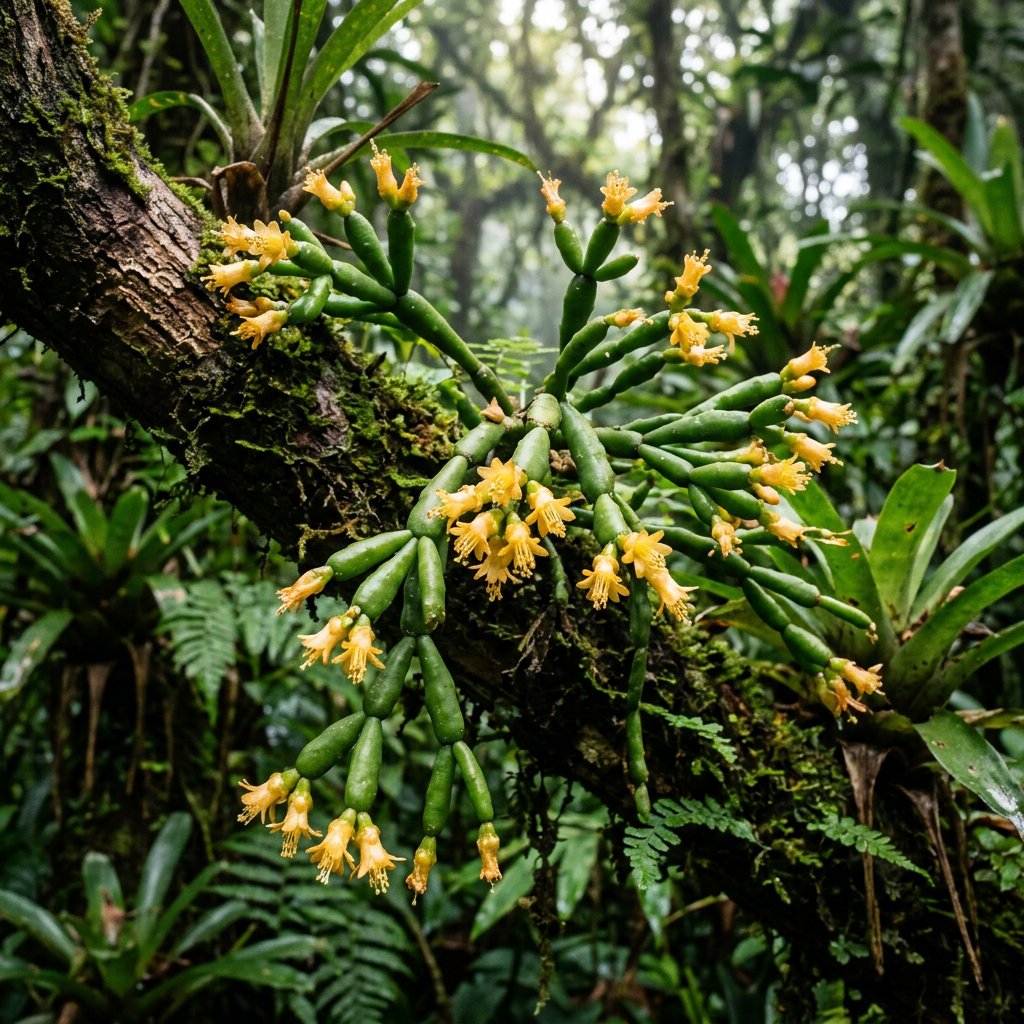
Plant Overview
Commonly known as the Dancing Bones Cactus or Drunkard’s Dream, this quirky Brazilian native is a far cry from your typical prickly desert inhabitant. Instead of spines and flat pads, it features a tangled, whimsical explosion of succulent segments that look like tiny green bottles or skeletal fingers. In the wild, it lives as an epiphyte, clutching onto tree branches in the humid rainforests rather than sitting in the sand.
🔍 How to Identify
- 🦴 Segmented Stems: The plant is made of many small, club-shaped segments (1–3 cm long) that are narrower at the base and wider at the top, resembling a miniature "bone" or an old-fashioned glass bottle.
- 🌼 Terminal Blooms: During late winter or spring, the tips of the "bones" sprout dainty, bell-shaped flowers in shades of bright yellow or deep gold.
- 🌵 Smooth Texture: Unlike many cacti, this species is mostly spineless, though it may have very fine, hair-like bristles at the joints that are soft to the touch.
🏡 In Your Garden
- ☁️ Rainforest Roots: Because it originates from the jungle, this plant dislikes the harsh, direct sun that desert cacti love. It prefers bright, filtered light—think of the dappled sun hitting a forest floor.
- 💧 Thirsty Cactus: Don't let the "cactus" name fool you; it hates drying out completely. Because it naturally grows on trees, it craves high humidity and a well-draining, airy potting mix (like an orchid or succulent blend) to prevent its delicate roots from suffocating.
- 🪴 Graceful Droop: As the plant grows, its weight causes the stems to arch and cascade, making it a perfect candidate for hanging baskets where its "dancing" limbs can sway.
⚠️ Safety & Toxicity
- ✅ Safe Status: Hatiora salicornioides is generally considered non-toxic to humans and common household pets like cats and dogs.
- 👄 Mild Irritation: While not poisonous, the stems are fibrous. If a curious pet decides to have a snack, it might cause some minor stomach upset or mouth irritation simply from the plant's texture. It is always best to keep decorative plants out of reach of nibbling animals.
✨ Fun Fact
The nickname "Drunkard's Dream" comes from the unique shape of the stem segments; they are said to resemble the shape of tiny, overflowing wine bottles stacked one on top of the other!

Detailed Care Instructions
| Humidity | Dry |
| Lighting | Part Sun |
| Difficulty | Easy |
| Temperature | 15°C - 30°C |
| Hardiness Zones | 10A - 12B |
To grow Hatiora salicornioides (commonly known as Drunkard's dream or dancing bones cactus), follow these steps:
- Choose a suitable location: This plant prefers bright, indirect sunlight. It can tolerate some morning or evening sun, but direct afternoon sun can cause sunburn.
- Select a pot with good drainage: Use a pot with drainage holes to prevent waterlogging. The preferred pot size should be slightly larger than the root system.
- Soil preparation: Use a well-draining cactus/succulent potting mix. You can also prepare your own mix by combining regular potting soil with perlite, coarse sand, or other ingredients that promote drainage.
- Planting: Gently place the Hatiora salicornioides in the pot, ensuring the roots are spread out evenly. Fill in the gaps with the prepared potting mix, but avoid burying the stem too deep.
- Watering: Allow the soil to dry out partially between waterings. Hatiora salicornioides appreciates moderate moisture, but overwatering can lead to root rot. Water thoroughly, allowing excess water to drain away.
- Humidity and misting: This plant enjoys higher humidity levels. You can provide this by misting the leaves regularly or placing a tray of water nearby to increase humidity through evaporation.
- Fertilization: Feed the plant with a balanced, water-soluble cactus fertilizer diluted according to the instructions on the package. Apply the fertilizer during the growing season (spring and summer) every few weeks.
- Pruning: Regularly pinch or prune back any leggy or overly long growth to encourage bushiness and maintain the desired shape. You can propagate the pruned stems by allowing them to dry for a few days and then planting them in well-draining soil.
- Temperature: Hatiora salicornioides prefers temperatures between 60-80°F (15-26°C) but can tolerate slightly higher or lower temperatures. Protect it from extreme cold or heat.
- Light exposure: Rotate the plant occasionally to ensure even growth and prevent leaning towards the light source.
- Avoid overhandling: Hatiora salicornioides can be quite delicate, so avoid excessive handling or moving the plant frequently.
Remember to observe your plant closely and adjust care according to its specific needs. With proper attention, your Hatiora salicornioides should thrive and grow into a beautiful, unique succulent.

Place in a window with dappled sun or a spot in the middle of a room. Or directly in a window facing west or east.

To water this plant, you should first look at the soil to determine if it is dry or moist. If the soil is dry, you can water it thoroughly until the water runs through the drainage holes. If the soil is moist, you can wait a few more days before watering again. It is important not to overwater this plant as it prefers slightly dry conditions. You can also mist the plant occasionally to increase humidity around it, which helps the plant thrive. Be sure to use room temperature water when watering this plant, as cold water can shock the roots and cause damage.
To fertilize this plant, use a balanced liquid or granular fertilizer with equal parts nitrogen, phosphorus, and potassium. Mix the fertilizer according to package instructions and apply it to the soil every two to four weeks from spring until fall. Make sure to water the plant well before and after fertilization to prevent stress. Avoid fertilizing during the winter months when the plant is dormant.
The soil recommended for growing the Hatiora Salicornioides plant should be well-draining and rich in organic matter. It should have a pH level between 5.5 and 7.5 and should not be too compacted to allow for proper air circulation. It is also important to avoid soils that are too heavy or contain too much clay. A suitable mixture could consist of peat moss, perlite, and sand in equal parts. This will provide the plant with the necessary nutrients and moisture retention, while also promoting good drainage. When transplanting, it is also recommended to add a slow-release fertilizer to the soil mixture.
To propagate this plant, you will need to take cuttings from a healthy and mature plant. Use a sharp, sterile knife or scissors to cut off a section of stem that is several inches long and has a few healthy leaves attached. Remove any leaves from the bottom third of the stem.
Next, dip the cut end of the stem in rooting hormone powder to encourage root growth. Place the stem cutting in a small pot filled with moist potting soil and cover it with a plastic bag to create a mini greenhouse. Keep the soil moist but not soggy and place the pot in a bright and warm location out of direct sunlight.
After a few weeks, check for roots by gently tugging on the stem. If it resists, roots have formed and the plant is ready to be transplanted into a larger pot. Water regularly and give it plenty of bright but indirect sunlight to promote healthy growth.
Common pests of the bottle cactus include Scale insect, mealybugs, spider mites. Make a habit of checking your bottle cactus frequently for pests so that any infestations can be caught and managed early.








