Plant Overview
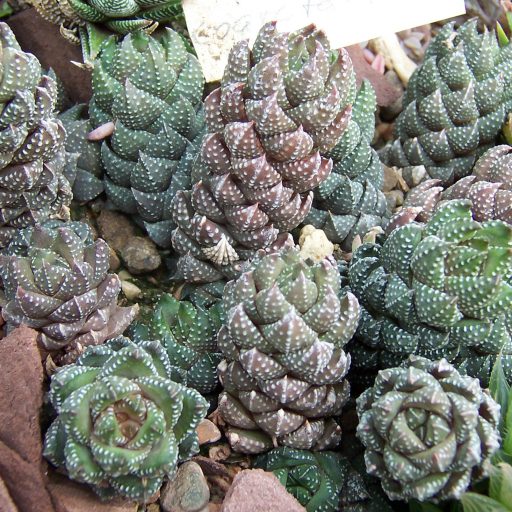
Known as the "Crowded Haworthia," this striking succulent looks like a miniature, dark green fortress rising from the soil. Native to the Eastern Cape of South Africa, it is a master of adaptation, often found huddling in the shade of larger bushes to escape the blistering sun. While many Haworthias grow in flat rosettes, Haworthia coarctata reaches upward in elegant, leafy columns that add a wonderful architectural verticality to any indoor succulent collection.
🔍 How to Identify
- 🗼 Growth Habit: Unlike its flat-growing cousins, this species grows in tall, upright columns that can reach up to 8 inches, often curving slightly as they lengthen.
- ⚪ The "Pearls": The dark green, fleshy leaves are adorned with small, white raised bumps called tubercles. These look like tiny pearls sewn into the leaf surface in attractive horizontal bands.
- 🎨 Stress Colors: When exposed to bright sunlight or cool temperatures, the deep green leaves undergo a stunning transformation, turning a rich coppery-red or deep purple.
🏡 In Your Garden
- 🧱 The Slow Clumper: This plant is a "social" grower; over time, it will produce numerous "pups" or offsets at the base, eventually filling a pot with a dense forest of miniature towers.
- 💧 Thirsty Roots Warning: It possesses thick, fleshy roots that store water, making it very drought-tolerant but extremely sensitive to "wet feet." It prefers a gritty, sandy mix that allows water to pass through instantly.
- ☀️ Light Nuance: While it loves bright light, it is a "shade-dweller" in the wild. In a home setting, it thrives on a windowsill with bright, indirect light rather than the harsh, direct midday sun which can sometimes scorch its tips.
⚠️ Safety & Toxicity
- 🛡️ Pet Friendly: Haworthia coarctata is generally considered non-toxic to both cats and dogs, making it an excellent choice for pet owners who want to green up their space without the worry.
- 👐 Human Safety: The leaves are firm but not sharp or spiny, so it is perfectly safe to handle during repotting or grooming.
✨ Fun Fact
In its natural South African habitat, Haworthia coarctata often grows half-buried in the soil or tucked under "nurse plants." This helps it survive extreme heat, with only the very tips of its leaves exposed to the air to gather just enough light for photosynthesis.

Detailed Care Instructions
To grow Haworthia coarctata successfully, follow these steps:
- Select a suitable pot: Choose a pot with drainage holes to prevent waterlogging. The size of the pot should be proportional to the size of the plant.
- Soil: Use a well-draining soil mix specifically formulated for succulents or cacti. You can also create your own mix by combining equal parts of regular potting soil, perlite, and coarse sand.
- Planting: Carefully remove the Haworthia coarctata plant from its nursery pot and gently loosen the root ball. Place the plant in the new pot, making sure it sits at the same depth as it was before. Fill in the gaps with the prepared soil mix, leaving a small space between the soil level and the rim of the pot.
- Light: Haworthia coarctata prefers bright but indirect sunlight. Place the plant near a south or west-facing window where it can receive about 4-6 hours of filtered sunlight each day. Avoid exposing it to direct sun, especially during the hottest hours of the day, as it may scorch the leaves.
- Temperature: These plants thrive in average room temperatures between 65-80°F (18-27°C) during the day. They can tolerate lower temperatures as long as it doesn't drop below 50°F (10°C).
- Watering: Allow the soil to dry out completely between waterings. Haworthia coarctata is drought-tolerant and can suffer from overwatering. Watering once every 7-10 days during the growing season should be sufficient. Reduce watering in winter when the plant goes dormant.
- Humidity: Haworthia coarctata doesn't require high humidity levels and can adapt to average household humidity. However, avoid placing it near drafts or heaters that can cause the air to become excessively dry.
- Fertilizer: During the growing season (spring and summer), you can use a balanced fertilizer diluted to half the recommended strength. Apply it once a month or as directed on the package. Avoid fertilizing during the winter months.
- Propagation: Haworthia coarctata can be propagated through offsets or leaf cuttings. Allow the offsets to dry for a day or two before planting them in a separate pot with well-draining soil. For leaf cuttings, remove a healthy leaf, let it callous for a few days, and then place it on top of damp soil until roots and new plants develop.
- Repotting: Repot your Haworthia coarctata every 1-2 years as the plant grows and fills its current pot. Choose a slightly larger pot and fresh soil mix when repotting.
Remember to observe your plant closely for any signs of pests or disease. If necessary, take appropriate measures to address the issue promptly.

Place in a window with dappled sun or a spot in the middle of a room. Or directly in a window facing west or east.

To water this succulent plant, you should allow the soil to completely dry out between waterings. When watering, pour water directly onto the soil and avoid getting water on the plant's leaves as this can cause rot. Water sparingly, as Haworthia Coarctata is sensitive to overwatering and can easily develop root rot. It is best to use a well-draining soil mix specifically designed for succulents. During the winter months, it is advisable to reduce watering to once a month or less since the plant goes into a dormant phase during this time. It is also important to provide proper drainage for the plant to prevent water from accumulating in the pot, which can lead to root rot.
To fertilize this plant, you should use a balanced fertilizer that is diluted to half strength. You can apply the fertilizer once a month during the growing season, which is usually from spring to fall. Be sure to water the plant well before applying the fertilizer. Avoid over-fertilizing, as this can damage the roots and leaves of the plant. Instead, follow the instructions on the fertilizer package carefully and adjust the dosage as needed depending on the specific needs of your plant. Also, be sure to keep the plant in a well-draining potting mix and provide it with ample sunlight, but not direct sunlight.
When selecting soil for the plant, it is important to choose a well-draining mix with a pH between 6.0 and 7.0. The soil should contain a mixture of organic and inorganic components such as sand, perlite, and peat moss to provide adequate drainage and prevent waterlogged roots. It is also important to avoid using soil with high levels of nutrients as this can harm the plant. The soil should be loose and friable to allow proper air circulation and prevent compaction. Finally, it is recommended to use a pot with drainage holes to allow excess water to drain away from the roots.
To propagate this succulent plant, begin by sterilizing your cutting tools with rubbing alcohol. Using a sharp knife or pruning shears, cut off a healthy leaf from the parent plant. Make sure the cut is clean and even. Allow the wound to dry for a day or two until a callus forms over the cut.
Fill a small pot with well-draining soil, such as a cactus or succulent mix. Insert the leaf cutting into the soil, burying the cut end about 1/3 of the way down. Water the soil lightly to moisten it, but do not let it become soggy.
Place the pot in a bright, indirect light location, such as a windowsill or under grow lights. Keep the soil moist but not wet, and avoid getting water on the leaves.
Within a few weeks, small roots should begin to grow from the buried end of the leaf cutting. After a few months, the cutting should develop small rosettes of leaves at the base. At this point, the newly propagated plant can be transplanted into its own pot.
Continue to care for the new plant as you would any other Haworthia Coarctata, providing bright, indirect light and watering it sparingly. Over time, it will grow into a beautiful and unique succulent plant.
Common pests of the crowded haworthia include Mealybugs, thrips. Make a habit of checking your crowded haworthia frequently for pests so that any infestations can be caught and managed early.








