Plant Overview
Often called the "Magnificent Haworthia," this South African native is a master of camouflage. In the wild, it frequently tucks itself deep into the rocky crevices of the Western Cape, showing only its "windowed" leaf tips to the sun to avoid being eaten by thirsty animals. It is a slow-growing gem that rewards patient collectors with intricate patterns and a sturdy, sculptural form.
🔍 How to Identify
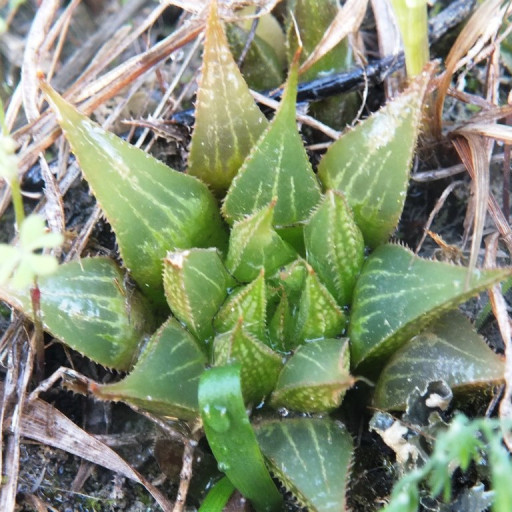
- 🌿 The Rosette: Grows in a compact, star-shaped rosette that stays low to the ground, rarely exceeding four inches in diameter.
- 🪟 Leaf Windows: The flat, triangular tops of the leaves are translucent (fenestrate), appearing like tiny frosted glass panes that allow light to reach the interior of the leaf.
- 📐 Leaf Texture: The leaves are thick, fleshy, and typically dark green or brownish, often featuring delicate longitudinal lines or tiny "teeth" along the margins.
🏡 In Your Garden
- ☀️ Light Nuance: While many succulents crave harsh direct sun, Haworthia mirabilis prefers bright, filtered light. If the plant receives too much sun, it will "blush" deep red or purple—a sign of stress—while too little light causes the tight rosette to stretch out and lose its shape.
- 💧 Drainage is Vital: This plant has a very sensitive root system. It prefers gritty, porous soil and hates "wet feet." It is best to use a terracotta pot which allows the soil to breathe and dry out completely between waterings.
⚠️ Safety & Toxicity
- 🐾 Safe Status: This plant is generally considered non-toxic to cats, dogs, and humans. It is a fantastic choice for "pet parents" who want to green up their space without worry.
- 🩹 Physical Fragility: While not poisonous, the leaves are quite turgid and brittle. They can snap off easily if bumped by curious pets or toddlers, and because the plant grows so slowly, it can take a year or more to replace a single lost leaf.
✨ Fun Fact
The translucent windows on the leaf tips act like biological fiber optics. They filter out harsh UV rays while channeling softened sunlight deep into the plant's body, allowing it to perform photosynthesis even when it is almost entirely buried under sand or grit.

Detailed Care Instructions
Growing Haworthia mirabilis plants can be done by following these steps:
- Choose a suitable container: Select a small pot or container with drainage holes. Haworthia mirabilis does well in small pots as it prefers crowded conditions.
- Soil mixture: Prepare a well-draining soil mixture by combining equal parts of regular potting soil, pumice, and perlite. This ensures that excess water drains well and prevents the plant's roots from sitting in standing water.
- Planting: Gently remove the plant from its nursery pot, being careful not to damage the roots. Place the plant in the new pot, ensuring that the base of the Haworthia mirabilis is slightly above the soil level. Fill the remaining space with the prepared soil mixture, pressing it lightly to secure the plant.
- Watering: Haworthia mirabilis requires infrequent watering. Allow the soil to dry out completely between waterings to prevent overwatering. Typically, watering once every two to three weeks is sufficient. When watering, pour water directly onto the soil, avoiding wetting the plant's leaves.
- Light requirements: Place your Haworthia mirabilis in a location where it can receive bright, indirect sunlight. Avoid placing it in direct sunlight as this can cause sunburn and damage the plant. A window sill or a spot on a bright shelf is usually ideal.
- Temperature and humidity: Haworthia mirabilis prefers average room temperatures between 65°F to 75°F (18°C to 24°C). It can tolerate slightly lower temperatures but should be brought indoors if the temperature drops below 50°F (10°C). This plant thrives in average household humidity levels and does not require high humidity.
- Fertilization: Haworthia mirabilis generally doesn't require frequent fertilization. However, a diluted balanced houseplant fertilizer can be applied once every three to four months during the growing season (spring and summer). Follow the instructions on the fertilizer packaging for specific dosage instructions.
- Propagation: Propagate Haworthia mirabilis by separating offsets, known as pups, from the main plant. Wait until the offsets are about one-third the size of the parent plant and have developed their own root system. Gently separate the offsets from the main plant and replant them in their own individual pots using the same potting mixture.
By following these steps, you can successfully grow and care for a Haworthia mirabilis plant. Remember to regularly monitor the plant's watering needs and adjust care accordingly to provide the optimum growing conditions.

Place in a window with dappled sun or a spot in the middle of a room. Or directly in a window facing west or east.

To water this plant, it is important to utilize a well-draining soil mixture and a pot with drainage holes. When watering, allow the soil to dry out completely before watering again. This plant prefers infrequent watering rather than being consistently wet. When watering, pour water directly into the soil and avoid getting water on the foliage. It is also recommended to water in the morning to avoid excess moisture sitting on the plant overnight.
To fertilize this succulent plant, prepare a well-draining soil mix and dilute a balanced, water-soluble fertilizer. Apply the fertilizer sparingly during the plant's active growth period in spring to summer. Avoid fertilizing during the winter dormancy period. Always water the plant thoroughly before and after fertilizing to prevent fertilizer burn on the roots.
Haworthia Mirabilis plants can thrive in a variety of well-draining soils. It is important to avoid using heavy soils that retain water, as it can lead to root rot and other issues. A good soil mix for this plant would include a combination of sand, perlite, and a well-draining potting mix. This will allow for proper drainage while also providing necessary nutrients. Additionally, it is recommended to place a layer of small rocks or pebbles at the bottom of the pot to further improve drainage. It is important to avoid overwatering, as this can also lead to root rot. Instead, allow the soil to dry out between waterings, and pay attention to any signs of wilting or yellowing leaves. Overall, providing a well-draining soil mix and proper watering habits will help ensure the health and longevity of your Haworthia Mirabilis plant.
Haworthia Mirabilis is a succulent plant that originates from South Africa. It is a popular choice for garden enthusiasts and houseplant lovers due to its unique, rosette-shaped appearance and low maintenance requirements.
Propagation of Haworthia Mirabilis can be achieved through several methods, such as leaf cuttings, offsets, and seeds. However, the easiest and most common method is through offsets.
To propagate Haworthia Mirabilis using offsets, you will need to follow these steps:
- Identify a mature plant with several well-developed rosettes.
- Gently remove the offsets by pulling them away from the main plant. You can also use a sharp knife or scissors to cut them away from the base.
- Allow the offsets to dry for a few days in a shaded area to promote callus formation.
- Once the callus has formed, prepare a well-draining potting mix with a mixture of sand, perlite, and peat moss.
- Plant the offsets at a depth of about 1 inch in the prepared potting mix.
- Water the newly planted offsets lightly and place them in a bright location with indirect sunlight.
- Keep the soil moist but not waterlogged, and avoid overwatering as it can cause rotting of the cuttings.
- After a few weeks, the cuttings should develop roots and new growth. At this point, you can reduce the frequency of watering and treat the new plants as mature Haworthia Mirabilis plants.
By following these steps, you can successfully propagate Haworthia Mirabilis and enjoy its unique beauty in your home or garden.
Common pests of the window haworthia include Mealybugs, thrips. Make a habit of checking your window haworthia frequently for pests so that any infestations can be caught and managed early.








