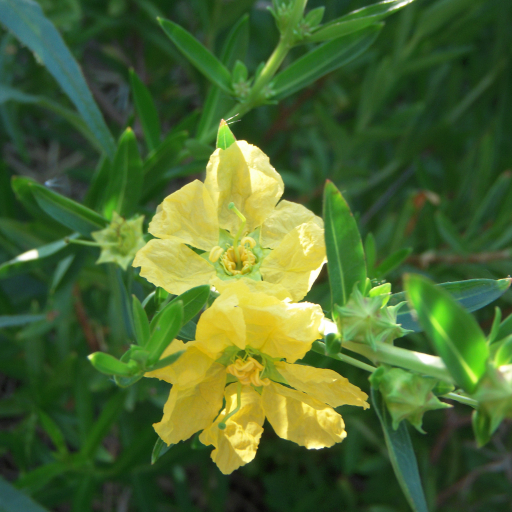
Plant Overview
Known as the "Sun Opener" or Sinicuichi, this enchanting shrub hails from the sun-drenched regions of Mexico and Central America. Its ancient reputation as a "memory opener" among the Aztecs gives it an air of mystery, as it was historically believed to allow people to recall events from the distant past. While it looks like a modest, willow-like bush, it holds a storied place in botanical folklore and spiritual history.
🔍 How to Identify
- 🌿 Slender Foliage: The leaves are narrow, long, and pointed, closely resembling those of a willow tree (hence the name salicifolia), usually arranged oppositely along the stems.
- ☀️ Golden Blooms: It produces striking, six-petaled yellow flowers that emerge directly from the leaf axils, creating a bright contrast against the green stalks.
- 🪵 Shrubby Habit: It grows as a multi-stemmed, woody shrub that can reach up to 10 feet in the wild, though it usually stays a manageable 2–4 feet when kept in garden containers.
🏡 In Your Garden
- 💧 Thirsty Roots: In its natural habitat, Sinicuichi thrives near streams and marshes. In your garden, it prefers "wet feet"—it is much more forgiving of overwatering than it is of a drought.
- 🌞 Light Requirements: To encourage a heavy flush of yellow flowers, place it in the brightest spot possible. While it can survive in partial shade, it will become "leggy" and thin as it stretches toward the light.
- 🪴 Potting Nuance: It has a vigorous root system but dislikes being frequently moved. If you are growing it in a container, choose a large pot from the start to avoid disturbing the sensitive roots later.
⚠️ Safety & Toxicity
- 🚫 Psychoactive Warning: This plant is not edible. It contains unique alkaloids that are known to have mild psychoactive properties when prepared in traditional ways.
- 🐾 Pets & Children: It is considered toxic to cats, dogs, and children. Ingestion can lead to muscle aches, dizziness, and blurred vision. It is best treated as a purely ornamental or historical specimen.
✨ Fun Fact
The nickname "Sun Opener" refers to a specific sensory effect: traditional accounts claim that after consuming a fermented tea of the leaves, a person’s vision appears tinged with yellow, and distant sounds are heard with strange, amplified clarity.

Detailed Care Instructions
To grow Heimia Salicifolia, also known as sun opener or sinicuichi, follow these steps:
- Obtain seeds or young plants: Purchase Heimia Salicifolia seeds from a reputable online plant nursery or specialty store. Alternatively, you can attempt to germinate them from dried seed pods. If you have access to a mature plant, you can also propagate it from cuttings or divisions.
- Choose a suitable location: Heimia Salicifolia prefers full sun but can tolerate partial shade. Select a well-draining soil location or use a pot with a well-draining potting mix if growing it indoors.
- Prepare the soil: If planting in the ground, make sure to loosen the soil and remove any weeds or rocks. If growing it in a pot, fill the pot with a good-quality potting mix.
- Sow the seeds or plant the young plant: If using seeds, sow them on the soil surface and lightly cover them with a thin layer of soil. If planting a young plant, dig a hole slightly larger than the root ball and gently place the plant in the hole, back-filling with soil and firming it gently around the roots.
- Watering and maintenance: Heimia Salicifolia prefers moderate watering, allowing the top inch of soil to dry out between waterings. Avoid overwatering, as it can lead to root rot. The plant does not require much maintenance besides regular watering and occasional removal of dead or yellowing leaves.
- Fertilization: Fertilize the plant with a balanced, slow-release fertilizer during the growing season (spring and summer) to promote healthy growth. Follow the package instructions for application rates.
- Pruning: Heimia Salicifolia can be pruned to maintain shape or limit its size. Prune in early spring before new growth begins to encourage bushier growth.
- Harvesting: Harvesting the leaves and flowers can be done when the plant is 6-8 months old. Dry the harvested parts in a cool, dark place and store in an airtight container.
Remember to check the specific growing requirements for Heimia Salicifolia as they can slightly vary depending on your climate and growing conditions.

Place in a bright room that is sun drenched almost all day. Or directly in a south-facing window.

To properly water this plant, first ensure that the soil is completely dry to the touch before watering. When watering, use room temperature water and pour it gently onto the soil around the base of the plant, being sure not to get water on the leaves or stem. Allow the water to fully soak into the soil and drain out the bottom of the pot. Avoid overwatering, as this can lead to root rot. Water less frequently during the plant's dormant period, typically in the winter months.
To fertilize this plant, use a well-balanced fertilizer with equal amounts of nitrogen, phosphorus, and potassium. Apply the fertilizer every 2-3 weeks during the growing season, starting in the early spring and continuing through the summer. Be careful not to over fertilize, as this can damage the plant. Use a water-soluble fertilizer and mix it to half-strength before applying it to the soil. Apply the fertilizer to the soil around the base of the plant, taking care not to get any on the leaves or stems. Water the plant thoroughly after fertilizing.
For optimal growth and health of this plant, it is recommended to use a well-draining soil mix that is rich in organic matter. The ideal pH range of the soil should be between 6 and 7.5. It is important to avoid using soil that is too compact or has poor drainage, as this can lead to root rot and growth problems. Additionally, it is recommended to fertilize the plant every few weeks during the growing season with a balanced fertilizer that is high in nitrogen.
To propagate this plant, take softwood cuttings from the tips of healthy branches in the early summer. Cuttings should be about 4-6 inches long with a few sets of leaves at the top. Remove the lower leaves and dip the cut end in rooting hormone powder. Place the cutting in a small container filled with well-draining soil, and water it thoroughly. Cover the container with a plastic bag to create a mini greenhouse and keep the cutting in a warm, bright location. Check the soil moisture level frequently and mist the cutting occasionally to keep it hydrated. After a few weeks, the cutting should form roots, and new growth will appear. Wait until the plant outgrows its container before transferring it to a larger pot or planting it outdoors.








