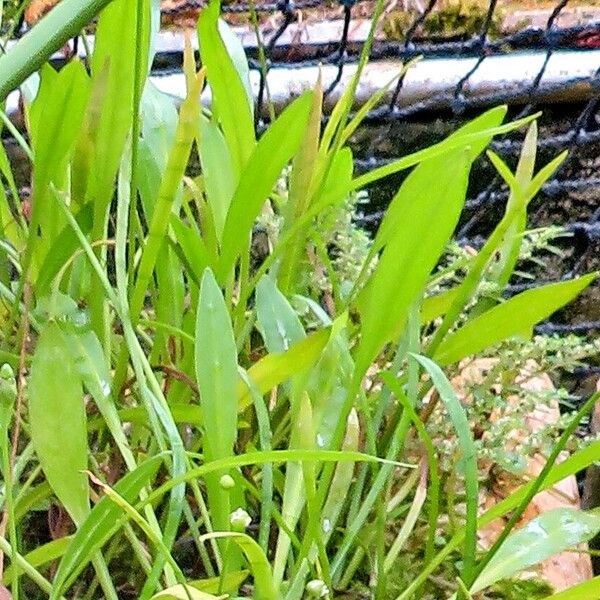
Plant Overview
Often called the "Bolivian Chain Sword," this resilient aquatic plant is a favorite for hobbyists looking to create a lush, underwater meadow. Hailing from the riverbanks and marshes of South America, it is famous for its "marching" growth habit. Whether you are a beginner or a seasoned aquascaper, this plant is the perfect choice for adding a sense of wild, grassy movement to your tank.
🔍 How to Identify
- 🌿 Leaf Structure: Features narrow, lance-shaped leaves that grow in a tight rosette pattern, typically reaching 3 to 5 inches in height.
- 🌱 The "Chain" Runner: Its most distinctive feature is the horizontal runner (stolon) it sends across the substrate, which sprouts new baby plants at regular intervals.
- 🎨 Color Variations: While usually a vibrant lime green, the leaves can take on a bronze or slightly reddish tint when exposed to very high-intensity light.
🏡 In Your Garden (Aquarium)
- 🥘 Root Feeding Needs: Unlike many aquatic plants that drink from the water column, the Bolivian Chain Sword is a "heavy feeder" at the roots. It requires a nutrient-rich substrate or regular root tabs to prevent the leaves from turning yellow.
- ✂️ Managing the Spread: Because it spreads via a "chain," it can quickly become an invasive carpet. To control its path, simply snip the runner with sharp scissors and relocate or discard the new plantlets.
- 💧 Transitioning States: This plant is "amphibious," meaning it can grow both fully underwater and partially above water. If you buy it from a shop where it was grown in air, don't panic if the old leaves die off—it is simply shedding its "land" leaves to grow new "water" leaves.
⚠️ Safety & Toxicity
- 🐾 Pet Safe: This plant is completely non-toxic to fish, snails, and shrimp. It actually serves as an excellent "nursery" for baby fish (fry) to hide from predators.
- 👶 General Safety: It is safe for humans and household pets (cats/dogs) if they happen to encounter it during a water change, though it is not meant for consumption.
✨ Fun Fact
🧬 The Great Renaming: For many years, this plant was categorized in the genus Echinodorus. Botanists eventually moved it to the genus Helanthium because it lacks "pellucid spots"—tiny translucent dots found in the leaves of true Sword plants that are only visible when held up to a light source.

Detailed Care Instructions







