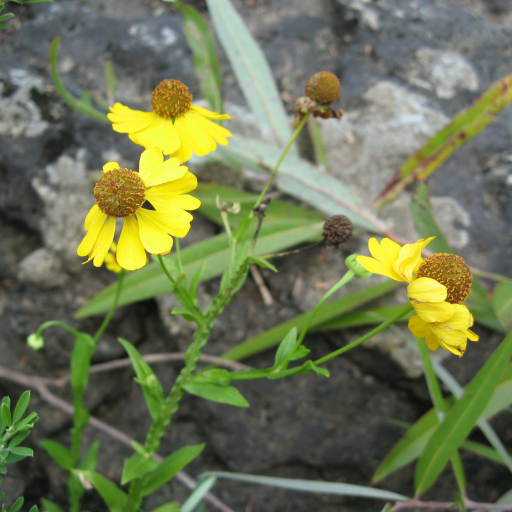
Plant Overview
Known commonly as the Purple-headed Sneezeweed, this North American wildflower is a striking late-summer beauty that looks like a tiny, sun-drenched badminton birdie. While its name might make you reach for a tissue, it actually doesn't cause hay fever; rather, it earned its moniker because its dried leaves were historically used to make snuff that induced sneezing.
🔍 How to Identify
- 🌻 The "Shuttlecock" Flower: The bright yellow ray petals are distinctively "reflexed," meaning they point downward and away from the center, giving the flower a drooping, skirt-like appearance.
- 🟣 Chocolate Centers: Unlike other Sneezeweeds with yellow centers, this species is crowned with a prominent, globe-shaped disk that ranges from deep purple to a rich chocolate brown.
- 🌿 Winged Stems: If you run your fingers down the stalk, you’ll feel "wings"—thin ridges of leaf tissue that extend down the length of the stem, a key identifying feature of the Helenium genus.
🏡 In Your Garden
- 💧 Wet Feet Welcome: This plant is a specialist for soggy spots. It thrives in heavy clay and moist meadows where other perennials might rot, making it a perfect candidate for rain gardens or the edges of ponds.
- ✂️ The Chelsea Chop: To prevent the stems from becoming too "leggy" or flopping over under the weight of the blooms, pinch back the stems by half in early June. This encourages a bushier habit and more flowers.
⚠️ Safety & Toxicity
- 🚫 Toxic if Ingested: All parts of the plant contain sesquiterpene lactones, which are toxic to humans and animals if eaten in significant quantities.
- 🐾 Pet & Livestock Warning: It is particularly bitter, which usually stops pets from munching, but it can be dangerous to horses and cattle if it finds its way into dried hay. Some gardeners also report mild skin irritation after handling the foliage, so gloves are a smart choice.
✨ Fun Fact
According to legend, the genus name Helenium is derived from Helen of Troy. It was said that these flowers first sprang from the ground where her tears fell. Despite its "sneezeweed" name, the plant is actually pollinated by butterflies and bees, not by the wind, so it isn't the culprit behind your autumn sniffles!

Detailed Care Instructions
To grow Helenium flexuosum, also known as Sneezeweed or Purplehead, follow these steps:
- Choose the right location: Select an area in your garden that receives full sun or partial shade. Helenium flexuosum prefers moist, well-draining soil.
- Prepare the soil: Before planting, improve the soil fertility and drainage by incorporating organic matter, such as compost, into the planting area. This will help the plant grow better.
- Planting: Helenium flexuosum can be started from seeds or by planting nursery-bought plants. If starting from seeds, sow them directly into the soil in spring or fall, following the specific seed packet instructions. If using nursery-bought plants, dig a hole large enough to accommodate the plant's root ball and place it in the hole. Backfill with soil, gently firming it around the plant.
- Watering: During the establishment period, water the plant regularly to keep the soil consistently moist. Once established, Helenium flexuosum is quite tolerant of drought but still thrives with regular watering during dry spells.
- Mulching: Apply a layer of organic mulch around the base of the plant to help retain moisture, suppress weed growth, and keep the soil temperature consistent.
- Pruning: Deadhead spent flowers by removing them to encourage prolonged blooming. This will also prevent self-seeding if you do not want more plants to grow.
- Fertilization: Although Helenium flexuosum does not require excessive fertilization, you can apply a balanced organic fertilizer in early spring to provide nutrients for healthy growth.
- Winter care: In colder regions, apply a layer of winter mulch (such as straw or wood chips) around the base of the plant to protect it from harsh winter conditions.
By following these steps, you should be able to successfully grow Helenium flexuosum in your garden.

Place in a bright room that is sun drenched almost all day. Or directly in a south-facing window.

Helenium flexuosum is a perennial flowering plant that is commonly grown in garden landscapes. When it comes to watering this plant, it is important to keep a few things in mind to ensure optimal growth and health. Here are some tips on how to water Helenium flexuosum plants:
1. Water deeply: Helenium flexuosum has a deep root system, so it is important to water deeply so that the water can penetrate the soil and reach the roots.
2. Avoid overwatering: While this plant requires regular watering, it is important not to overwater it as this can lead to root rot and other issues.
3. Check the soil moisture: Before watering, check the soil moisture by sticking your finger into the soil to see if it feels dry. If the soil feels moist, wait a day or two before watering.
4. Water early in the day: It is best to water early in the day so that the plant has time to absorb the water before the sun evaporates it.
5. Use a watering can or hose: When watering Helenium flexuosum, it is best to use a watering can or hose rather than a sprinkler system to avoid getting the foliage wet.
By following these tips, you can ensure that your Helenium flexuosum plant receives the proper amount of water to grow and thrive.
To fertilize this plant, apply a balanced fertilizer in early spring before new growth emerges. Use a slow-release granular fertilizer or a liquid fertilizer diluted according to package instructions. Apply the fertilizer evenly around the root zone, being careful not to apply too close to the stem. Water thoroughly after fertilizing. Repeat every four to six weeks during the growing season. Reduce fertilization in late summer to avoid stimulating new growth that won't have time to harden off before winter.
Helenium Flexuosum plant prefers a well-draining soil with a pH level ranging from slightly acidic to neutral. It does well in soil that is rich in organic matter, but not overly fertile. Sandy loam soil is ideal for this plant. It is important to avoid heavy or compacted soil types, as they can hinder root development and lead to overall poor growth. Mulching around the plant can help maintain soil moisture, reduce weed competition, and improve soil health. It is recommended to regularly test the soil to ensure it contains the necessary nutrients and adjust as needed.
There are several ways to propagate this plant. One way is to collect its seeds when they are fully ripe and sow them in a well-draining potting soil. Cover the seeds with a thin layer of soil and keep them evenly moist until they germinate.
Another method is to take softwood stem cuttings in early summer. Use a sharp, clean pair of pruning shears to take cuttings from the top third of the plant, making sure to cut just below a node. Remove the lower leaves from the stem and dip the cut end into rooting hormone powder. Then, plant the cutting in a small pot filled with a well-draining potting mix and keep it in a warm, bright location with high humidity. Keep the soil evenly moist until roots form and the plant has established before transplanting it into a larger container or outside in the garden.
It is also possible to propagate this plant by dividing its root system. Dig up the plant in early spring or late fall and gently separate the roots into several clumps. Plant each clump in a prepared planting hole or in a container filled with fresh soil, making sure to water thoroughly and keep the soil evenly moist during the establishment phase.








