Plant Overview
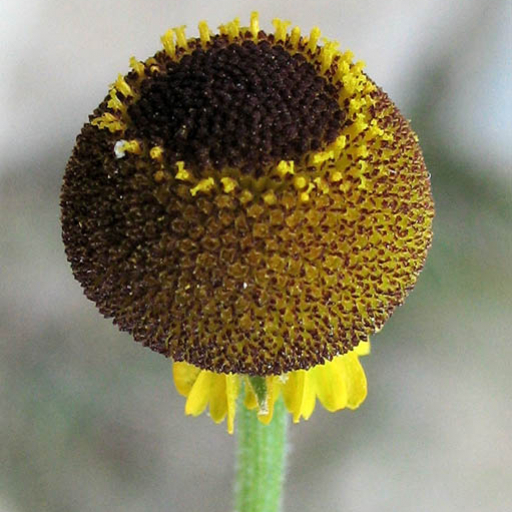
Known as "Rosilla" or the "California Sneezeweed," this golden-hearted native of the West Coast is a true architectural wonder. Unlike traditional daisies that flaunt long, showy petals, Helenium puberulum features unique, spherical flower heads that look like tiny, velvety disco balls. It has been a staple in indigenous botanical traditions for centuries and is a favorite for gardeners looking to add a touch of "wild" structure to moist landscapes.
🔍 How to Identify
- 🌼 The "Button" Bloom: The most striking feature is the flower head—a perfectly round, brownish-yellow disc that dominates the bloom, while the yellow ray petals are tiny and reflexed (pointed downward).
- 🌿 Winged Stems: If you look closely at the tall, sturdy stalks, you’ll notice the leaf bases actually extend down the stem, creating a "winged" or ribbed appearance.
- 🍃 Hairy Foliage: As the name puberulum suggests, the lance-shaped leaves are covered in very fine, soft hairs that give the plant a slightly dusty, matte green look.
🏡 In Your Garden
- 💧 The Water Lover: Unlike many drought-tolerant California natives, Rosilla thrives in "wet feet" conditions. It is perfect for rain gardens, pond edges, or that one low spot in your yard that stays damp.
- 🦋 Pollinator Magnet: While it might look unusual to us, bees and butterflies find the spherical flower heads irresistible, as they offer a stable landing pad and easy access to nectar.
- ✂️ Growth Habit: It can grow quite tall (up to 5 feet). If it gets too "leggy," pinching back the early growth in spring will encourage a bushier, more compact shape with more flower heads.
⚠️ Safety & Toxicity
- 🐾 Mildly Toxic: Like most members of the Helenium genus, this plant contains sesquiterpene lactones (specifically helenalin). It is toxic to horses, cattle, and sheep if consumed in large quantities.
- 👶 Human Sensitivity: While not deadly to touch, the leaves can cause skin irritation or "contact dermatitis" in sensitive individuals. It is best to wear gloves when pruning.
- 🤧 The "Sneeze" Factor: Its common name "Sneezeweed" doesn't come from causing hay fever, but from the historical practice of using dried leaves to make snuff, which induced sneezing to supposedly rid the body of "evil spirits" or congestion.
✨ Fun Fact
The genus name Helenium is inspired by none other than Helen of Troy. Legend has it that these flowers first sprang from the ground where her tears fell. In the case of Rosilla, those "tears" have turned into beautiful, resilient golden globes!

Detailed Care Instructions
To grow Helenium puberulum, also known as sneezeweed or Mexican hat, you can follow these steps:
- Choose a planting location: Helenium puberulum prefers full sun to partial shade, so select a spot that receives at least 6 hours of sunlight per day. Make sure the soil is well-draining, as heavy or clayey soils may cause root rot.
- Prepare the soil: Before planting, amend the soil with organic matter such as compost to improve drainage and fertility. Ensure the soil pH is between 6.0 and 7.5, which is suitable for Helenium puberulum.
- Planting: Dig a hole that is slightly larger than the plant's root ball and place the plant into the hole, making sure it is at the same depth as it was in the container or nursery. Space multiple plants around 12-18 inches apart.
- Watering: Initially, water the newly planted Helenium puberulum thoroughly to help establish its root system. Afterward, water deeply but infrequently, allowing the soil to dry between waterings. This will encourage the plant to develop deep roots.
- Mulching: Apply a layer of organic mulch, such as wood chips or straw, around the base of the plant to help retain moisture, suppress weed growth, and provide insulation during extreme temperatures.
- Fertilization: Helenium puberulum generally does not require heavy fertilization. However, you can apply a balanced, slow-release fertilizer in the spring to enhance growth and promote flowering. Follow the manufacturer's instructions for application rates.
- Maintenance: Deadhead faded or spent flowers regularly to encourage more blooms. Cut back the plant to the ground in late fall or early spring to promote new growth in the following season.
- Pests and diseases: Helenium puberulum is generally resistant to most pests and diseases. However, keep an eye out for aphids, slugs, and snails, and treat accordingly if necessary.
- Propagation: You can propagate Helenium puberulum through division in early spring or autumn. Dig up the plant, separate the clump into smaller sections, and replant them in suitable locations.
By following these steps, you can successfully grow Helenium puberulum and enjoy its attractive flowers in your garden.

Place in a bright room that is sun drenched almost all day. Or directly in a south-facing window.

There are a few key factors to consider when watering this particular plant. First, it is important to note that Helenium Puberulum prefers moist soil conditions, but does not tolerate waterlogged soil. Therefore, it is recommended to water regularly but make sure the soil has adequate drainage.
Another tip is to avoid getting water on the foliage when possible, as this can increase the risk of fungal diseases. Instead, aim to water directly at the base of the plant and avoid getting water on the leaves.
The amount of water needed will depend on several factors such as the climate, soil type, and planting location. As a general rule, Helenium Puberulum should be watered deeply once a week during periods of dry weather. However, if the plant is situated in a particularly sunny or windy area, more frequent watering may be needed.
Ultimately, it is important to monitor the soil moisture level and adjust the watering schedule accordingly. Over time, you will become more familiar with your plant's specific watering needs.
Apply a balanced fertilizer, such as 10-10-10, in the spring when new growth begins. Repeat every four to six weeks until late summer. Avoid over-fertilizing, as this can cause the plant to become leggy and flop over. Water the plant before and after fertilizing to prevent burning the roots.
The soil that is suitable for Helenium Puberulum Plant should have a slightly acidic to neutral pH level. It should be well-draining, yet able to retain some moisture to keep the roots hydrated. The soil should be rich in organic matter and nutrients, and should ideally be loamy or sandy in texture. Adding compost or other organic matter to the soil before planting can help improve soil quality and provide extra nutrients for your plants. However, it is important not to use soil that is too rich or heavy, as this can cause problems with drainage and root rot. Overall, the ideal soil for Helenium Puberulum should be light, loose, and nutrient-rich, with a slightly acidic to neutral pH level.
There are several ways to propagate Helenium Puberulum plants, but the most common method is through division.
Step 1: Wait for the plant to mature.
Step 2: Dig up the mature plant from its current location.
Step 3: Use a sharp garden knife to divide the plant's root ball into smaller sections.
Step 4: Plant each section in a pot or directly in the ground.
Step 5: Water the newly divided plants thoroughly.
Step 6: Fertilize the plants with a balanced fertilizer.
Step 7: Place the plants in a sunny location.
Step 8: Monitor the plants regularly to ensure that they are growing well.
Propagation can also be achieved through seed sowing, but this method is less reliable and takes longer to produce mature plants.








