Plant Overview
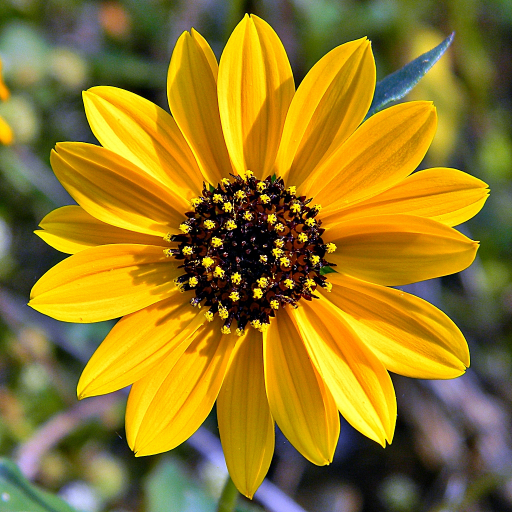
Often called the Beach Sunflower or Cucumberleaf Sunflower, Helianthus debilis is the laid-back, salt-loving cousin of the towering giants we usually see in cornfields. Native to the sandy shores of the southeastern United States, this plant doesn't aim for the clouds; instead, it spreads out like a golden carpet across dunes and coastal gardens, soaking up the sun and salt spray with ease.
🔍 How to Identify
- 🌻 The Blooms: Features classic sunflower-like heads, but smaller (about 2–3 inches across) with bright yellow rays surrounding a dark brownish-purple central disk.
- 🥒 The Foliage: Unlike the broad, heart-shaped leaves of common sunflowers, these leaves are smaller, triangular, and slightly lobed, bearing a striking resemblance to cucumber leaves.
- 🏃 Growth Habit: This is a sprawling, multi-branched perennial or annual that grows horizontally. It acts more like a groundcover than a vertical stalk, often reaching only 1–2 feet in height but spreading several feet wide.
🏡 In Your Garden
- 🏖️ Coastal Warrior: This plant is legendary for its salt tolerance. It thrives in sandy, nutrient-poor soil where other plants would wither, making it the "gold standard" for beach-front landscaping.
- 🦋 Pollinator Party: Because it produces a constant succession of flowers throughout the year in warmer climates, it serves as a reliable "fast food joint" for butterflies, bees, and songbirds who love the small seeds.
- ✂️ Low Maintenance: It hates "pampering." Over-fertilizing or over-watering will actually lead to fewer flowers and a shorter lifespan. It prefers to be left alone in the brightest, driest spot you have.
⚠️ Safety & Toxicity
- ✅ Safe for All: Helianthus debilis is considered non-toxic to humans, cats, dogs, and horses. It is a very "family-friendly" addition to the landscape.
- 🌵 Bristly Texture: While not poisonous, the stems and leaves are covered in fine, stiff hairs (trichomes). Some sensitive individuals might experience mild skin redness or itching after handling the plant extensively without gloves.
✨ Fun Fact
The Beach Sunflower is a vital "dune stabilizer." Its deep, spreading root system acts like a biological anchor, holding sand in place during coastal storms and helping to prevent beach erosion!

Detailed Care Instructions
To grow Helianthus debilis (Beach sunflower), follow these steps:
- Choose a location: Beach sunflowers thrive in full sun, so choose a spot in your garden or yard that receives at least 6-8 hours of direct sunlight every day. They are also salt-tolerant, making them an excellent choice for coastal gardens.
- Soil preparation: Beach sunflowers prefer well-drained soil. Prepare the soil by removing any weeds and loosening it with a garden fork or tiller. You can improve drainage by adding organic matter such as compost or peat moss to the soil.
- Planting: The best time to plant beach sunflowers is in early spring, after the last frost date in your area. Dig a hole that is twice the size of the root ball of the plant. Place the plant in the hole, ensuring that the top of the root ball is level with the soil surface. Backfill the hole with soil, gently patting it down to remove any air pockets.
- Watering: After planting, give the plant a thorough watering to help it establish roots. Keep the soil consistently moist but not overly saturated. Watering deeply once or twice a week should be sufficient, depending on the rainfall in your area.
- Mulching: Apply a layer of organic mulch around the base of the plant to help retain moisture and suppress weeds. Avoid piling mulch directly against the stems to prevent rotting.
- Maintenance: Beach sunflowers are relatively low-maintenance plants. Regularly check for pests and disease and take appropriate measures to control them if necessary. Deadhead the flowers as they fade to promote continuous blooming. If the plants become leggy or untidy, you can trim them back in late summer or early fall to encourage bushier growth.
- Propagation: Beach sunflowers can be propagated from seeds or stem cuttings. Seeds can be collected from mature plants after the flowers fade, or you can purchase them from a local nursery or online. Sow the seeds in well-drained soil in early spring or autumn. If propagating from stem cuttings, take 3-4 inch cuttings from healthy plants and dip the ends in rooting hormone before planting them in well-drained soil.
- Division: Over time, beach sunflowers can form large clumps. You can divide the clumps every 2-3 years in early spring or autumn to create new plants. Dig up the clump, gently separate it into smaller sections, ensuring each section has roots attached, and replant them.
With proper care and the right conditions, your beach sunflowers should grow and bloom beautifully. Enjoy their cheerful yellow blossoms!

Place in a bright room that is sun drenched almost all day. Or directly in a south-facing window.

To water this plant, you should wait until the top layer of soil is dry to the touch before watering. Be sure to water deeply, allowing the water to soak through the entire root system. It is important to avoid overwatering to prevent root rot. Watering once or twice a week in moderate amounts should be sufficient.
For optimal growth and flowering, fertilize this plant with a balanced 10-10-10 fertilizer once a month during the growing season. Apply the fertilizer around the base of the plant and water it in well. Avoid over-fertilizing, as this can lead to excessive foliage growth at the expense of flowering. Additionally, be sure to provide adequate water and sunlight for the plant to thrive.
Helianthus debilis is a type of plant that requires a specific type of soil to thrive. When planting Helianthus debilis, it is important to use a well-draining soil that is rich in nutrients. This type of soil should also be slightly acidic and have a pH level between 5.5 and 6.5.
In terms of texture, Helianthus debilis should be planted in soil that is loamy and somewhat sandy. Loamy soil provides a good balance of water, air, and nutrients for the plant, while sandy soil helps with drainage to prevent waterlogging.
It is important to note that Helianthus debilis does not do well in heavy clay soil or compacted soil. These soil types can restrict root growth and make it difficult for the plant to absorb nutrients and water.
To prepare the soil for planting Helianthus debilis, it is recommended to till the soil to a depth of 12 inches and mix in well-aged compost or organic matter. This will help to improve soil structure, water-holding capacity, and nutrient availability for the plant.
Overall, choosing the right soil for Helianthus debilis is crucial for the plant's health and growth. A well-draining, slightly acidic, loamy soil rich in nutrients is the ideal soil type for this plant to thrive.
To propagate this plant, begin by selecting a healthy stem or shoot that is several inches long. Cut the stem at a 45-degree angle, making sure to use sharp, sterile pruning shears. Next, remove the lower leaves from the stem, leaving only a few at the top.
Dip the cut end of the stem into rooting hormone, which will help stimulate root growth. Then, place the stem in a container filled with moistened potting soil. Cover the container with a clear plastic bag to create a greenhouse effect and keep the soil moist.
Place the container in a bright, warm location, but out of direct sunlight. In a few weeks, the stem should begin to produce roots. Once the roots have developed, move the plant to a larger container or transplant it outdoors into a sunny location in well-draining soil. Regularly water and fertilize the newly propagated plant to ensure healthy growth.
Common pests of the beach sunflower include Spider mites, thrips, whiteflies. Make a habit of checking your beach sunflower frequently for pests so that any infestations can be caught and managed early.








