Plant Overview
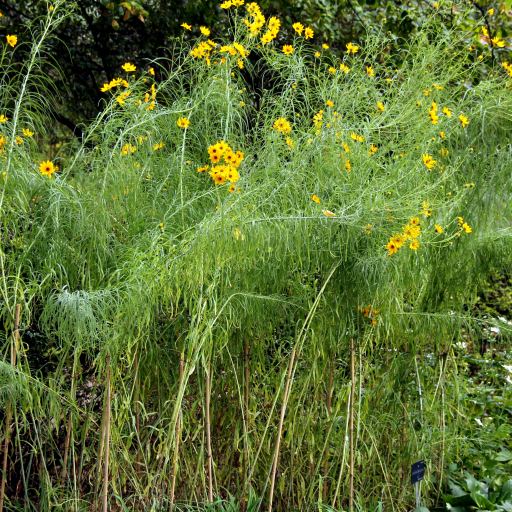
Often called the "Willow-leaved Sunflower," this architectural giant is a showstopper in any late-season garden. Unlike its stocky cousins, it features elegant, drooping foliage that looks more like a fountain of green ribbons than a traditional sunflower. It is a North American native that transitions from a lush, feathery mound in summer to a towering burst of gold in the cooling autumn air.
🔍 How to Identify
- 🌿 The Foliage: Long, narrow, and incredibly fine leaves (up to 8 inches long) that arch gracefully downward, mimicking the elegant look of a weeping willow tree.
- 🌻 The Blooms: Small, bright yellow daisy-like flowers with dark chocolate centers, typically appearing in dense clusters at the very top of the stems.
- 📏 The Stature: A towering perennial that can easily reach 8 to 10 feet in height, supported by smooth, waxy stems that are surprisingly sturdy despite their height.
🏡 In Your Garden
- 🏜️ Soil & Structure: This plant thrives in rocky, limestone-heavy soils and is exceptionally drought-tolerant once established. Because it develops a deep, resilient root system, it dislikes being moved—choose its "forever home" carefully to avoid transplant shock.
- ✂️ The "Chelsea Chop": To prevent it from becoming too leggy or flopping over in the wind, many gardeners cut the stems back by half in early June. This encourages a bushier, more manageable habit and results in a more massive display of flowers in the fall.
⚠️ Safety & Toxicity
- 🐾 Pet Friendly: The Willow-leaved Sunflower is generally considered non-toxic to cats, dogs, and horses, making it a safe choice for a busy backyard.
- 👐 Mild Irritation: While not poisonous, the stems and leaves are covered in very fine, rough hairs. If you have sensitive skin, you might experience a mild "itchy" sensation after pruning, so wearing gloves is recommended.
✨ Fun Fact
Despite its delicate, almost "tropical" appearance, this plant is a true survivor of the American tallgrass prairies; its narrow leaves are an evolutionary adaptation designed to minimize water loss during the scorching summer heat.

Detailed Care Instructions
To grow a Helianthus Salicifolius plant, also known as willow-leaved sunflower, you can follow these steps:
- Choose a suitable location: Select a spot in your garden with full sun exposure, as Helianthus Salicifolius plants require at least 6 hours of direct sunlight daily.
- Prepare the soil: These plants prefer well-draining soil. Ensure good drainage by loosening the soil and adding compost or organic matter to improve its structure.
- Sow seeds: You can start the Helianthus Salicifolius plants from seeds indoors, around 6 to 8 weeks before the last expected frost date, or directly sow them outdoors in late spring. Sow the seeds about 1 inch deep and cover them lightly with soil.
- Watering: Keep the soil consistently moist but not waterlogged during the germination period. Once the plants are established, they are somewhat drought-tolerant but will still benefit from regular watering, especially during dry spells.
- Provide support: Helianthus Salicifolius plants can grow up to 6 feet tall, so providing support is essential. You can use stakes or cages to prevent the plants from toppling over in strong winds.
- Mulching: Apply a layer of organic mulch, such as straw or wood chips, around the base of the plants to conserve moisture, suppress weed growth, and maintain a more even soil temperature.
- Fertilization: Add a balanced fertilizer, such as a 10-10-10, at the time of planting and then apply a slow-release fertilizer during the growing season to promote healthy growth.
- Pruning and deadheading: Remove any dead or yellowing leaves to maintain the overall health of the plant. Deadhead the flowers by cutting off the spent blooms to encourage further blooming.
- Pest and disease control: Monitor for common pests like aphids and caterpillars. If detected, treat them with organic methods like insecticidal soaps or by manually removing them. Keep an eye out for any signs of diseases, such as powdery mildew, and take appropriate action if necessary.
- Overwintering: In colder climates, where temperatures drop below freezing, apply a layer of mulch or straw around the base of the plant to protect the roots during winter.
By following these steps, you should be able to successfully grow Helianthus Salicifolius plants and enjoy their beautiful yellow flowers.

Place in a bright room that is sun drenched almost all day. Or directly in a south-facing window.

To properly water this plant, it is important to first check the soil moisture level by sticking your finger at least an inch deep into the soil. If the soil feels dry to the touch, it is time to water. Use a watering can or hose with a gentle stream to water around the base of the plant, taking care not to splash water onto the leaves. Water evenly until the soil is damp but not waterlogged. Avoid letting the soil become completely dry or soaking wet, as this can stress the plant. Adjust the watering schedule as needed according to weather conditions and the plant's growth stage.
To fertilize this plant, choose a balanced fertilizer, such as a 10-10-10 or 20-20-20 formula. Apply the fertilizer according to the package instructions, making sure not to over-fertilize. It is best to fertilize in the early spring or late fall when the plant is not actively growing. Spread the fertilizer evenly around the base of the plant and water thoroughly. Repeat fertilization every 4-6 weeks during the growing season for best results.
The best type of soil to use with the plant in question is a well-draining, nutrient-rich soil with a slightly acidic to neutral pH level. The soil should have a good mixture of organic matter, such as compost or aged manure, and sand or perlite to improve drainage. It is also important to ensure that the soil is not compacted, as this can impede proper root growth and development. In terms of watering, the plant prefers moist but well-drained soil, so it is important to water regularly without allowing the soil to become waterlogged. Overall, the key is to provide the plant with a balanced and nourishing environment that supports healthy growth and development.
- Choose healthy parent plants: All plants used for propagation must be free of diseases and pests. Select the parent plant that has lush green leaves and stout stems.
- Collect stem cuttings: Cut a 6-8 inch stem from the parent plant, making sure that it has at least 3-4 nodes. Nodes are areas where the leaves come out. Remove all the leaves except for the top two.
- Rooting hormone: Dip the bottom end of the stem cutting into powdered rooting hormone. Shake off the excess.
- Potting mix: Use a well-draining potting mix. You can buy premade potting mix or make it at home by mixing peat moss, perlite, and coarse sand in equal parts.
- Planting: Plant the cutting in the potting mix, making sure that at least two nodes are buried in the mix. Water the potting mix until it is saturated.
- Covering: Cover the pot with a plastic bag or a clear plastic container. This will keep the cutting moist and humid, which will encourage faster root growth.
- Place in a bright, warm location: The pot should be placed in an area where it will receive ample bright, indirect sunlight. You can also provide artificial light to promote faster root growth.
- Monitor and water: The cutting should be monitored for any signs of disease or pests. Keep the potting mix moist and don't allow it to dry out.
- Transplant: After the cutting has developed a healthy root system (usually after 4-6 weeks), it can be transplanted into its final growing location.
Common pests of the willowleaf sunflower include Spider mites, thrips, whiteflies. Make a habit of checking your willowleaf sunflower frequently for pests so that any infestations can be caught and managed early.








