Plant Overview
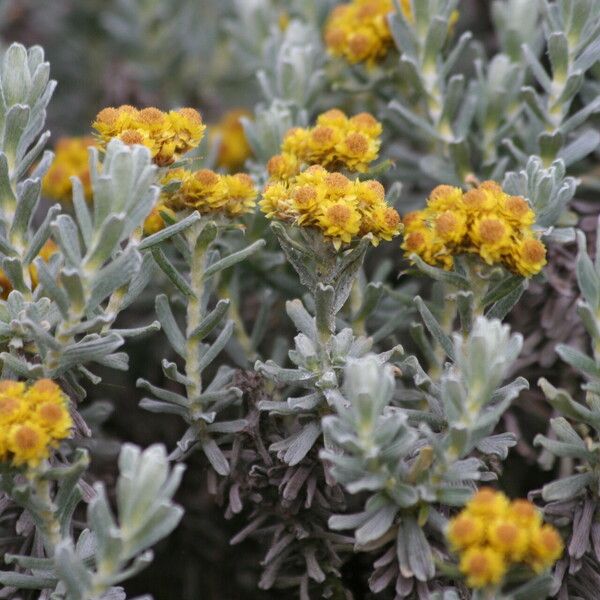
Known affectionately as "Cape Gold" or the "Splendid Everlasting," this shimmering South African shrub is a true survivor of the mountain slopes. Its name, splendidum, is no exaggeration—when the sun hits its silver-felted leaves, the entire plant seems to glow with a metallic luster. For centuries, it has been a staple in traditional fynbos gardens, prized for its ability to look "alive" even after the flowers have dried.
🔍 How to Identify
- 🌿 Silvery Foliage: The small, narrow leaves are densely covered in tiny white hairs, giving the plant a soft, velvety texture and a distinct grey-silver hue.
- 🌼 Everlasting Blooms: It produces tight clusters of bright, canary-yellow flower heads. These are actually "papery" bracts that retain their color and shape long after the plant has finished blooming.
- 🌳 Dense Habit: It grows as a sturdy, rounded woody shrub, typically reaching about 1 meter in height, though it can become quite sprawling in the wild.
🏡 In Your Garden
- ⛰️ Mountain Roots: Because it originates from rocky, high-altitude slopes, it requires exceptional drainage. If its "feet" stay wet in heavy clay soil, the roots will rot quickly.
- 🌬️ Tough as Nails: This is one of the hardiest Helichrysum species. It can withstand frost and high winds that would wither more delicate garden plants, making it a perfect "pioneer" plant for exposed areas.
- ✂️ Shape & Scent: When the leaves are crushed, they release a pleasant, herbal aroma. Regular light pruning after flowering is essential to prevent the center of the shrub from becoming too woody and bare.
⚠️ Safety & Toxicity
- ✅ General Safety: Helichrysum splendidum is generally considered non-toxic to humans and is often used in traditional herbal salves.
- 🐾 Pet Watch: While not listed as a major toxin for cats or dogs, the high oil content in the aromatic leaves can cause mild stomach upset if ingested in large quantities.
- 🖐️ Skin Contact: The woolly texture is soft, but some sensitive individuals may experience a mild "prickly" sensation or contact dermatitis from the tiny hairs.
✨ Fun Fact
The "Everlasting" name isn't just a metaphor—the flowers are so durable that they were historically used to stuff mattresses. Not only did they provide a soft cushion, but the natural aromatic oils in the leaves acted as a primitive insect repellent to keep bedbugs away!

Detailed Care Instructions

Place in a bright room that is sun drenched almost all day. Or directly in a south-facing window.

Some plants require more regular watering than others, which should be done every few days. It's critical to maintain the soil moist all of the time. The water requirements of the same plant placed in pots with varying sizes will differ. Because the water in the smaller pot evaporates faster than the water in the larger pot, it will require more watering. Regardless of pot size, the surface should constantly be maintained moist.








