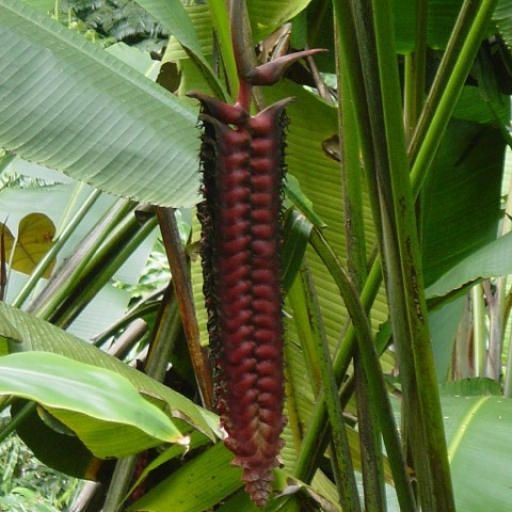
Plant Overview
Known as the Beefsteak Heliconia or Giant Lobster Claw, this tropical titan is famous for its massive, swinging flower structures that look like thick, braided steaks or vibrant red shingles. Native to the lush rainforests of Central and South America, it brings an undeniable "Jurassic Park" energy to any landscape or large greenhouse, standing tall with its architectural, banana-like foliage.
🔍 How to Identify
- 🥩 Pendulous Bracts: The most striking feature is its long, hanging flower spikes (inflorescences) that can reach up to 2 feet in length. These are composed of densely packed, bright red, fleshy bracts.
- 🍃 Giant Foliage: The leaves are massive, paddle-shaped, and deep green, closely resembling those of a banana tree, often reaching lengths of several feet.
- 📏 Towering Habit: Unlike smaller potted varieties, Heliconia mariae is a giant, often growing 10 to 15 feet tall in ideal conditions, forming dense, dramatic clumps.
🏡 In Your Garden
- 💧 Thirsty Giant: Because it originates from the rainforest floor, it doesn't just like water—it thrives on high humidity and consistently moist soil. It’s a "heavy feeder" that requires rich, organic soil to support those massive blooms.
- 🌬️ Wind Protection: While it is sturdy, its huge leaves can easily shred and look "tattered" if exposed to high winds. Planting it near a wall or sheltered by other trees helps maintain its pristine, tropical look.
- ☀️ Light Nuance: While it loves the sun, in scorching climates, it prefers "filtered" light. Too much direct, midday sun can scorch the leaf edges, turning them brown and crispy.
⚠️ Safety & Toxicity
- ✅ Status: Generally non-toxic to humans and pets.
- 🌱 Details: While not considered poisonous, the sap can occasionally cause mild skin irritation in sensitive individuals. As with any fibrous plant, keep an eye on pets who like to chew, as the tough leaves can cause a choking hazard or mild stomach upset if swallowed in large amounts.
✨ Fun Fact
In the wild, the deep "pockets" of the Beefsteak Heliconia's bracts collect rainwater, creating tiny aquatic ecosystems called phytotelmata. These little pools host specialized insects and even provide a drinking station for the hummingbirds that pollinate the plant!

Detailed Care Instructions
To grow a Heliconia Mariae plant, follow these steps:
- Select a suitable location: Heliconia Mariae plants thrive in tropical or subtropical climates, so choose a spot that receives bright, indirect sunlight throughout the day. Ensure that it is protected from strong winds, as they can damage the leaves.
- Prepare the soil: The soil should be well-draining, rich in organic matter, and slightly acidic. Adding compost or organic matter to the soil can enhance its fertility and drainage capabilities. Avoid heavy clay soils that retain moisture, as they can cause root rot.
- Planting: Dig a hole that is about twice the size of the root ball. Place the plant in the hole and backfill it with the prepared soil, ensuring that the top of the root ball is level with the ground. Gently firm the soil around the plant to eliminate air pockets.
- Watering: Heliconia Mariae plants require regular watering. Keep the soil consistently moist but not waterlogged. Water deeply and thoroughly, allowing the top inch of soil to dry out before watering again. Ensure that the soil does not become excessively dry or soggy.
- Fertilizing: Apply a balanced, slow-release fertilizer to the plant every three to four months during the growing season (spring to fall). Follow the manufacturer's instructions for the appropriate dosage. Avoid over-fertilizing, as it can lead to excessive foliage growth and reduced flowering.
- Mulching: Apply a layer of organic mulch around the base of the plant. This helps retain moisture, suppress weeds, and provide nutrients to the soil as it breaks down. Keep the mulch a few inches away from the stem to prevent rot.
- Pruning: As the plant grows, remove any dead or damaged leaves to maintain its health and appearance. Prune any old or spent flowers to promote continuous blooming.
- Support: Heliconia Mariae plants have tall and slender stems that may require support to prevent them from tilting or breaking. Use stakes or bamboo poles to provide support if necessary.
- Protection: Protect the plant from extreme temperatures, frost, and harsh weather conditions. If the temperature drops below 50°F (10°C), consider covering the plant with a frost cloth or moving it indoors temporarily.
- Propagation: Heliconia Mariae plants can be propagated through division. After a few years, when the clumps become crowded, carefully dig up the plant and divide it into multiple sections, ensuring each division has healthy roots and shoots. Replant the divisions at the same depth as the original plant.
By following these instructions, you should be able to successfully grow Heliconia Mariae.

Place in a window with dappled sun or a spot in the middle of a room. Or directly in a window facing west or east.

Heliconia Mariae is a tropical plant that requires regular watering. To water the plant, fill a watering can with room temperature water and slowly pour the water onto the soil around the base of the plant. Be careful not to let the water splash onto the leaves or flowers. Allow the soil to soak up the water until it feels moist to the touch, but not waterlogged. During hot and dry weather conditions, water the plant more frequently. However, do not over-water the plant as it may lead to root rot. It is best to water Heliconia Mariae in the morning or evening, avoiding the midday heat.
- Choose a balanced fertilizer with equal amounts of nitrogen, phosphorus, and potassium.
- Dilute the fertilizer according to package instructions, usually at a rate of 1/4 to 1/2 strength.
- Apply the fertilizer evenly around the base of the plant, avoiding contact with the leaves.
- Water the plant thoroughly after fertilizing to help distribute the nutrients.
- Repeat fertilization every 4-6 weeks during the growing season (spring through fall), but reduce frequency or stop fertilizing altogether in the winter when the plant is dormant.
- Monitor the plant for signs of over-fertilization, such as burning or yellowing of the leaves, and adjust the fertilization schedule accordingly.
Heliconia Mariae plants prefer soil that is well-draining but also retains moisture. It is best to use a mixture of rich organic matter, sand, and perlite in the soil. This soil should be slightly acidic with a pH level between 5.5 and 6.5. Adding compost or fertilizers can also improve the soil quality for the plant's growth and health. It is important to avoid water-logged conditions as it can lead to root rot. The soil should also be loose and aerated to ensure proper growth and development of the plant.
To propagate this plant, you will need to first identify and select a mature, healthy specimen to use as a parent plant. Then, you will need to prepare a sterile cutting tool, such as a sharp knife or pruning shears.
Next, locate a healthy stem or pseudostem on the parent plant that has at least two fully developed leaves. Carefully slice through the stem at a 45-degree angle, making sure to include both the stem and the attached leaves.
Dip the cut end of the stem into a rooting hormone powder, which can help stimulate the growth of new roots. Then, plant the stem in a well-draining potting mix, burying the cut end about 2 inches deep and positioning the leaves above the soil surface.
Water the cutting thoroughly but be careful not to overwater, as excessive moisture can cause rot. Place the pot in a warm, humid location with indirect sunlight.
After a few weeks, new roots should begin to form from the cut end of the stem. Once the roots have developed and the cutting has established itself, it can be transplanted to a larger pot or planted outdoors in a suitable location.








