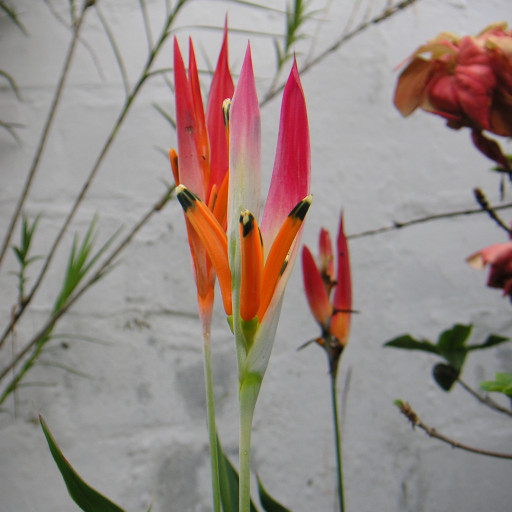
Plant Overview
Known as the "Parrot’s Beak" or "Parakeet Flower," this vibrant tropical beauty gets its name from its strikingly shaped blooms that mimic the colorful plumage of a bird. Native to the Caribbean and South America, it is a smaller, more manageable relative of the giant Lobster Claw Heliconias. It brings an instant "jungle vibe" to any patio or garden with its architectural foliage and long-lasting, waxy flowers.
🔍 How to Identify
- 🌿 Foliage: The leaves are long, narrow, and deep green, resembling a smaller, more elegant version of a banana leaf or a Canna lily.
- 🦜 The "Beaks": The true flowers are small and hidden inside showy "bracts" (modified leaves). These bracts are typically brilliant orange with dark green tips, looking remarkably like a bird's open beak.
- 📏 Growth Habit: It grows in upright, dense clumps, usually reaching about 3 to 5 feet tall, which makes it a perfect mid-height filler for tropical landscapes.
🏡 In Your Garden
- 🌞 Light & Space: While it loves the sun, its leaves can scorch in intense, direct midday heat. It thrives best in "filtered" sunlight where it can soak up the warmth without the burn.
- 💧 Thirsty Roots: Originating from rainforest margins, it demands high humidity. If the air is too dry or the soil stays parched, the leaf edges will quickly turn brown and crispy.
- 🌱 Rhizome Power: This plant spreads via underground stems called rhizomes. In the right conditions, it can be quite "creeping," so it’s often best to plant it in large containers or areas where its spread won't overwhelm smaller neighbors.
⚠️ Safety & Toxicity
- 🐾 Pet Safety: Heliconia psittacorum is generally considered non-toxic to dogs and cats, making it a safer "tropical look" alternative to the highly toxic true Lily.
- 👶 Human Safety: It is safe for humans, though the sap can cause very mild skin irritation for those with sensitive skin. The pointed tips of the bracts can also be surprisingly stiff and sharp.
✨ Fun Fact
The Heliconia psittacorum is a master of specialized evolution; its flowers are perfectly shaped to fit the curved bills of specific hummingbirds, which are its primary pollinators in the wild. If you plant them outside, don't be surprised if the local birds come by to investigate!

Detailed Care Instructions
| Color | Greenish-Yellow Flowers |
| Soil Ph | 5.0–6.5 (Acidic To Near Neutral) |
| Lighting | Full Sun |
| Toxicity | Toxic |
| Soil Type | Rich, Moist, Well-Drained Soil; Houseplants Prefer Ordinary Peat-Based Potting Mix |
| Bloom Time | Spring And Summer |
| Plant Type | Tropical Perennial |
| Mature Size | 3-6 Ft. Tall |
| Native Area | Tropical Americas |
| Sun Exposure | Full Sun To Part Shade |
| Hardiness Zones | 9–11 (Usda); Often Grown As A Houseplant |
To grow Heliconia psittacorum plants, follow these steps:
- Choose a suitable location: Heliconias prefer full sun to partial shade. Select a spot in your garden where they will receive at least 6-8 hours of direct sunlight per day.
- Soil preparation: Heliconias thrive in well-draining soil that is rich in organic matter. Make sure the soil is loose and has good water retention capabilities. If needed, amend the soil with compost or organic matter to improve its structure.
- Planting: Dig a hole that is slightly larger than the plant's root ball. Place the plant in the hole, ensuring that the crown (where the stem meets the roots) is level with the soil surface. Backfill the hole with soil, gently firming it around the plant to remove any air pockets.
- Watering: Water the newly planted heliconia thoroughly to settle the soil around the roots. Keep the soil consistently moist but not waterlogged. Water deeply whenever the top few inches of soil feel dry. During hot summer months, you may need to water more frequently.
- Fertilization: Heliconias are heavy feeders and benefit from regular fertilization. Use a balanced, slow-release fertilizer or a specialized fertilizer formulated for tropical plants. Follow the package instructions for application rates and frequency. Avoid over-fertilizing, as it may burn the roots.
- Mulching: Apply a layer of organic mulch around the base of the plant, taking care not to mound it against the stem. Mulching helps retain moisture, suppresses weeds, and provides a gradual release of nutrients as it decomposes.
- Pruning: Prune any dead or damaged foliage as needed to maintain the plant's appearance and health. Remove spent flowers to encourage continuous blooming.
- Protect from frost: Heliconias are tropical plants and are highly sensitive to frost. If you live in a colder climate, grow heliconias in containers and move them indoors during winter or provide frost protection by covering the plants with a frost cloth.
Remember to regularly monitor for pests or diseases and take appropriate measures if any issues arise. With proper care and attention, your Heliconia psittacorum plant should thrive and produce beautiful tropical flowers.

Place in a window with dappled sun or a spot in the middle of a room. Or directly in a window facing west or east.

When watering this plant, it is important to keep the soil consistently moist but not waterlogged. Adjust the frequency of watering based on the humidity in the air and the soil condition. This plant requires frequent watering during the growing season, so it is recommended to check the soil moisture level regularly. When watering, aim to water the base of the plant and avoid getting water on the leaves as this can lead to fungal diseases. Use a well-draining soil mix to ensure excess water can escape, and consider adding a layer of mulch around the base of the plant to help retain moisture. Finally, avoid letting the soil dry out, as this can be harmful to the health of the plant.
To fertilize this plant, mix a balanced N-P-K fertilizer with micronutrients in a ratio of 10-10-10. Apply the fertilizer every two months during the growing season, reducing the frequency to once every three to four months during the dormant season. Spread the fertilizer evenly around the base of the plant and water thoroughly after application. Avoid using high-nitrogen fertilizers, as they can cause excessive foliage growth and reduce flower production.
Heliconia Psittacorum plant requires soil that is rich in nutrients and well-drained. The ideal soil pH should be between 5.5 and 7.5. The soil should be moisture retentive, but not water-logged, as the plant is susceptible to root rot. The plant prefers soil that is loamy and well-aerated, which allows for good water infiltration and drainage. Organic matter such as compost, manure, or leaf mold can be added to the soil to further improve its fertility and moisture holding capacity. Additionally, soil should be replenished with fertilizer every 2-3 months to ensure healthy plant growth.
Heliconia Psittacorum is a tropical plant that is native to South and Central America. It is a perennial plant that can grow up to 8 feet tall and has large, vibrant flowers.
Propagating Heliconia Psittacorum can be done through various methods such as root division, stem cuttings, and seeds. Root division involves digging up the plant and separating the rhizomes (root-like structures) into smaller sections. Each section should have at least one shoot and a few roots. These can be replanted in well-draining soil and kept moist.
Stem cuttings can be taken from mature stems that have not yet produced a flower. The stem should be about 6 inches long and planted in soil with good drainage. Keep the soil moist and in a warm, humid environment until new growth appears.
Heliconia Psittacorum can also be propagated from seeds. Gather seeds from mature pods in the fall and plant them in a well-draining soil mixture. Keep the soil moist and warm, and protect the seedlings from direct sunlight. Once the seedlings have grown large enough, they can be transplanted into larger pots or into the ground.
Propagation of Heliconia Psittacorum requires patience and care, but with the right conditions, the plant can be easily propagated and grown into a beautiful, vibrant addition to any tropical landscape.
Common pests of the parakeetflower include Mealybugs, spider mites. Make a habit of checking your parakeetflower frequently for pests so that any infestations can be caught and managed early.








