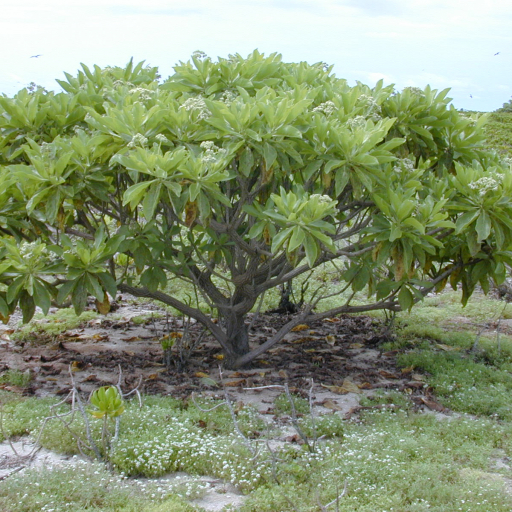
Plant Overview
Often called the Velvetleaf Soldierbush or the Octopus Bush, this hardy coastal native is a true maritime survivor. Thriving where other plants wither from harsh salt spray, its shimmering silver-green foliage makes it look as though it has been dusted with moonlight. It serves as a vital shoreline sentinel across the Indo-Pacific, protecting beaches from erosion while offering a tropical, architectural flair to seaside gardens.
🔍 How to Identify
- 🌿 The Foliage: Large, fleshy, spatula-shaped leaves that feel incredibly soft to the touch. They are covered in fine, silky silver hairs that reflect sunlight and help the plant retain moisture.
- 🌼 The Blooms: Tiny white flowers arranged in tight, curled clusters. These "scorpioid cymes" resemble the curled tail of a scorpion or the tentacles of an octopus, which gives the plant one of its famous nicknames.
- 🌳 The Form: Usually grows as a wide, multi-stemmed shrub or a small, gnarled tree with deeply fissured, cork-like bark that adds a rugged character to the landscape.
🏡 In Your Garden
- 🌊 Salt & Sand Specialist: This plant is the ultimate choice for beachfront properties. It handles salt spray and poor, sandy soils with ease, whereas most ornamental plants would struggle to survive.
- ☀️ Sun Seeker: It requires a position in full, blazing sun to maintain its compact shape and silvery sheen. If grown in too much shade, the branches become "leggy" and the iconic silver hairs may thin out.
⚠️ Safety & Toxicity
- 🟢 Touch-Safe: The Velvetleaf Soldierbush is perfectly safe to touch and handle. Its soft, fuzzy leaves are a favorite for sensory gardens.
- 🚫 Ingestion Warning: While it has a history in traditional island medicine, the plant contains pyrrolizidine alkaloids. These compounds can be toxic to the liver if ingested in large quantities by humans, cats, or dogs. It is best treated as strictly ornamental.
✨ Fun Fact
In many Pacific Island cultures, the leaves of the Tree Heliotrope are more than just pretty—they were historically used as a traditional remedy for "Ciguatera," a type of food poisoning caused by eating certain reef fish. Scientists have even studied the plant to understand how its extracts might neutralize these specific marine toxins!

Detailed Care Instructions
To grow a Heliotropium Foertherianum plant, also known as "Cherry Pie Plant," you can follow the steps below:
- Choose the right location: Heliotropium Foertherianum prefers full sun but can tolerate light shade. Make sure the location has well-draining soil.
- Prepare the soil: Before planting, work the soil by removing weeds and adding organic matter like compost to improve drainage and nutrient content.
- Planting: Dig a hole slightly larger than the root ball of the plant. Place the plant in the hole and backfill with soil, gently firming it around the roots.
- Watering: After planting, water the plant thoroughly and keep the soil consistently moist but not waterlogged. Avoid letting the soil dry out completely.
- Fertilization: Feed the plant with a balanced, all-purpose fertilizer once a month during the growing season to ensure healthy growth. Follow the instructions on the fertilizer packaging for application rates.
- Pruning: Regularly prune the plant to maintain its shape and encourage bushier growth. Pinch back the stems to encourage branching and remove any dead or damaged growth.
- Pest and disease control: Monitor the plant for signs of pests such as aphids or whiteflies and treat them accordingly. Heliotropium Foertherianum is generally resistant to diseases, but it's still essential to keep an eye out for any issues.
- Mulching: Apply a layer of mulch around the base of the plant to help retain moisture, prevent weed growth, and regulate soil temperature.
- Winter care: In areas where winter temperatures drop below freezing, Heliotropium Foertherianum is typically treated as an annual plant. However, you can attempt to overwinter it indoors by bringing it inside before the first frost and placing it in a well-lit location.
Remember to regularly water, fertilize, and care for the Heliotropium Foertherianum plant to keep it healthy and encourage continuous flowering.

Place in a bright room that is sun drenched almost all day. Or directly in a south-facing window.

To water Heliotropium foertherianum, it is important to consider a few factors in order to maintain its health and vitality. Here are some details on watering requirements without mentioning the plant's common names:
1. Frequency: Water the plant regularly, ensuring that the soil never becomes overly dry. While it is important to avoid waterlogging, a consistent moisture level is vital.
2. Soil Type: Heliotropium foertherianum prefers well-draining soil. To ensure proper water retention, use a soil mix with good water-holding capacity but still allows excess water to drain easily.
3. Establishing Root System: During the initial stages, focus on establishing a strong root system. Water deeply but infrequently to encourage deep root growth. This will promote stability and enable the plant to access moisture from deeper soil layers.
4. Container Plants: If your Heliotropium foertherianum is potted, check the plant's drainage holes to ensure water can freely escape. Allow the excess water to drain completely to avoid water accumulation at the bottom of the pot.
5. Environmental Factors: Consider the humidity and temperature levels of your plant's surroundings. Adjust your watering schedule accordingly during hotter periods to prevent the plant from drying out.
6. Watering Technique: When watering, it is important to water at the base of the plant, aiming for the soil surface rather than the foliage. Directing water to the root zone reduces the risk of fungal diseases and helps the plant utilize moisture efficiently.
7. Drought Tolerance: Heliotropium foertherianum has some drought tolerance but will still benefit from regular watering. While it can survive dry conditions, consistent irrigation will maintain its overall health and promote continuous growth and flowering.
Remember, every individual plant's water requirements may vary slightly depending on factors such as environmental conditions, size, and stage of growth. It is always best to observe the plant closely and adjust your watering regimen accordingly.
To fertilize Heliotropium Foertherianum, use a balanced, slow-release fertilizer with equal amounts of nitrogen, phosphorus, and potassium (NPK). Here are the instructions:
- Choose a well-draining potting mix or prepare a garden bed with nutrient-rich, loamy soil.
- Before planting, ensure the area receives full or partial sun exposure.
- Apply the slow-release fertilizer according to the package instructions. Usually, this involves spreading it evenly across the soil surface or adding it to the planting hole.
- After applying the fertilizer, gently work it into the topsoil to ensure proper distribution.
- Water the plant thoroughly immediately after fertilizing to help activate the nutrients and prevent root burn.
- To maintain optimal growth, regularly apply fertilizer every 4-6 weeks during the growing season, typically spring through fall.
- Adjust the amount of fertilizer based on the plant's growth and health. If growth appears stunted or yellowing occurs, reduce the amount of fertilizer used.
- Always follow the recommended dosage on the fertilizer packaging, as over-fertilization can harm the plant.
- Monitor the plant closely for any signs of nutrient deficiencies or excesses. Adjust the fertilizer regimen accordingly to maintain a healthy growth and vibrant appearance.
Remember to be mindful of your local environmental regulations and use fertilizers as directed to prevent any adverse effects on the plant or surroundings.
When growing Heliotropium foertherianum, it is important to choose a suitable type of soil that provides optimal conditions for its growth. The recommended soil for this plant should possess specific characteristics to ensure its well-being:
- Well-Draining: Heliotropium foertherianum prefers a soil that is well-drained, meaning it allows excess water to freely drain away. This helps prevent waterlogging, which can lead to root rot and other complications. A well-draining soil ensures that the plant's roots are not constantly sitting in water.
- Loamy or Sandy: This species generally thrives in a loamy or sandy soil, which is loose and allows air circulation throughout the root zone. Such soil types are also typically good at retaining the right amount of moisture without becoming waterlogged. Loamy or sandy soils promote healthy root development and prevent the plant from becoming stressed.
- Nutrient-Rich: Heliotropium foertherianum plants benefit from a soil that is enriched with essential nutrients. This can be achieved by adding organic matter, such as compost or well-rotted manure, to the soil before planting. Nutrient-rich soil provides the necessary elements for robust growth, flower development, and overall plant health.
- pH Level: The ideal soil pH for Heliotropium foertherianum is slightly acidic to neutral, ranging between 6.0 to 7.0. This range allows for optimal nutrient absorption by the plant's roots, promoting healthy growth, and preventing nutrient deficiencies.
- Moisture Retention: While it is crucial to ensure that the soil is well-draining, it should also have the ability to retain moisture. This is particularly important during dry periods to prevent the plant from becoming dehydrated. Mulching around the base of the plant can help retain moisture in the soil.
By providing a well-draining, loamy or sandy, nutrient-rich, slightly acidic to neutral soil with adequate moisture retention, you can create an ideal growing environment for Heliotropium foertherianum. This will support its growth, flowering, and overall vitality.
Heliotropium Foertherianum, commonly known as the seaside heliotrope, is a perennial plant that can be propagated using various methods. Here is a detailed guide on how to propagate this plant:
- Collecting Seeds:
- Wait for the plant to produce flowers, which later turn into small fruits containing seeds.
- Allow the fruits to ripen and turn brown before harvesting them.
- Cut off the dried fruits and place them in a paper bag or envelope to collect the seeds.
- Store the seeds in a cool, dry place until you are ready to sow them.
- Wait for the plant to produce flowers, which later turn into small fruits containing seeds.
- Sowing Seeds:
- Fill a small seed tray or pots with seed-starting mix or a well-draining soil medium.
- Moisten the soil surface before sowing the seeds.
- Gently scatter the seeds over the soil surface or press them lightly into the soil, ensuring they are evenly spaced.
- Cover the seeds with a thin layer of soil or vermiculite, approximately the same depth as the width of the seeds.
- Mist the soil surface with water to keep it moist, but avoid overwatering.
- Place the tray or pots in a warm location with indirect sunlight.
- Ensure consistent moisture by misting the soil surface whenever it feels dry.
- Germination usually takes around 1-3 weeks. Once the seedlings have grown larger, they can be transplanted into individual pots or directly into the garden.
- Fill a small seed tray or pots with seed-starting mix or a well-draining soil medium.
- Stem Cuttings:
- Locate a healthy stem on the plant that has not yet flowered.
- Using clean and sharp pruning shears, cut a 4-6 inch (10-15 cm) section of the stem just below a leaf node.
- Remove the lower leaves from the cutting, leaving only a few at the top.
- Dip the cut end of the stem into a rooting hormone powder or gel to promote root development (optional).
- Fill a small pot or container with a well-draining rooting medium such as perlite or vermiculite.
- Create a small hole in the medium and place the cutting, ensuring at least 2-3 nodes are buried in the medium.
- Firmly press the medium around the cutting to provide stability.
- Mist the cutting and the surrounding medium to ensure moisture.
- Cover the cutting with a plastic bag or create a mini-greenhouse by placing a clear plastic or glass container over it to maintain humidity.
- Place the pot in a warm, bright location but avoid direct sunlight.
- Keep the medium consistently moist but not soaking wet.
- After 4-6 weeks, check for root development by gently tugging on the cutting. If resistance is felt, roots have likely formed.
- Once roots have developed, transplant the cutting into a larger pot or directly into the garden.
Remember to monitor the propagation process regularly, provide adequate care, and adjust the environment if needed to ensure successful propagation.
- Locate a healthy stem on the plant that has not yet flowered.








