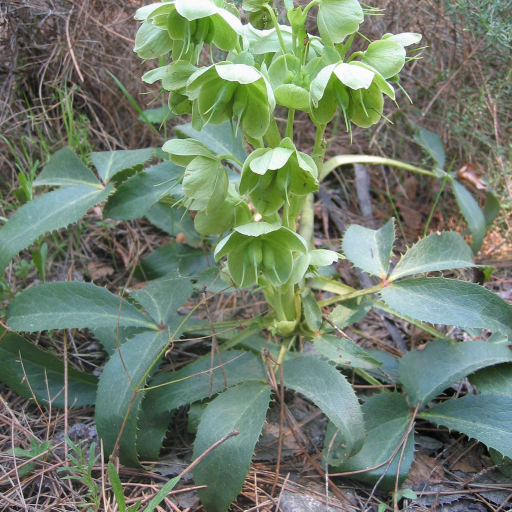
Plant Overview
Known as the Corsican Hellebore, this architectural beauty brings a touch of the rugged Mediterranean islands to the winter garden. Unlike its drooping, delicate cousins, this plant stands tall with bold, leathery foliage that looks more like holly than a traditional flower. It is a favorite for gardeners seeking a "set it and forget it" evergreen that provides structure and color when the rest of the garden is still in hibernation.
🔍 How to Identify
- 🍃 Holly-Like Leaves: The foliage is exceptionally thick, leathery, and divided into three sharp-toothed leaflets that feel slightly prickly to the touch.
- 🍏 Pale Green Blooms: From late winter to mid-spring, it produces large, heavy clusters of nodding, cup-shaped flowers in a refreshing shade of pale apple-green.
- 📏 Stately Stature: It is one of the largest and most upright hellebores, growing in woody-based clumps that can reach up to 3 feet in height and width.
🏡 In Your Garden
- ☀️ Island Resilience: Originating from Corsica and Sardinia, this species is far more sun-tolerant and drought-resistant than most other hellebores. It thrives in well-drained soil and actually prefers a bit of "tough love" once established.
- 🪴 The Taproot Rule: This plant develops a deep, sturdy root system very quickly. It famously hates being moved or divided; if you transplant a mature specimen, it may sulk or fail to bloom for several seasons. Choose its "forever home" carefully!
⚠️ Safety & Toxicity
- 🚫 Toxic if Ingested: All parts of the plant contain protoanemonin and glycosides. If eaten, it can cause severe mouth irritation, nausea, and vomiting. Keep it away from curious pets and toddlers.
- 🧤 Sap Sensitivity: The sap can be a skin irritant. Some gardeners experience a mild rash or "burning" sensation after pruning. It is highly recommended to wear gloves when cutting back old stems in the spring.
✨ Fun Fact
The Corsican Hellebore is one of the few members of its family that is highly resistant to salt spray, making it a rare and valuable choice for coastal gardens where other perennials might wither.

Detailed Care Instructions
Helleborus Argutifolius, also known as Corsican hellebore or holly-leaved hellebore, is a beautiful evergreen perennial plant that can be grown in gardens. Here are some steps to help you grow this plant successfully:
- Location: Choose a suitable location for the Helleborus Argutifolius plant. It prefers partial shade to full shade, especially during the hottest part of the day. It can tolerate some morning sun, but avoid planting it in direct afternoon sunlight.
- Soil: The plant prefers well-draining soil that is rich in organic matter. Amend the soil with compost or well-rotted manure before planting to improve its fertility and drainage.
- Planting: Dig a hole slightly larger than the root ball of the plant. Place the plant in the hole at a similar depth as it was in the container and backfill with soil, gently firming it around the roots.
- Watering: Keep the soil moist but not waterlogged. Water thoroughly after planting and provide regular watering during dry periods, especially in the first year. Avoid overwatering, as this can lead to root rot.
- Mulching: Apply a layer of mulch around the base of the plant to help retain moisture, regulate soil temperature, and suppress weed growth.
- Fertilization: Helleborus Argutifolius does not require heavy fertilization. However, you can apply a balanced, slow-release fertilizer in early spring or use a liquid fertilizer formulated for flowering plants according to the instructions on the package.
- Pruning: Prune back any damaged or diseased leaves in early spring. This will help maintain the plant's overall appearance and prevent the spread of diseases.
- Propagation: Helleborus Argutifolius can be propagated by division in early spring or fall. Carefully dig up the plant, divide the clumps, and replant them in desired areas or containers.
- Pests and diseases: While Helleborus Argutifolius is generally resistant to pests and diseases, it may occasionally be affected by slugs or snails. Monitor the plant regularly and take appropriate measures if necessary, like using organic slug repellents or setting up traps.
Remember to check your specific growing zone and local conditions for any additional requirements or recommendations for this particular plant.
To water this plant, you should first check the soil moisture level by sticking your finger about an inch down into the soil. If it feels dry, give the plant a thorough watering, making sure the water reaches the roots. Avoid getting water on the leaves as this can lead to fungal growth. Watering once a week should be sufficient, but adjust based on the humidity and temperature of your environment. It is also important to ensure good drainage to prevent the plant from sitting in water.
To fertilize this plant, use a slow-release, balanced fertilizer in early spring before new growth appears. Spread the fertilizer around the base of the plant, being careful not to get any on the leaves. Water thoroughly after fertilizing. Repeat this process every year to maintain the plant's health and encourage strong growth.
Helleborus argutifolius is a plant that prefers well-draining soil with a pH between 6 and 7.5. Good drainage is particularly important to prevent waterlogging in the root zone. For this reason, a mixture of sandy loam and organic matter, such as compost or leaf mold, is recommended. Adding perlite or vermiculite to the soil mix can help improve drainage. The plant prefers a fertile soil which is rich in nutrients such as nitrogen, phosphorous, and potassium. Additionally, the plant prefers a soil that is moderately moist but not overly wet. Tolerance to soil texture varies but neutral to alkaline soils are preferred.
To propagate this plant, first select a healthy stem with several leaves and a strong root system. Cut the stem at an angle just below a node and remove any lower leaves. Dip the cut end into rooting hormone powder and plant it in moist potting soil. Cover the container with plastic wrap and place it in a bright, warm location, but out of direct sunlight. Keep the soil moist and mist the leaves regularly. After several weeks, gently tug on the stem to check for root growth. Once the plant has established roots, it can be transplanted into a larger pot or into the ground in a shaded location with well-drained soil.








