Plant Overview
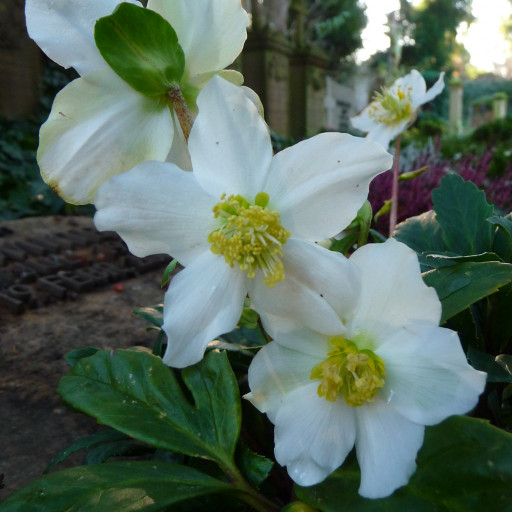
Known as the "Christmas Rose," Helleborus niger is the crown jewel of the winter garden. Despite its delicate, porcelain-white appearance, this plant is a rugged survivor, pushing its blooms through the frozen ground and even snow during the darkest months of the year. Legend says it first bloomed in the snow from the tears of a young shepherd girl who had no gift for the Christ Child in Bethlehem.
🔍 How to Identify
- 🌸 The "Petals": The large, cup-shaped white flowers are actually sepals, not petals. They often fade to a soft pink or dusty green as they age.
- 🌿 Evergreen Foliage: The leaves are thick, leathery, and dark green. They are divided into several "fingers" (leaflets) with slightly serrated edges that stay green all winter.
- ☀️ Golden Centers: Each flower features a prominent, fuzzy cluster of bright yellow stamens that provide a stark, beautiful contrast to the white sepals.
- 🖤 The Roots: While the flowers are white, the plant's name "Niger" (black) comes from its dark, soot-colored rhizomes and roots.
🏡 In Your Garden
- 🌳 The Perfect Spot: It thrives under deciduous trees. This allows it to soak up the winter sun when the trees are bare, while being protected by a cooling canopy of leaves during the hot summer months.
- 🛑 Don't Move Me: This plant has a deep, sensitive root system and absolutely hates being transplanted. Choose its home carefully, as it may take a year or two to recover if moved.
- 🥣 Soil Nuance: Unlike many garden plants that prefer acidic soil, the Christmas Rose loves alkaline (lime-rich) conditions. Adding a bit of crushed eggshells or lime to the soil can make it very happy.
⚠️ Safety & Toxicity
- 🚫 Status: Highly Toxic.
- 🐾 Details: All parts of the plant contain protoanemonin and cardiac glycosides. If ingested, it can cause severe nausea, vomiting, and even heart rhythm issues. Keep it away from curious pets and children.
- 🧤 Skin Irritation: The sap can cause skin irritation or "Hellebore dermatitis." It is always a good idea to wear gloves when pruning or handling the plant.
✨ Fun Fact
In ancient times, Hellebore was used in "siege warfare." During the Siege of Kirrha in 585 BC, the besiegers reportedly salted the city's water supply with crushed Hellebore leaves, causing the defenders to suffer such intense digestive distress that they could no longer fight!

Detailed Care Instructions
| Humidity | Normal |
| Lighting | Part Sun |
| Toxicity | Poisonous |
| Difficulty | Medium |
| Hibernation | Cold Period |
| Temperature | 5°C - 18°C |
| Hardiness Zones | 5A - 8B |
To grow Helleborus Niger, commonly known as Christmas rose or black hellebore, follow these steps:
- Find a suitable location: Choose a spot in your garden that receives partial shade to full shade, as Helleborus Niger prefers cool conditions. It can also tolerate some morning sun but avoid hot afternoon sun.
- Prepare the soil: Helleborus Niger prefers moist, well-draining soil. Amend the soil with organic matter, such as compost or aged manure, to improve fertility, drainage, and moisture retention.
- Planting: Dig a hole slightly larger than the root ball of the plant. Place the plant in the hole, making sure the crown (where the stems emerge from the roots) is at soil level or slightly above. Backfill the hole with soil, gently firming it around the roots.
- Watering: Water the plant thoroughly after planting to settle the soil. Provide regular watering, especially during dry spells, to keep the soil consistently moist but not waterlogged. Mulching the soil around the plant can help conserve moisture.
- Fertilizing: Helleborus Niger generally doesn't require heavy feeding. However, you can apply a balanced fertilizer in early spring as new growth emerges. Follow the manufacturer's instructions for application rates.
- Pruning: Remove any damaged or dead foliage to keep the plant healthy and tidy. Trim spent flowers to prevent seed formation, as this can divert energy away from the plant.
- Winter protection: Although Helleborus Niger is cold-hardy, providing extra protection during extreme cold can be beneficial. Mulch the plant with a layer of straw or leaves before the first frost to insulate the root system.
- Pests and diseases: Helleborus Niger is generally resistant to pests and diseases. However, watch out for slugs and snails, which are attracted to the plant. Use organic pest control methods if necessary.
- Propagation: Helleborus Niger can be propagated by dividing the plant in early spring when the clump becomes crowded. Carefully dig up the plant, separate the roots, and replant the divisions.
With proper care and suitable growing conditions, your Helleborus Niger should thrive and produce lovely blooms during the winter months.

Place in a window with dappled sun or a spot in the middle of a room. Or directly in a window facing west or east.

The best way to water this plant is to keep the soil consistently moist, but not waterlogged. It is important to avoid letting the soil completely dry out, as this can lead to wilt and yellowing of the leaves. When watering, it is best to water from the base of the plant, rather than from above. This helps to prevent the leaves from becoming wet, which can lead to fungal diseases. Avoid getting water on the leaves, especially during cold weather, as this can result in damage to the plant. It is also important to ensure that the plant is grown in well-draining soil, as waterlogged soil can cause root rot and lead to the death of the plant.
For optimal growth and blooming, fertilize this plant in early spring before new growth appears, and again in fall after blooming has finished. Use a balanced, slow-release fertilizer with equal amounts of nitrogen, phosphorus, and potassium. Apply the fertilizer according to package instructions, being careful not to over-fertilize. Finally, water deeply after fertilizing to ensure proper absorption.
Helleborus Niger is a medium-sized perennial plant that requires a suitable soil type for optimal growth. The ideal soil type for Helleborus Niger should be well-draining, moist, and fertile. It should also be slightly acidic, with a pH range of about 5.5 to 7.0. The addition of organic matter, such as compost or well-rotted manure, is recommended to improve soil fertility and structure. Additionally, Helleborus Niger prefers a soil that is rich in nutrients, such as nitrogen, phosphorus, and potassium. Thus, it is recommended to use a balanced fertilizer that contains these nutrients. In summary, the best soil for Helleborus Niger would be well-draining, moist, slightly acidic, rich in nutrients, and amended with organic matter.
To propagate this plant, take a healthy stem cutting from the parent plant, ideally in the summer or early fall. Make sure the cutting is approximately 4-5 inches long and remove any leaves from the bottom half of the stem. Dip the cut end in rooting hormone, then plant the cutting in moist soil. Cover the pot with a clear plastic bag to create a humid environment and place it in a bright, but indirect, location. Keep the soil consistently moist and in a few weeks, roots should start to form. Once there is new growth visible, remove the plastic bag and gradually acclimate the new plant to normal conditions.
Common pests of the christmas-rose include Aphids, larvae, snails. Make a habit of checking your christmas-rose frequently for pests so that any infestations can be caught and managed early.








