Plant Overview
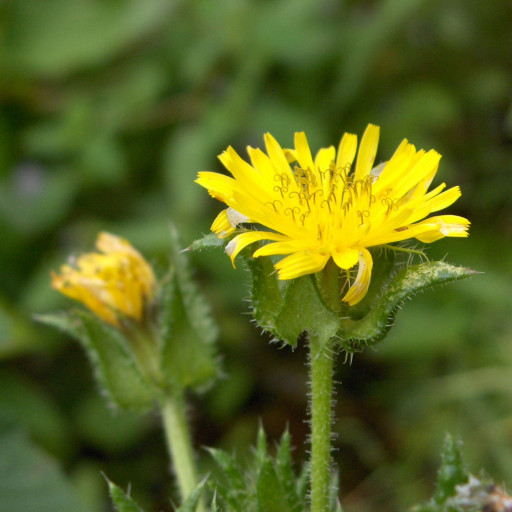
Often called the Bristly Oxtongue, this hardy Mediterranean native is a master of defense. It earns its descriptive name from its rough, bumpy leaves that mimic the sandpaper-like texture of a cow’s tongue. While many gardeners view it as a persistent weed, its cheerful yellow blooms provide a vital nectar source for pollinators during the late summer heat.
🔍 How to Identify
- 👅 The "Tongue" Leaves: The most striking feature is the foliage; the long, lance-shaped leaves are covered in distinct white, pimple-like bumps (tubercles) topped with sharp, stiff bristles.
- 🌼 Golden Blooms: It produces bright yellow, dandelion-like flower heads that sit atop branched stems. These flowers are unique because they are surrounded by an outer ring of heart-shaped green leaves (bracts).
- 🌵 Prickly Stems: The stalks are stout, ridged, and heavily armored with the same hooked hairs found on the leaves, making the plant feel very rough to the touch.
🏡 In Your Garden
- 🧱 The Ultimate Survivor: This plant thrives in heavy, compacted clay soils and disturbed ground where other plants might struggle. If you see it in your yard, it is likely a sign of nutrient-rich but dense soil.
- 📈 Deep Taproots: It anchors itself with a formidable taproot. This makes it incredibly drought-tolerant, but it also means that if you want to remove it, you must dig deep; simply snapping the top off will result in the plant regrowing quickly.
⚠️ Safety & Toxicity
- 🛡️ Physical Irritant: Helminthotheca echioides is not known to be chemically toxic to humans or common household pets.
- 🧤 Skin Protection: The stiff, hooked bristles can cause mild skin irritation or "rashes" if handled with bare hands. It is highly recommended to wear thick gardening gloves when weeding this plant to avoid the prickly sensation.
✨ Fun Fact
The specific epithet echioides comes from the Greek word echis, meaning "viper." This refers to the plant's rough, scaly appearance, which ancient botanists thought resembled the skin of a snake.

Detailed Care Instructions
To grow Helminthotheca echioides, also known as bristly ox-tongue, you can follow these steps:
- Climate: Ensure that you live in a suitable climate for this plant. Helminthotheca echioides thrives in temperate regions with mild winters and moderate temperatures.
- Soil: Prepare well-draining soil with a neutral to slightly alkaline pH. The soil should be rich in organic matter and have a loose texture to facilitate root growth.
- Sunlight: Choose a sunny location for planting. Helminthotheca echioides requires full sun exposure to grow and flower properly. It can tolerate some shade, but overall, it is a sun-loving plant.
- Watering: Provide regular and consistent watering to keep the soil moist but not waterlogged. Avoid overwatering as it can lead to root rot. During hot and dry periods, water more frequently.
- Planting: Sow the seeds of Helminthotheca echioides directly into the prepared soil in either spring or early autumn. The recommended depth for planting is about 1/8 inch (3 mm).
- Spacing: Maintaining proper spacing is crucial for the healthy growth of the plants. Ensure a spacing of at least 12-18 inches (30-45 cm) between each seedling.
- Weeding: Regularly check and remove any weeds that may compete with Helminthotheca echioides for nutrients and moisture.
- Fertilization: Apply a balanced, slow-release fertilizer during the growing season or incorporate organic compost into the soil to provide the necessary nutrients.
- Maintenance: Pinch back or prune the plants when they are about 6 inches (15 cm) tall to promote compact growth and prevent legginess.
- Mulching: Apply a layer of organic mulch around the base of the plants to suppress weed growth, retain soil moisture, and regulate soil temperature.
- Pests and diseases: Monitor for any signs of pests or diseases and take appropriate measures, such as using organic or chemical controls if necessary.
- Harvesting: Helminthotheca echioides produces vibrant yellow flowers that can be cut for floral arrangements. You can also allow some flowers to go to seed if you wish to collect them for future planting.
Remember to check local regulations and guidelines regarding the cultivation of Helminthotheca echioides, as it may be considered invasive in some regions.

Place in a bright room that is sun drenched almost all day. Or directly in a south-facing window.

Helminthotheca Echioides plants should be watered using a watering can or similar watering device. The soil around the plant should be moistened but not saturated, as over-watering can lead to root rot and other issues. It is important to water the plant regularly, especially during hot and dry spells, but also to avoid getting the foliage wet to prevent diseases. It is best to water in the morning or evening to prevent water evaporation and allow the plant to absorb more water. The plant should be checked regularly to ensure that it is not becoming too dry or too wet, and adjustments to the watering schedule should be made accordingly.
To fertilize the plant, mix a balanced, water-soluble fertilizer in a watering can according to the instructions on the package. Apply the fertilizer to the soil around the base of the plant, taking care not to get any on the leaves or stems, as this can cause fertilizer burn. Repeat this process every two to three weeks during the growing season. Avoid fertilizing the plant during the winter months, as it is dormant and does not require the extra nutrients.
Helminthotheca Echioides plant prefers well-draining soil that is loamy or sandy in texture. It requires soil that is slightly alkaline with a pH range of 6.5 to 7.5. The plant can tolerate drought to some extent, so the soil should be well aerated, and it should not retain water for long periods. A good quality potting mix with added perlite or sand can be used for container gardening. The soil should be rich in organic matter, which can be incorporated into the top layer of soil. The soil should be fertile and should provide nutrients such as nitrogen, phosphorus, and potassium for optimal growth. The plant requires adequate sunlight and regular watering for best results.
To propagate the plant, you will need to take stem cuttings from a healthy and mature plant. Use a sharp and sterilized pruning shears to cut a stem that is about 4-6 inches long. Remove the lower leaves from the stem, leaving only a few at the top. Dip the cut end of the stem in a rooting hormone powder to promote root growth.
Prepare a pot with a well-draining soil mix and make a hole in the center. Insert the stem cutting into the hole and gently press the soil around it. Water the cutting thoroughly and cover the pot with a plastic bag to create a humid environment. Place the pot in a bright and indirect light location.
Check the soil moisture frequently and water the cutting when the top inch of soil feels dry. You should see roots forming in a few weeks. Once the roots have developed, you can remove the plastic bag and gradually expose the plant to direct sunlight. Over time, the cutting will grow into a mature plant.








