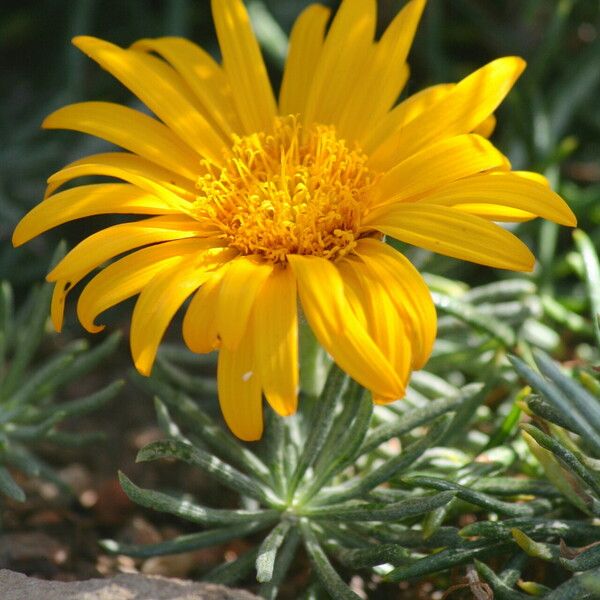
Plant Overview
Known affectionately as the Rock Marguerite, this South African native is a master of survival, clinging to the craggy, sun-baked slopes of the Western Cape and Karoo. Its botanical name, aliena, hints at its "otherworldly" or distinct appearance compared to common garden daisies. It is a resilient, woody shrublet that acts as a shimmering silver beacon in dry, rocky landscapes.
🔍 How to Identify
- 🌿 Shimmering Foliage: The leaves are narrow and densely covered in fine, white hairs, giving the entire plant a metallic, silvery-grey hue that reflects intense sunlight.
- 🌼 Bicolor Blooms: At first glance, the flowers look like standard yellow daisies, but look closer—the undersides of the outer petals are often marked with striking purplish or mahogany-colored stripes.
- 🪵 Gnarled Structure: As the plant ages, it develops a rugged, woody base and a sprawling habit, rarely growing taller than a foot or two, making it look like a natural bonsai.
🏡 In Your Garden
- 🪨 The Rock Specialist: True to its heritage, this plant thrives in poor, sandy, or rocky soils. It is the perfect candidate for a rock garden or a "death zone" in your yard where other plants wither from heat.
- 💧 Aversion to "Wet Feet": The Rock Marguerite is highly drought-tolerant but extremely sensitive to overwatering. It requires excellent drainage; if its roots sit in soggy soil for too long, the plant will quickly decline.
- ☀️ Sun Seeker: To maintain its compact shape and vibrant silver color, it needs the brightest spot available. In shade, the stems will become "leggy" and the silvery sheen will fade to a dull green.
⚠️ Safety & Toxicity
- ✅ Generally Safe: Heterolepis aliena is not known to be toxic to humans, cats, or dogs. It is a safe addition to a wildlife-friendly garden.
- 🖐️ Mild Irritation: Like many members of the Asteraceae (daisy) family, the tiny hairs on the leaves may cause very mild skin itching or "contact dermatitis" for gardeners with particularly sensitive skin.
✨ Fun Fact
The name Heterolepis is derived from the Greek words for "different" and "scale." This refers to the unique, overlapping protective scales (bracts) underneath the flower head, which look like a tiny, intricate suit of armor protecting the seeds!

Detailed Care Instructions

Some plants require more regular watering than others, which should be done every few days. It's critical to maintain the soil moist all of the time. The water requirements of the same plant placed in pots with varying sizes will differ. Because the water in the smaller pot evaporates faster than the water in the larger pot, it will require more watering. Regardless of pot size, the surface should constantly be maintained moist.








