Plant Overview
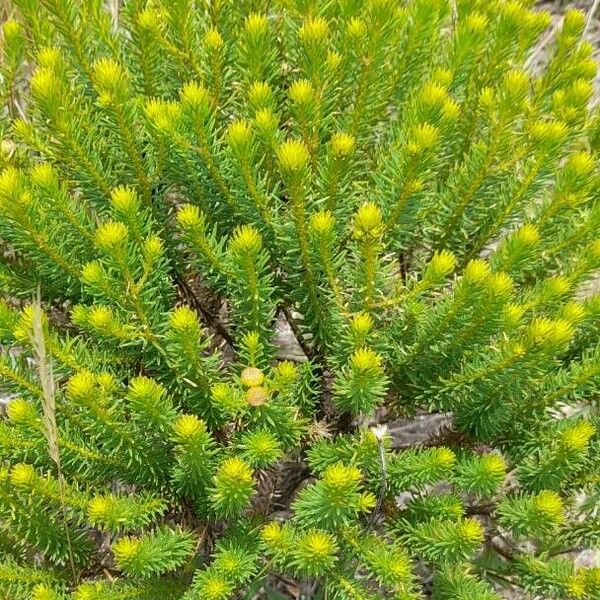
Often called "Romerillo" for its uncanny resemblance to Rosemary, Heterothalamus alienus is a hardy, aromatic shrub native to the rocky landscapes of South America. Despite its "alien" name, it is a grounded survivor, frequently found clinging to hillsides in Uruguay and Argentina. Its resinous leaves and golden-tinted blooms make it a rugged beauty for gardeners looking for a wild, naturalistic aesthetic.
🔍 How to Identify
- 🌿 The Foliage: Small, narrow, and leathery leaves that are densely packed along the stems, giving the shrub a brush-like, evergreen appearance.
- 💧 Resinous Texture: The leaves and stems are often covered in a sticky, waxy resin that emits a pungent, herbal aroma when crushed.
- 🌼 The Flowers: It produces clusters of tiny, yellowish-white flower heads at the tips of the branches. While not as showy as a typical daisy, they provide a delicate texture to the plant.
🏡 In Your Garden
- ⛰️ Rocky Roots: This plant is a "rock star"—it thrives in poor, stony soils where other plants might struggle. It absolutely requires sharp drainage; if its roots sit in soggy soil, it will decline quickly.
- 🌬️ Climate Toughness: Because it originates from high-altitude and windy regions, it is incredibly wind-resistant and drought-tolerant once established. It is an excellent choice for xeriscaping or coastal gardens where salt spray and wind are common.
⚠️ Safety & Toxicity
- ✅ Status: Generally considered non-toxic to humans. In its native range, it has a history of use in traditional folk medicine, though it should never be ingested without professional guidance.
- 🐾 Sensitive Skin: The high concentration of resins and essential oils in the leaves can cause mild skin irritation or "contact dermatitis" in sensitive individuals. It is best to wear gloves when pruning.
✨ Fun Fact
The species name alienus doesn't mean it came from outer space! In botanical Latin, it translates to "strange" or "foreign." It was given this name because its unique floral structures seemed so different from its close relatives in the Asteraceae (daisy) family that botanists initially found it quite puzzling.

Detailed Care Instructions








