Plant Overview
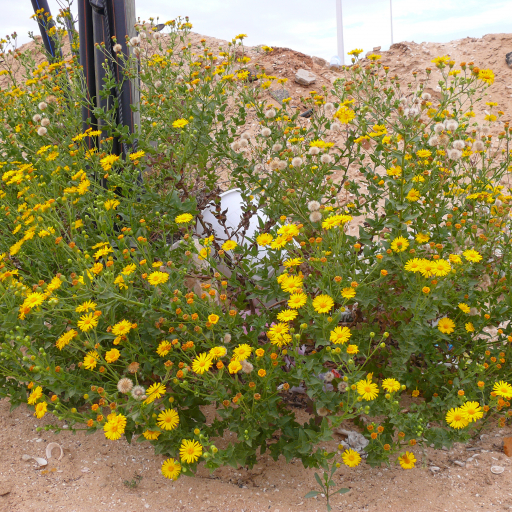
Often called the Camphorweed or "Telegraph Weed," this resilient yellow wildflower is a master of the sand. Originally hailing from the coastal and sandy regions of North America, it is often seen standing tall like a yellow beacon in places where other plants struggle to survive. Its most famous trait is the medicinal, cooling scent it releases the moment its leaves are bruised or crushed.
🔍 How to Identify
- 🌼 Sunny Blooms: It features small, daisy-like flower heads with bright yellow ray petals surrounding a darker yellow center.
- 🌿 Sticky Foliage: The stems and leaves are covered in fine, glandular hairs that can make the plant feel slightly sticky to the touch.
- 👃 Aromatic Leaves: The leaves are alternate and wavy-edged; they emit a powerful, pungent odor reminiscent of camphor or eucalyptus when touched.
🏡 In Your Garden
- 🏖️ The Sand Specialist: This plant has a specialized taproot that allows it to thrive in nutrient-poor, sandy soils where water drains away instantly. It is an excellent "pioneer species" for stabilizing loose soil.
- 🦋 Pollinator Magnet: While humans might find the smell intense, bees and butterflies are highly attracted to the late-summer nectar, making it a great addition to a "wild" pollinator garden.
- 🌱 Opportunistic Growth: It can be quite aggressive in disturbed soil. It is best suited for naturalized meadow areas rather than formal, manicured flower beds where it might crowd out delicate neighbors.
⚠️ Safety & Toxicity
- ✅ General Safety: Camphorweed is generally considered non-toxic to humans and common household pets.
- 🧴 Skin Sensitivity: Due to the potent volatile oils and the "hairy" texture of the stems, some individuals may experience mild skin irritation or contact dermatitis if handling the plant extensively without gloves.
- 🐾 Livestock Note: Most grazing animals (like horses or cattle) will avoid it because of the bitter taste and strong smell, which serves as the plant's natural defense.
✨ Fun Fact
🧪 Built-in Bug Spray: The "camphor" scent isn't just for show; the plant produces these volatile oils specifically to discourage herbivores and certain pests. In folk traditions, the crushed leaves were sometimes used as a primitive insect repellent!

Detailed Care Instructions
To grow Heterotheca subaxillaris, also known as camphorweed or golden aster, follow these steps:
- Choose the right location: Heterotheca subaxillaris prefers full sun to partial shade. Ensure the chosen location receives at least six hours of direct sunlight a day.
- Prepare the soil: The plant thrives in well-draining, sandy or loamy soil. Amend the soil with organic matter, such as compost or peat moss, to improve drainage and fertility.
- Sow the seeds: Heterotheca subaxillaris can be grown from seeds. Sow the seeds directly into the prepared soil in either spring or fall. Sow them thinly and cover them with a thin layer of soil. Gently water the area to settle the seeds.
- Watering: After sowing the seeds, keep the soil consistently moist but not waterlogged. Water the plants regularly, especially during dry periods. However, ensure the soil is well-draining to prevent root rot.
- Mulching: Apply a layer of organic mulch, such as wood chips or straw, around the plants to help retain soil moisture and suppress weed growth.
- Pruning: Trim back the plants after flowering to encourage bushier growth and maintain a compact form. Remove any dead or damaged foliage to maintain plant health.
- Fertilization: Heterotheca subaxillaris generally doesn't require much fertilizer. However, you can apply a balanced, slow-release fertilizer according to the manufacturer's instructions if you feel the plant needs a nutrient boost.
- Pests and diseases: Camphorweed is relatively resistant to pests and diseases. However, keep an eye out for aphids or leaf spot diseases. If necessary, use appropriate insecticides or fungicides to control these issues.
- Propagation: Heterotheca subaxillaris can be propagated via division or stem cuttings. Divide clumps in spring or take stem cuttings in summer, treating them with rooting hormone before planting them in well-draining soil.
- Enjoy the blooms: Heterotheca subaxillaris typically produces bright yellow, daisy-like flowers from summer to fall. These blooms attract pollinators, making them a lovely addition to any garden.
Remember to consult local gardening resources or experts for specific growing advice that may be relevant to your region.

Place in a bright room that is sun drenched almost all day. Or directly in a south-facing window.

Heterotheca Subaxillaris plant requires regular watering, especially during the growing season which is from mid-spring to late summer. The plant prefers moist soil, but it is essential not to overwater it as it can be vulnerable to root rot. Water the plant deeply whenever the top inch of soil feels dry, ensuring that the water drains well, and avoid watering the foliage. In the dormant season during winter, reduce watering and allow the soil to dry out a little between waterings. The amount of water required will depend on factors such as the weather, soil type, and container size, so it is crucial to check the soil moisture level frequently and adjust the watering frequency accordingly.
To fertilize this plant, use a balanced fertilizer with equal amounts of nitrogen, phosphorus, and potassium. Apply the fertilizer in early spring when new growth begins, and then once every 3-4 weeks during the growing season. Mix the fertilizer according to the package instructions and use it to water the plant. Avoid getting the fertilizer on the leaves or stem of the plant. Alternatively, use a slow-release fertilizer that can be applied once a season. Always water the plant after fertilizing.
Heterotheca Subaxillaris is best grown in well-drained soil that is moderately fertile. The ideal pH range for the soil is between 6.0 and 7.5. It is recommended to use a high-quality potting mix that contains a mix of organic matter, such as peat moss, compost, and vermiculite or perlite to improve drainage. It is important to avoid heavy soils or soil containing high levels of clay. Additionally, this plant prefers full sun exposure, so it is important to place it in an area that receives at least 6-8 hours of direct sunlight per day.
Heterotheca Subaxillaris plant can be propagated through several methods including division, stem cuttings, and seed propagation.
To propagate through division, wait until the plant is established and mature. Dig up the plant and gently separate the root ball into smaller sections, making sure each section has healthy roots and shoots. Replant each section in well-draining soil and water thoroughly.
To propagate through stem cuttings, take a cutting from the plant in the spring or early summer. Cut a 3-4 inch stem with at least two sets of leaves and remove the bottom leaves. Dip the cut end in rooting hormone and plant it in well-draining soil. Keep the soil moist and in a warm, humid environment until the cutting has rooted and new growth appears.
To propagate through seed, collect the seeds from the mature plant in the fall. Plant the seeds in well-draining soil and lightly cover them with soil. Water the soil regularly and keep in a warm, sunny location. Seeds should germinate within 2-3 weeks.








