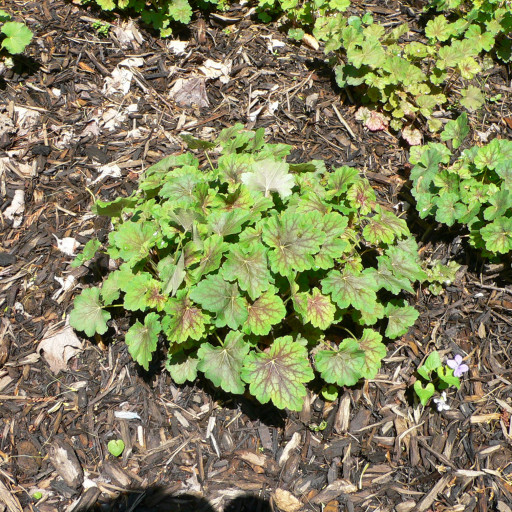
Plant Overview
Known as the "American Alumroot," this sturdy perennial is the wild ancestor of many of the colorful "Coral Bell" hybrids found in modern nurseries. While it might look like a delicate woodland fairy, it is a tough-as-nails groundcover native to the rocky outcrops and forests of North America. It is prized by shade gardeners for its sophisticated, marbled foliage that often changes color with the seasons.
🔍 How to Identify
- 🍃 Lobed Foliage: The leaves are broad, heart-shaped, and deeply lobed, often featuring a subtle silver-grey marbling or "watermark" pattern between the veins.
- 🔔 Wand-like Blooms: In late spring, it sends up slender, wiry stalks topped with clusters of tiny, bell-shaped flowers that are typically greenish-white or pinkish.
- 🌱 Mounded Habit: It grows in a tidy, compact clump that stays low to the ground, usually reaching only 12 to 18 inches in height and width.
🏡 In Your Garden
- 🌲 The Shade Specialist: This species is exceptionally tolerant of heat and humidity compared to other Heucheras, making it a reliable choice for "problem spots" under tall deciduous trees or on the north side of a house.
- 💧 The Drainage Dance: While it enjoys consistent moisture, it is highly susceptible to "wet feet." Planting it in heavy, soggy clay will likely lead to crown rot; it prefers well-draining soil rich in organic matter.
- ❄️ The Winter Lift: Because it has a shallow root system, it can sometimes "heave" out of the ground during winter freeze-thaw cycles. A layer of mulch around the base acts like a warm winter blanket to keep it tucked in.
⚠️ Safety & Toxicity
- 🛡️ Pet & Child Friendly: Heuchera americana is generally considered non-toxic to dogs, cats, and humans, making it a very safe addition to a family-friendly landscape.
- 🧤 Skin Sensitivity: While not poisonous, the high tannin content in the roots can occasionally cause mild skin irritation for people with very sensitive skin. Wearing gloves while dividing the plant is a good precaution.
✨ Fun Fact
✨ The Living Band-Aid: Its common name "Alumroot" comes from the roots' high concentration of tannins. Native American tribes historically used the pulverized roots as a powerful astringent to stop bleeding and treat wounds, effectively using the plant as a natural antiseptic.

Detailed Care Instructions
| Humidity | Normal |
| Difficulty | Medium |
| Temperature | 24°C - 27°C |
| Hardiness Zones | 4 - 9 |
To grow Heuchera Americana, also known as American alumroot, follow these steps:
- Choose a suitable location: Heuchera Americana plants prefer partial to full shade. They can tolerate some sun, but excessive sunlight can scorch the leaves. Ensure the soil is well-draining and rich in organic matter.
- Prepare the soil: Before planting, amend the soil with compost or well-rotted manure to improve drainage and provide essential nutrients.
- Planting: Dig a hole slightly larger than the root ball of the plant. Place the plant in the hole, making sure the crown is level with the soil surface. Backfill the hole with soil, lightly patting it around the plant to eliminate air pockets.
- Watering: Water the plant thoroughly after planting to settle the soil. Afterward, water consistently to keep the soil moist but not waterlogged. Avoid overwatering, as it can lead to root rot.
- Mulching: Apply a layer of organic mulch, like shredded bark or compost, around the base of the plant. This helps retain moisture, suppress weeds, and regulate soil temperature.
- Fertilizing: Heuchera Americana generally does not require heavy fertilization. However, you can apply a balanced, slow-release fertilizer in early spring to provide nutrients throughout the growing season.
- Pruning: Trim off any dead or damaged foliage throughout the year. In the early spring, remove any tattered or exhausted leaves to improve the plant's appearance and encourage fresh growth.
- Divide and propagate: Every few years, divide the plant to maintain its vigor. Carefully lift the plant from the ground and divide the rootball into smaller sections using a sharp knife or garden spade. Replant the divisions in suitable locations, following the planting instructions above.
- Pests and diseases: Heuchera Americana is generally resistant to pests and diseases. However, slugs and snails may feed on the leaves. Use organic pest control methods or traps to manage them.
- Winter care: American alumroot is hardy in USDA hardiness zones 4-9. In colder regions, apply a layer of mulch around the base of the plant to insulate the roots and protect them during winter.
By following these steps, you can successfully grow and care for Heuchera Americana plants.

Place in a window with dappled sun or a spot in the middle of a room. Or directly in a window facing west or east.

To water this plant, it is important to ensure that the soil is consistently moist but not waterlogged. One way to achieve this is by watering deeply once a week, allowing the water to fully soak into the soil. It is also important to avoid getting water on the leaves as this can lead to disease. Additionally, it is important to monitor the plant during periods of high heat or drought and increase watering as needed to ensure the soil remains moist.
To fertilize this plant, you should use a balanced fertilizer with an NPK ratio of 10-10-10. Apply the fertilizer in early spring before the plant begins to actively grow. Follow the package instructions for application rates, typically 1 pound of fertilizer per 100 square feet of planting area. Make sure to water the plant thoroughly after fertilizing. Repeat this process once in mid-summer if desired. Avoid over-fertilizing, as this can damage the plant.
The ideal soil for the Heuchera Americana plant is a well-draining soil mix that is slightly acidic with a pH level between 5.5 and 6.5. The soil should be rich in organic matter and contain a balanced amount of nutrients, such as nitrogen, phosphorus, and potassium. A mix of loam, compost, and peat moss is recommended. The soil should be moist but not waterlogged, and the plant should not be planted too deep in the soil. Adequate drainage is essential to avoid waterlogging and root rot. Mulching with organic matter can help retain moisture and regulate soil temperature. Additionally, the plant prefers a partially shaded area with dappled sunlight but can tolerate full sun if the soil is consistently moist.
One way to propagate this plant is by dividing the roots. This can be done in the spring or fall when the plant is not actively growing. Gently dig up the plant and use a sharp, clean knife or shovel to slice the root system into smaller sections. Each section should have at least one healthy root and a few leaves. Replant the divided sections in well-draining soil and water thoroughly.
Another method of propagation is by taking stem cuttings. Choose a healthy stem and cut a 2-3 inch section with a sharp, clean knife. Remove the lower leaves and dip the cut end into rooting hormone powder. Plant the cutting in a container filled with moist potting soil and cover with plastic wrap to retain moisture. Place the container in a warm, bright location and mist the cutting regularly. After a few weeks, the cutting should develop roots and can be transplanted into a larger container or directly into the garden.
Lastly, Heuchera Americana can also be grown from seed. Sow the seeds in the spring on the surface of moist seed-starting mix. Cover lightly with a thin layer of soil and keep the soil moist. Provide bright, filtered light and maintain a consistent temperature of around 70 degrees Fahrenheit. Once the seedlings develop a few true leaves, transplant them into individual containers or directly into the garden.








