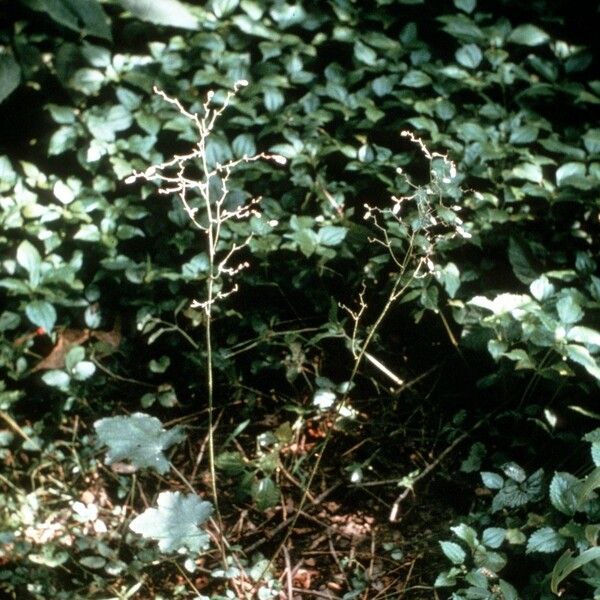
Plant Overview
Often called the Long-flowered Alumroot, this Appalachian native is the understated, elegant cousin of the brightly colored garden "Coral Bells." While modern hybrids chase neon pinks and purples, Heuchera longiflora holds its own with intricate silver-mottled foliage and unusually long, bell-shaped blooms. It is a true survivor of the rocky, shaded slopes of the American Southeast, bringing a touch of wild woodland sophisticated to any shade garden.
🔍 How to Identify
- 🍃 Marbled Foliage: Broad, heart-shaped leaves with 5 to 9 shallow lobes, often featuring a beautiful silvery-green marbling or "water-stain" pattern on the surface.
- 🔔 Elongated Blooms: Unlike the tiny, bead-like flowers of other species, these blossoms are notably tubular and long (up to 1 cm), appearing in airy clusters atop slender, hairy stems.
- 🌱 Low Mound: It forms a tidy, basal clump of foliage that stays close to the ground, making it an excellent semi-evergreen groundcover for textured borders.
🏡 In Your Garden
- 🪨 The Drainage Rule: In the wild, this plant clings to limestone ledges and rocky outcrops. In a garden setting, this translates to a need for "perfect drainage." It is susceptible to crown rot if left in heavy, soggy clay during the winter months.
- ☁️ Shadow Dweller: This is a specialist of the dappled shade. While it can handle some morning sun, the intense afternoon heat will scorch the delicate patterns on its leaves, so keep it tucked under a canopy or on the north side of your home.
⚠️ Safety & Toxicity
- 🛡️ Safe Status: Heuchera longiflora is generally considered non-toxic and is not listed on major poisonous plant databases for humans or common household pets.
- 🐾 Pet Friendly: It is a safe choice for "nibble-prone" gardens, though the tough, fibrous nature of the leaves usually discourages cats and dogs from taking more than a curious bite.
✨ Fun Fact
📜 The "Alum" Connection: The name "Alumroot" refers to the plant's incredibly astringent roots. Historically, the roots were used by Native Americans and early settlers as a medicinal wash to shrink tissues and stop minor bleeding, acting much like a styptic pencil or alum block used in shaving!

Detailed Care Instructions
To grow Heuchera longiflora, also known as coral bells, you can follow these steps:
- Choose a suitable location: Select a spot that receives partial shade to full sun, depending on your climate. Heuchera longiflora prefers well-drained soil with a slightly acidic to neutral pH.
- Prepare the soil: Before planting, amend the soil by mixing in organic matter, such as compost or peat moss, to improve drainage and fertility.
- Planting: Dig a hole slightly larger than the root ball of the plant. Place the plant in the hole, ensuring that the crown (where the roots meet the stem) is level with or slightly above the soil surface. Backfill the hole with soil and gently firm it around the plant.
- Watering: Water the plant thoroughly after planting to settle the soil and promote root establishment. Afterward, water consistently, keeping the soil evenly moist but not saturated. Avoid overwatering, as Heuchera longiflora is susceptible to root rot.
- Mulching: Apply a layer of mulch around the base of the plant to help retain moisture, suppress weeds, and regulate soil temperature.
- Fertilizing: Heuchera longiflora benefits from an annual application of a balanced, slow-release fertilizer in early spring. Follow the recommended dosage on the fertilizer package.
- Pruning: Trim away any dead or damaged leaves throughout the growing season. In early spring, you can also cut back the entire plant to about 2 inches above the ground to encourage fresh new growth.
- Winter care: In colder regions, mulch heavily around the plant in late fall to protect the roots from freezing temperatures. Remove the mulch in spring once the danger of frost has passed.
- Division: If your Heuchera longiflora becomes overcrowded or starts to decline after a few years, you can divide the plant in early spring or late fall. Dig up the clump, separate it into smaller sections with healthy roots, and replant them in well-prepared soil.
By following these steps, you can successfully grow Heuchera longiflora and enjoy its attractive foliage and delicate flowers.
To water this particular species of plant, you will want to ensure that you are providing it with the correct amount of moisture. It is important to avoid overwatering, as this can lead to root rot and other issues. Monitor the soil moisture regularly by inserting your finger into the soil up to the second knuckle. If the soil feels dry, it is time to water. Use a watering can or hose with a gentle spray attachment to water the soil around the plant's base. Aim to keep the soil moist, but not waterlogged. Allow excess water to drain away, and avoid leaving the plant standing in water for extended periods of time. It is also important to avoid getting water on the foliage, as this can promote disease. Watering this plant regularly will help it thrive and produce healthy foliage and blooms.
To fertilize the plant, use a balanced, water-soluble fertilizer with equal amounts of nitrogen, phosphorus, and potassium. Mix the fertilizer according to the package instructions and apply it to the soil every four to six weeks during the growing season. Avoid over-fertilizing, as this can lead to excess foliage growth and fewer flowers. Water the plant well after fertilizing to help distribute the nutrients throughout the soil.
The ideal soil for Heuchera Longiflora is well-draining soil that is rich in organic matter. The soil should have a pH level of 6.0 to 7.5 and should be kept moist but not waterlogged. The plant prefers soil that is slightly acidic to neutral. The soil should not be compacted and should have good aeration. The plant is sensitive to high salt levels in the soil, so it is important to avoid soils with high salt content. The soil should be prepared with compost or well-rotted manure before planting to provide the plant with essential nutrients. Overall, a well-draining, fertile, and slightly acidic soil is beneficial for the growth and health of Heuchera Longiflora.
To propagate this plant, start by selecting a healthy mother plant that has plenty of healthy leaves. Carefully remove a leaf from the mother plant, making sure to keep the stem intact. Dip the end of the stem in rooting hormone powder, and plant it in a small pot filled with a well-draining potting mix. Water the cutting lightly and cover the pot with a plastic bag to create a humid environment. Place the pot in a warm, bright area, but out of direct sunlight. Check the cutting every few days for signs of new growth and for signs of wilting. Once new growth is visible, remove the plastic bag and continue to care for the plant as it grows. After a few weeks, the new plant should be strong enough to transfer to a larger pot or to the garden.








