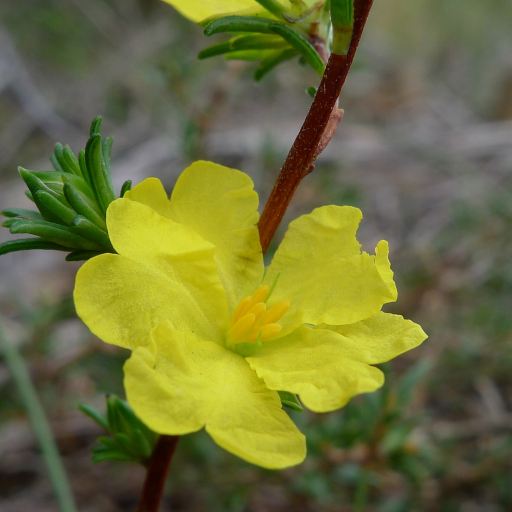
Plant Overview
Often called the Bundled Guinea Flower, this resilient Australian native is like a splash of liquid sunshine for the garden. It is a tough, wiry shrub that thrives in the rugged heathlands and sandy forests of Eastern Australia. Its ability to produce vibrant, coin-shaped flowers even in poor soil has made it a favorite for those looking to add a touch of "wild" beauty to their landscape.
🔍 How to Identify
- 🌿 Clustered Foliage: The name fasciculata refers to its "fascicles"—the way its thin, needle-like leaves grow in tight, brushy bundles along the stems.
- ☀️ Golden Blooms: It features classic five-petaled flowers in a brilliant primary yellow. The petals are delicate and surround a central cluster of golden stamens.
- 📏 Compact Growth: This plant usually stays low to the ground, forming a sprawling or upright mound that rarely exceeds 40–50 centimeters in height.
🏡 In Your Garden
- 🏜️ Drainage is Key: In the wild, this plant loves sandy or rocky ground. In your garden, it will struggle in heavy clay; it requires extremely well-draining soil to prevent root rot.
- 🐝 A Bee Magnet: The wide, open shape of the flowers makes it an easy landing pad for native bees and hoverflies, acting as a vital refueling station for local pollinators.
- ✂️ Shape Management: Left to its own devices, it can become a bit "leggy" or sparse. A light trim after the flowering season helps maintain a dense, bushy habit.
⚠️ Safety & Toxicity
- ✅ Low Risk: Hibbertia fasciculata is generally considered non-toxic to humans and common household pets like dogs and cats.
- 🧤 Abrasive Texture: While not poisonous, the fine, wiry stems and stiff leaves can be slightly scratchy. If you have sensitive skin, you might want to wear gloves when pruning.
✨ Fun Fact
The genus is named after George Hibbert, a 19th-century English merchant and plant collector. Almost all 150+ species of Hibbertia produce yellow flowers, which is why they are collectively known as "Guinea Flowers"—their blooms look just like the old British gold guinea coins!

Detailed Care Instructions








