Plant Overview
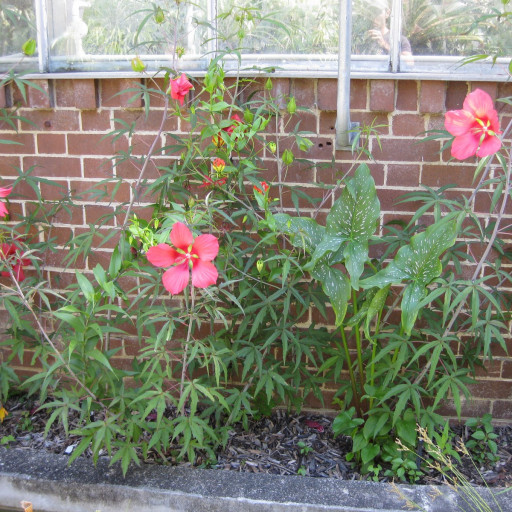
Often called the Texas Star Hibiscus or Scarlet Rose Mallow, this striking perennial is a master of disguise. While it isn't actually from Texas (it’s native to the southeastern US swamps), its most famous trait is its foliage, which looks remarkably similar to a certain "recreational herb." Beyond the lookalike leaves, it produces some of the most dramatic, star-shaped crimson flowers in the botanical world.
🔍 How to Identify
- 🌺 The Star Bloom: Features brilliant, deep-red flowers with five distinct, pointed petals that do not overlap, creating a perfect star shape.
- 🍃 The "Lookalike" Leaf: The bright green leaves are deeply palmate (hand-shaped) with slender, serrated lobes, often leading to humorous misunderstandings with neighbors or local authorities.
- 📏 Stately Stature: A tall, slender grower that can reach heights of 6 to 8 feet, with woody stems that emerge from the ground each spring.
🏡 In Your Garden
- 💧 The "Wet Feet" Lover: Unlike many garden plants that fear root rot, this Hibiscus thrives in boggy conditions. It is perfect for rain gardens, pond edges, or that one low spot in your yard that never seems to dry out.
- ☀️ Sun Seeker: To get those massive 6-inch blooms, it needs full sun. In too much shade, the tall stems may become "leggy" and flop over, requiring staking for support.
- ✂️ Winter Nap: This is a herbaceous perennial, meaning it will die back completely to the ground after the first hard frost. Don't panic—it’s just sleeping! Cut the dead stalks to the ground, and it will roar back to life in late spring.
⚠️ Safety & Toxicity
- ✅ Safe for All: Hibiscus coccineus is generally considered non-toxic to humans, dogs, and cats.
- 🐜 Pollinator Magnet: While safe for pets, it is "dangerous" to boredom in the garden, as it is a high-traffic zone for hummingbirds and large butterflies like the Palamedes Swallowtail.
✨ Fun Fact
Due to its leaf shape, police departments in the southern US have historically received many "concerned citizen" calls about illegal crops, only to arrive and find a stunning garden full of Scarlet Rose Mallow!

Detailed Care Instructions
| Color | Bright Red |
| Soil Ph | Tolerates A Variety |
| Humidity | Normal |
| Lighting | Full Sun |
| Soil Type | Tolerates A Variety |
| Bloom Time | July To September |
| Difficulty | Medium |
| Plant Type | Herbaceous Perennial |
| Mature Size | Up To 6 Feet |
| Native Area | Southeastern United States |
| Sun Exposure | Full Sun/Partial Shade |
| Hardiness Zones | 6-9 |
To grow Hibiscus coccineus, also known as the Texas Star or Scarlet Hibiscus, you can follow these steps:
- Climate considerations: Hibiscus coccineus is a cold-hardy perennial that grows well in USDA hardiness zones 7 to 10. Make sure your climate is suitable for this plant.
- Location: Choose a location with full sun or partial shade, where the plant will receive at least 6 hours of direct sunlight each day. Ensure the soil is well-draining.
- Planting: Plant your Hibiscus coccineus in spring or early summer after the danger of frost has passed. Dig a hole twice as wide and slightly deeper than the root ball. Place the plant in the hole, backfill with soil, and gently firm it around the roots. Water thoroughly after planting.
- Watering: Keep the soil consistently moist, especially during the first growing season. Deeply water the plant when the top few inches of soil feel dry. Avoid overwatering to prevent root rot.
- Fertilization: Hibiscus coccineus benefits from regular fertilization with a balanced, slow-release fertilizer. Apply the fertilizer according to the manufacturer's instructions, typically every 4 to 6 weeks during the growing season.
- Mulching: Apply a layer of organic mulch around the base of the plant to help retain moisture, suppress weeds, and regulate soil temperature.
- Pruning: Prune Hibiscus coccineus in late winter or early spring to remove dead or damaged branches and shape the plant. This plant typically dies back to the ground in winter but regrows from the roots in spring. Cut back any remaining stems to a few inches above the ground level.
- Pest and disease control: Keep an eye out for common hibiscus pests like aphids, whiteflies, and spider mites. Treat infestations promptly with insecticidal soap or neem oil. Hibiscus coccineus is generally resistant to diseases but may occasionally face issues like powdery mildew or leaf spot. Increase air circulation around the plant and remove affected leaves if necessary.
Remember to regularly monitor your Hibiscus coccineus for any signs of stress, disease, or pests and take appropriate actions to maintain its health.

Place in a window with dappled sun or a spot in the middle of a room. Or directly in a window facing west or east.

1. Determine the watering requirements of the plant: Hibiscus Coccineus requires moderate watering. The plant should not be left completely dry for extended periods, nor should it be watered excessively.
2. Test the soil moisture: Before watering, use your finger to feel the top 1 inch (2.5 cm) of soil. If it feels dry to the touch, it's time to water.
3. Water thoroughly: When it's time to water, do so thoroughly, taking care to wet the entire root ball. Stop watering when water starts to drain out of the bottom of the pot.
4. Water less frequently in winter: In cooler months, the plant may require less watering. Test the soil moisture regularly to determine when the plant needs water.
5. Monitor for signs of overwatering or underwatering: Watch for signs such as yellowing leaves, wilting, or stunted growth. Adjust your watering routine accordingly.
6. Use room temperature water: Use water that is at room temperature, rather than cold from the tap. Cold water can shock the plant's roots.
7. Use a watering can or hose with a gentle flow: Use a watering can or hose with a gentle flow to avoid disturbing the soil or damaging the plant.
To fertilize this plant, use a slow-release fertilizer with a ratio of 10-10-10 or 12-12-12. Apply in early spring and again in mid-summer, following the manufacturer's instructions for the appropriate amount. Water thoroughly after applying fertilizer to ensure the nutrients reach the roots. Avoid fertilizing when the plant is dormant or during periods of drought.
Hibiscus Coccineus, a plant belonging to the Malvaceae family, requires a well-draining soil that is rich in nutrients. It prefers a slightly acidic to neutral soil pH range of 6.0 to 7.0. The best soil type for this plant is a fertile loam, which is a mix of sand, silt, and clay in equal proportions. The soil should also be able to retain moisture but not become waterlogged, as this can lead to root rot. Adding organic matter such as compost or peat moss to the soil can help improve its structure and fertility. It is also recommended to fertilize the plant regularly during the growing season to ensure healthy growth and abundant blooms.
To propagate this plant, you will need a clean pair of pruning shears, a container with potting soil, and rooting hormone powder.
- Choose a healthy stem that is at least 6 inches in length and has no flowers or buds. Cut the stem at a 45-degree angle just above a node (the place where a leaf attaches to the stem).
- Remove any leaves from the bottom 2-3 inches of the cutting. Dip the bottom of the cutting into the rooting hormone powder and tap off any excess.
- Make a hole in the potting soil with your finger or a pencil, and insert the cutting into the hole. Firmly press the soil around the stem to hold it in place.
- Water the cutting thoroughly and place the container in a bright, but shaded area. Mist the cutting daily to keep it moist and humid.
- After about 2-3 weeks, you should see new growth and roots forming. Once the cutting has developed roots, you can transplant it into a larger container or into the ground.
- Keep the newly propagated plant in a bright, sunny location with well-draining soil and regular watering.
Note: It is important to use caution when handling this plant, as some parts of it may be toxic if ingested.
Common pests of the scarlet rosemallow include Mealybugs, spider mites, fungus gnats, aphids, thrips. Make a habit of checking your scarlet rosemallow frequently for pests so that any infestations can be caught and managed early.








