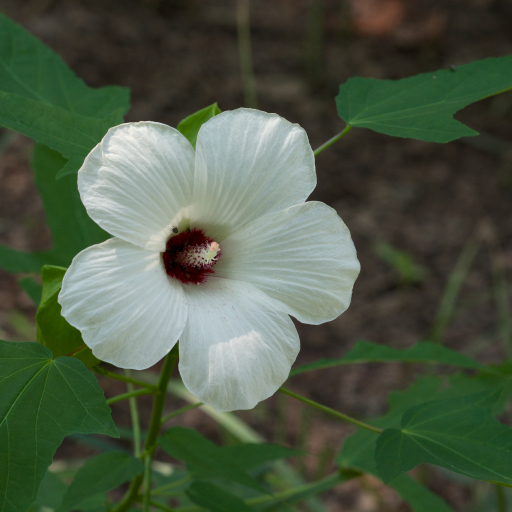
Plant Overview
Known as the "Halberd-leaved Rose Mallow," this native North American beauty is a wetland superstar. Its common name comes from its unique foliage, which looks remarkably like a medieval halberd or spearhead. Often found dancing along riverbanks and marshes, it brings a tropical, "big-flower" aesthetic to temperate gardens.
🔍 How to Identify
- 🍃 The Halberd Leaf: Look for distinct, three-lobed leaves where the two side lobes point outward at the base, creating a shape like an ancient polearm.
- 🌸 The Blooms: Large, funnel-shaped flowers that can reach up to 6 inches across. They are typically creamy white or soft pink with a dramatic, deep burgundy "eye" at the center.
- 📏 Smooth Stems: Unlike some of its "hairy" hibiscus cousins, the stems of Hibiscus laevis are smooth (glaucous) and often have a waxy, grayish-green coating.
🏡 In Your Garden
- 💧 Wetland Specialist: This plant is the perfect solution for "problem" wet spots. It thrives in heavy clay and boggy soil where other plants might succumb to root rot.
- 🦋 Wildlife Hub: It is a primary nectar source for hummingbirds and specialized bees. It also serves as a host plant for several butterfly species, including the Gray Hairstreak.
- ⏳ Late Bloomer: Be patient in the spring! This species is famous for being a "late sleeper," often not showing new growth until the ground is thoroughly warm in late May or June.
⚠️ Safety & Toxicity
- ✅ Non-Toxic: Hibiscus laevis is generally considered non-toxic to humans, dogs, and cats.
- 🦌 Deer Resistance: While not entirely "deer-proof," its tough stems and specific habitat make it less appealing to deer than many other garden perennials.
✨ Fun Fact
Each spectacular flower lasts for only a single day! It opens with the morning sun and wilts by dusk, but the plant is such a prolific producer that it can stay covered in fresh blooms for several weeks during the height of summer.

Detailed Care Instructions
To grow Hibiscus laevis, also known as halberd-leaved rose mallow or scarlet rose mallow, follow these steps:
- Choose a suitable planting location: Hibiscus laevis requires full sun and well-drained soil. Select a spot in your garden that receives at least 6-8 hours of direct sunlight per day.
- Prepare the soil: Hibiscus laevis prefers slightly acidic soil (pH 6.0-6.8). Test the soil pH and amend it if necessary by adding organic matter like compost or peat moss.
- Planting: Dig a hole that is two times wider and as deep as the root ball of the plant. Gently remove the plant from its container, loosen the roots, and place it in the hole. Make sure the top of the root ball is level with or slightly above the soil surface. Backfill the hole with soil, firm it gently, and water thoroughly.
- Watering: Keep the soil consistently moist but not waterlogged. Water deeply whenever the top inch of soil feels dry. Be careful not to overwater, as hibiscus plants do not tolerate waterlogged soil.
- Mulching: Apply a layer of organic mulch, such as wood chips or straw, around the base of the plant. Mulch helps retain moisture, suppress weeds, and regulate soil temperature.
- Fertilization: Feed your hibiscus plant with a balanced slow-release fertilizer once every 4-6 weeks during the growing season (spring to early fall). Follow the instructions on the fertilizer package for proper application rates.
- Pruning: Hibiscus laevis benefits from pruning to maintain shape and encourage bushiness. Prune dead or damaged branches and trim back leggy growth. Annual pruning in late winter or early spring helps promote vigorous growth and more abundant blooms.
- Pests and diseases: Keep an eye out for common pests like aphids, whiteflies, or spider mites. Regularly inspect your plants and use appropriate organic insecticides or natural remedies if necessary. Hibiscus can also be prone to fungal diseases, so provide good air circulation and avoid overhead watering to prevent mildew or leaf spot. If necessary, treat with fungicides following the instructions on the product label.
- Winter protection (in colder regions): If you live in an area with frost or freezing temperatures, provide winter protection for your hibiscus plant. Apply a layer of mulch around the base of the plant to insulate the roots, and cover the plant with frost cloth or move it indoors to a protected location.
By following these guidelines and providing proper care, your Hibiscus laevis plant should thrive and reward you with its beautiful scarlet flowers.

Place in a bright room that is sun drenched almost all day. Or directly in a south-facing window.

The ideal way to water this plant is to thoroughly soak the soil until water runs out the bottom of the pot or seeps into the ground. It is important to allow the soil to dry out somewhat before watering again, as over-watering can lead to root rot. It is also best to water in the morning or early evening to avoid evaporation and prevent the leaves from burning in direct sunlight. Additionally, it is recommended to use room temperature or slightly warm water.
To give proper nourishment to the Hibiscus Laevis plant, first, choose an organic fertilizer that is rich in nitrogen, potassium, and phosphorus. Mix the fertilizer with water and apply it to the soil around the base of the plant during the growing season, which is generally from spring to summer. Be sure to water the plant immediately after applying the fertilizer. Use a fertilizer that contains more phosphorus in the fall to promote root growth. Avoid fertilizing during the winter months.
It is recommended to use a well-draining soil with good aeration for this plant. The soil should also be rich in organic matter and have a pH level between 6.0 and 7.5. It is important to avoid heavy or clay soils as they can lead to waterlogging and root rot. The soil should also be regularly fertilized during the growing season to provide the necessary nutrients for healthy growth and blooming.
To propagate this plant, you will need a healthy adult plant with mature stems and node points, pruning shears, rooting hormone, and a potting mix.
- Select a healthy stem that is at least six inches long and has a few nodes. Nodes are the points where the leaves originate from the stem.
- Use pruning shears to cut the stem at a 45-degree angle just below the node.
- Remove any lower leaves from the stem, leaving only a few leaves at the top.
- Dip the cut end of the stem into rooting hormone.
- Prepare a potting mix by using an equal mixture of sand, perlite, and peat moss.
- Make a hole in the potting mix and plant the stem, making sure that the node is covered with soil.
- Water the soil thoroughly until it is evenly moist.
- Cover the pot with a plastic bag to retain moisture and create a mini greenhouse.
- Place the pot in a warm area away from direct sunlight.
- Check the soil regularly and water when it becomes dry.
- In two to three weeks, you should see roots starting to grow from the node.
- Once the roots are a few inches long, you can transplant the new plant into a larger container or into your garden.
Common pests of the halberd-leaf rosemallow include Mealybugs, spider mites, fungus gnats, aphids, thrips. Make a habit of checking your halberd-leaf rosemallow frequently for pests so that any infestations can be caught and managed early.








