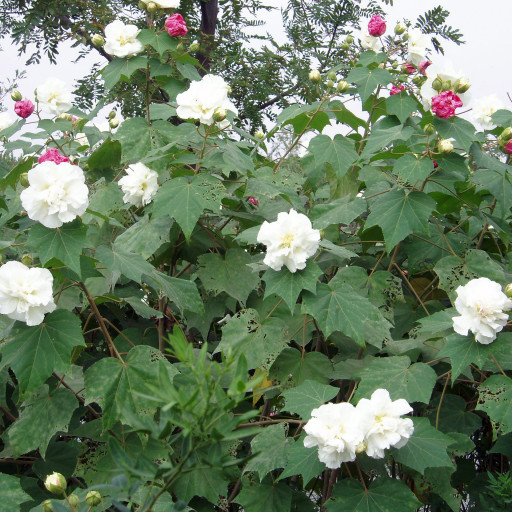
Plant Overview
Known affectionately as the "Confederate Rose" or "Cotton Rosemallow," this plant is a living mood ring for your garden. Originating from East Asia, it has become a staple of Southern landscapes due to its dramatic, shape-shifting blooms that transition through a sunset of colors in a single day. It is a vigorous grower that adds a touch of old-world charm and botanical magic to any sunny corner.
🔍 How to Identify
- 🌸 Changing Blooms: The most striking feature; flowers typically open white or pale pink in the morning, turn hot pink by noon, and fade to a deep "drunken" red by evening.
- 🍃 Maple-like Foliage: Large, heart-shaped leaves that are deeply lobed (usually 5 to 7 lobes), resembling a giant maple leaf with a soft, fuzzy texture on the underside.
- 🌳 Growth Habit: A large, multi-stemmed deciduous shrub or small tree that can reach heights of 10 to 15 feet, creating a lush, bushy screen.
🏡 In Your Garden
- ☀️ Sun-Driven Transformation: To witness the full intensity of its color change, it requires full sun. Shady spots will lead to leggy growth and fewer, paler flowers.
- 💧 Thirsty Nature: Because it produces so much foliage and large blooms, it is a heavy drinker. It prefers consistently moist, well-draining soil and will visibly wilt its large leaves to tell you when it’s parched.
- ✂️ The Winter Reset: In cooler climates, this plant acts like a perennial. It may die back to the ground after a hard frost, but don't dig it up! Prune the dead canes to the ground, and it will roar back from the roots once the soil warms.
⚠️ Safety & Toxicity
- ✅ Generally Safe: Hibiscus mutabilis is widely considered non-toxic to humans and common household pets like cats and dogs.
- 🧤 Skin Sensitivity: While not poisonous, the fine hairs on the stems and undersides of the leaves can be a mild mechanical irritant to people with very sensitive skin. Wearing gloves during heavy pruning is a good idea.
✨ Fun Fact
The species name mutabilis is Latin for "changeable," referring to the flower's color shift. This rapid pigment change is caused by the accumulation of anthocyanins (natural plant pigments) triggered by temperature and sunlight throughout the day!

Detailed Care Instructions
| Color | White, Pink, Red |
| Soil Ph | 5-6.5 |
| Lighting | Full Sun |
| Soil Type | Loamy, High Organic Matter |
| Bloom Time | Late Summer/Early Fall |
| Plant Type | Deciduous Shrub/Tree |
| Mature Size | 6-15 Feet Tall; 6-10 Feet Wide |
| Native Area | China |
| Sun Exposure | Full Sun |
| Hardiness Zones | 7-11 |
To grow a Hibiscus Mutabilis plant, you can follow these steps:
- Choose a suitable location: The plant requires full sun to grow well, so choose a spot that receives at least 6-8 hours of direct sunlight every day.
- Prepare the soil: Hibiscus Mutabilis prefers well-draining soil with organic matter. Prepare the soil by loosening it and adding compost or well-rotted manure to improve its fertility.
- Planting: Dig a hole slightly larger than the plant's root ball. Place the plant in the hole and fill it with soil, gently pressing down to remove air pockets. Water the plant thoroughly after planting.
- Watering: Keep the soil evenly moist, but not soggy. Water the plant deeply once or twice a week, especially during dry spells. Avoid overwatering as it can lead to root rot.
- Fertilizing: Apply a balanced, slow-release fertilizer during the growing season to promote healthy growth and blooming. Follow the package instructions for the recommended dosage.
- Pruning: Prune the plant in early spring to remove any dead or damaged branches. This helps maintain the plant's shape and promotes vigorous growth and blooming. Pruning can also be done after the blooming period to encourage new growth.
- Mulching: Apply a layer of organic mulch, such as wood chips or straw, around the base of the plant. This helps retain moisture, suppresses weeds, and regulates soil temperature.
- Pests and diseases: Hibiscus Mutabilis is generally resistant to pests and diseases. However, occasional aphid infestations or fungal diseases may occur. Monitor the plant regularly and take appropriate measures to control pests or diseases if needed.
- Propagation: You can propagate Hibiscus Mutabilis through stem cuttings or by collecting and planting seeds. Softwood or semi-hardwood cuttings taken in spring or early summer tend to root easily.
- Winter care: In colder regions, where winters are harsh, provide protection to the plant by covering it with burlap or moving it indoors. Mulching around the base can also help insulate the roots.
By following these steps and providing proper care, your Hibiscus Mutabilis plant should grow well and reward you with beautiful blooms.

Place in a bright room that is sun drenched almost all day. Or directly in a south-facing window.

To water this plant, first check the top inch of soil to see if it is dry to the touch. If it is, water the plant thoroughly until water comes out of the bottom drainage holes. It is important to not let the soil become waterlogged, so make sure to not overwater the plant. Additionally, it is best to water the plant in the morning or early afternoon to allow for any excess moisture to evaporate before nighttime.
To promote healthy growth and blooming, fertilize the plant with a slow-release, balanced fertilizer in early spring and midsummer. Follow the instructions on the fertilizer package and apply the fertilizer evenly around the base of the plant, being careful not to let it touch the stems or leaves. Water the plant immediately after fertilizing. Additionally, you can supplement with a liquid fertilizer every two weeks during the growing season. Avoid fertilizing in the fall and winter when the plant is dormant.
The ideal soil for Hibiscus Mutabilis plants should have a balanced pH level, between 6.0 and 7.0. The soil should be well-draining and rich in organic matter. It should be a mixture of sand, loam, and peat moss. The soil should also be able to hold moisture while still allowing for air to circulate around the roots. It is important to ensure that the soil does not become waterlogged as this may cause root rot. Adequate drainage is essential. Additionally, the soil should have a sufficient level of nutrients, especially nitrogen, phosphorus, and potassium. It is recommended to add a slow-release fertilizer to the soil during the growing season to nourish the plant and promote growth.
The process of propagating this particular type of hibiscus plant can be done through stem cuttings. Begin by selecting a healthy stem from the parent plant that is free from any signs of damage or disease. The stem should be at least 6 inches long and have 2-3 sets of leaves attached to it.
Next, prepare a potting mix with equal parts of peat moss and sand or perlite. Dip the cut end of the stem in rooting hormone powder and insert it into the potting mix. Make sure that at least one set of leaves is above the soil level.
Keep the potting mix moist but not overwatered and place the pot in a warm and bright location, but out of direct sunlight. It may take a few weeks for roots to form.
Once the cutting has developed a strong root system, it can be transplanted into a larger pot or directly into the ground. Water the plant regularly and fertilize every 2-3 weeks with a balanced fertilizer.
Over time, the new plant will grow and develop its own unique characteristics.
Common pests of the confederate rose include Mealybugs, spider mites, fungus gnats, aphids, thrips. Make a habit of checking your confederate rose frequently for pests so that any infestations can be caught and managed early.








