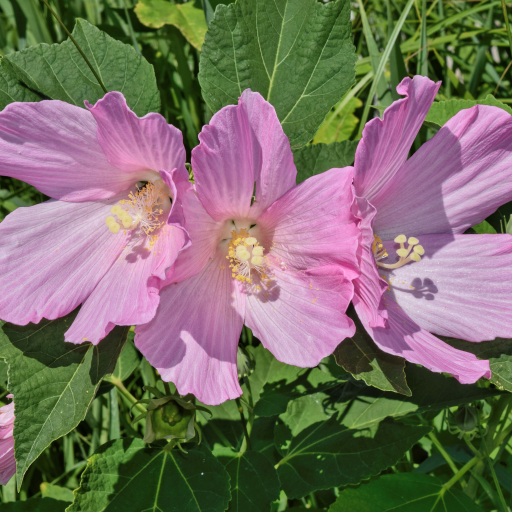
Plant Overview
Often called the Swamp Rose Mallow, this stunning perennial is famous for producing some of the largest flowers in the temperate world. Native to the wetlands and marshes of North America, it brings a lush, "tropical vacation" vibe to home gardens, even in cooler climates. It is a resilient beauty that literally rises from the mud each spring to steal the spotlight with its massive, papery blooms.
🔍 How to Identify
- 🌸 The "Dinner Plate" Bloom: Giant, five-petaled flowers that can reach up to 8 inches across. They are typically soft pink, mauve, or white, usually featuring a deep crimson "eye" at the center.
- 🍃 Velvety Foliage: The leaves are large, heart-shaped (or slightly three-lobed), and have a soft, grayish-green underside with a fine, hairy texture.
- 🌿 Sturdy Stature: It grows in multi-stemmed clumps that can reach 4 to 7 feet tall. The stems are green and robust, though they die back completely to the ground in the winter.
🏡 In Your Garden
- 💧 The "Wet Feet" Specialist: Unlike many garden plants that rot in soggy soil, Hibiscus palustris loves moisture. It is the perfect choice for rain gardens, the edges of ponds, or that one low spot in your yard that never seems to dry out.
- ☀️ Sun Seeker: To produce those massive flowers, this plant requires full sun. If it's too shaded, the stems may become "leggy" and lean over, and the bloom count will drop significantly.
- ✂️ Patience is Key: Don't panic in the spring! This species is a "late riser" and often won't show any green growth until the soil is thoroughly warm, sometimes as late as June.
⚠️ Safety & Toxicity
- ✅ Safe & Non-Toxic: The Swamp Rose Mallow is generally considered non-toxic to humans, dogs, cats, and even horses.
- 👅 Digestive Note: While not poisonous, consuming large amounts of the foliage can cause minor stomach upset in curious pets. It is always best to discourage your furry friends from using the garden as a buffet.
✨ Fun Fact
The Swamp Rose Mallow belongs to the same family as the plant used to create the original "marshmallow" treats (Althaea officinalis). While we use gelatin today, the roots of its marsh-loving cousins were once boiled to create the sticky, sweet medicinal sap that started it all!

Detailed Care Instructions
| Humidity | Normal |
| Lighting | Full Sun |
| Difficulty | Medium |
| Hibernation | Cold Period |
| Hardiness Zones | 5 - 9 |
To grow Hibiscus Palustris (also known as Swamp Rose Mallow), follow these steps:
- Select a suitable planting location: Choose a sunny area with moist soil. Hibiscus Palustris thrives in wet conditions, such as near ponds, streams, or in bog gardens.
- Prepare the soil: Loosen the soil and remove any weeds or grass from the planting area. You can mix in some organic compost or well-rotted manure to improve soil fertility and drainage.
- Planting: Dig a hole that is slightly larger than the root ball of the plant. Place the plant in the hole and backfill with soil, gently firming it around the roots. Water thoroughly after planting.
- Watering: Hibiscus Palustris requires consistent moisture, so water the plant regularly to keep the soil consistently damp. Be careful not to overwater, as excessive waterlogging can harm the plant.
- Mulching: Apply a layer of organic mulch, such as wood chips or shredded bark, around the base of the plant. Mulching helps retain moisture, reduce weed growth, and protect the roots from temperature fluctuations.
- Fertilizing: Hibiscus Palustris generally does not require much fertilizer, as it can get most of its nutrients from the surrounding wet soil. However, you can apply a slow-release or balanced fertilizer in early spring, following the instructions on the packaging.
- Pruning: Prune the plant in late winter or early spring before new growth appears. Remove any dead, damaged, or weak branches and shape the plant to maintain a desired size and form.
- Pests and diseases: Hibiscus Palustris is generally resistant to most pests and diseases. However, keep an eye out for common garden pests like aphids or caterpillars, and address any issues promptly.
- Winter care: In colder climates, provide extra protection for the plant in winter. Mulch heavily around the base, and if the temperatures drop significantly, consider covering the plant with a burlap or blanket to shield it from freezing temperatures.
By providing the right growing conditions and care, your Hibiscus Palustris plant should thrive and produce beautiful flowers.

Place in a window with dappled sun or a spot in the middle of a room. Or directly in a window facing west or east.

To properly water this plant, first check the soil with your finger to determine if it is dry. If it is, water the plant slowly at the base, making sure to saturate the soil evenly. Avoid getting water on the leaves as it can cause damage. Allow the soil to drain properly before returning the plant to its spot. It is important not to overwater this plant, so make sure to monitor the soil's moisture levels before watering again.
To fertilize this plant, apply a fertilizer high in nitrogen during the growing season. Fertilize every 2-3 weeks and ensure that the soil is well-draining. Be careful not to over-fertilize as this can cause damage to the plant.
The ideal soil for the Hibiscus Palustris plant is a well-draining mixture that is rich in organic matter. It should have a pH level of 6.5 to 7.5 and be able to retain moisture without becoming waterlogged. The soil should also be nutrient-rich and should contain a good amount of nitrogen, phosphorus, and potassium. It is recommended to use a mixture of garden soil, compost, and sand to create the ideal soil conditions for the Hibiscus Palustris plant. The soil should be kept moist but not overly saturated and should be fertilized regularly with a balanced fertilizer. It is important to avoid using soils that are high in salt or alkaline, as this can cause damage to the plant.
There are several ways to propagate this plant. One method is to take stem cuttings from mature, healthy plants. Cut a section of stem that is 4 to 6 inches long and has at least two sets of leaves. Remove the lower leaves and any flower buds or blooms. Dip the cut end in rooting hormone and plant it in well-draining soil. Keep the soil moist and in a warm, sunny location. After a few weeks, roots should begin to form and new growth should appear.
Another way to propagate this plant is through seed. Collect the seed pods once they have dried and turned brown on the plant. Gently remove the seeds from the pod and plant them in well-draining soil. Keep the soil moist and in a warm, sunny location. The seeds should germinate within a few weeks.
Finally, this plant can also be propagated through division. Carefully dig up the plant and separate it into smaller sections, making sure each section has roots attached. Replant the sections in well-draining soil and keep the soil moist in a warm, sunny location. New growth should appear within a few weeks.
Common pests of the swamp rose mallow include Mealybugs, spider mites, fungus gnats, aphids, thrips. Make a habit of checking your swamp rose mallow frequently for pests so that any infestations can be caught and managed early.








