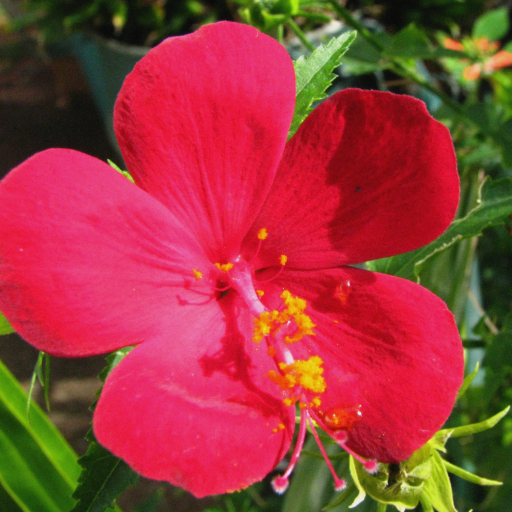
Plant Overview
Known affectionately as the Brazilian Rosemallow or False Mallow, Hibiscus phoeniceus is the understated, elegant cousin of the flashy tropical hibiscus. Native to the warm regions of the Americas and the Caribbean, this shrub brings a whimsical, airy feel to landscapes with its "dancing" flowers. Unlike the heavy, dinner-plate blooms of garden hybrids, this species is celebrated for its wild, delicate beauty and its ability to thrive in rugged conditions.
🔍 How to Identify
- 🌸 The Bloom: Features five delicate petals, usually in shades of pale pink, soft lavender, or crisp white. They are smaller than common hibiscus but bloom prolifically.
- 📏 The Stalks: One of its most distinct features is its exceptionally long, thin flower stalks (pedicels) that allow the blossoms to dangle and sway in the breeze.
- 🍃 The Foliage: The leaves are relatively small, heart-shaped or slightly three-lobed, with jagged (serrated) edges and a soft, matte green texture.
🏡 In Your Garden
- ☀️ Resilient Roots: This is a "tough love" plant. It is surprisingly drought-tolerant once established and actually prefers well-draining, rocky, or sandy soil over rich, heavy clay.
- 🦋 Pollinator Paradise: Because of its open flower shape and accessible nectar, it is a favorite pit-stop for hummingbirds and long-tongued butterflies, making it a "must-have" for conservation gardens.
⚠️ Safety & Toxicity
- ✅ Status: Generally non-toxic.
- 🐾 Details: Hibiscus phoeniceus is considered safe for pets (cats and dogs) and children. While not traditionally used for tea like its cousin Hibiscus sabdariffa, it poses no significant threat if accidentally touched or nibbled, though any plant ingestion may cause mild stomach upset in pets.
✨ Fun Fact
The species name phoeniceus is derived from the Greek word for "purple-red" or "crimson." This is a nod to the ancient Tyrian purple dye, referencing the deep, vibrant hues the flowers can display in certain climates and soil types.

Detailed Care Instructions
To grow Hibiscus Phoeniceus, also known as the Scarlet Rose Mallow, follow these steps:
- Choose the right location: Hibiscus Phoeniceus prefers full sun to partial shade. Select a spot in your garden that receives at least 6-8 hours of direct sunlight daily.
- Prepare the soil: The plant thrives in well-draining soil with a pH range of 6.0 to 7.5. If your soil is heavy or clayey, amend it with organic matter like compost or well-rotted manure to improve drainage and fertility.
- Planting: Dig a hole that is slightly larger than the root ball of the plant. Place the plant in the hole and backfill with soil, ensuring the crown of the plant is level with the soil surface. Firmly press the soil around the plant to eliminate air pockets.
- Watering: Water the newly planted Hibiscus Phoeniceus deeply, thoroughly wetting the root zone. Afterward, water regularly to keep the soil moist but not overly saturated. During dry spells, increase the frequency of watering.
- Fertilization: Apply a balanced slow-release fertilizer in early spring and mid-summer to provide the plant with essential nutrients. Follow the manufacturer's instructions for proper dosage.
- Mulching: Spread a layer of organic mulch around the plant, leaving a gap near the stem to prevent moisture-related diseases. Mulch helps to retain soil moisture and suppresses weed growth.
- Pruning: Regular pruning stimulates branching and promotes a compact, bushy growth habit. Prune back one-third of the plant's overall height in early spring before new growth appears. Deadheading spent flowers throughout the blooming season can also encourage prolonged flowering.
- Pest and disease control: Monitor the plant regularly for common pests like aphids, spider mites, or whiteflies. Treat infestations using appropriate insecticides or by spraying the plant with neem oil. Watch for signs of fungal diseases like powdery mildew or leaf spot, and take immediate action to prevent the spread. Removing infected leaves or using fungicides can help control these issues.
- Winter care: If you live in a region with freezing winters, provide protection for your Hibiscus Phoeniceus. Apply a thick layer of organic mulch around the base of the plant and wrap it loosely in burlap or frost cloth to shield it from harsh cold temperatures.
By following these steps and providing proper care, your Hibiscus Phoeniceus should thrive and reward you with its beautiful scarlet flowers.

Place in a bright room that is sun drenched almost all day. Or directly in a south-facing window.

To water this particular plant, it is important to note that it prefers to be kept consistently moist but not waterlogged. The soil should be well-draining to prevent standing water around the roots. It is recommended to water deeply, allowing the water to soak through the entire root system, and then wait until the soil is slightly dry to the touch before watering again. Avoid getting the leaves or flowers wet when watering to prevent the likelihood of fungal diseases. Depending on the humidity and temperature of the environment, the plant may need to be watered more or less frequently.
To fertilize this plant, you should use a balanced fertilizer with an NPK ratio of 10-10-10. Apply the fertilizer every 4-6 weeks during the growing season (spring and summer) and reduce fertilization during the winter months. Do not over-fertilize as this can harm the plant. Water the plant thoroughly before and after fertilizing to prevent any potential damage to the roots.
The ideal soil for this plant is one that is well-draining and rich in organic matter. The pH of the soil should be slightly acidic to neutral, with a range of 6.0 to 7.5. It should also have good water retention capacity to keep the plant hydrated during dry periods.
To achieve this soil composition, a recommended mixture consists of equal parts of high-quality garden soil, peat moss, and perlite. This blend will provide good drainage, aeration, and organic matter, which will enhance the growth and development of the plant.
To propagate this plant, gather fresh stem cuttings from a healthy parent plant. Cuttings should be about 6 inches long and have several healthy leaves. Remove the leaves from the lower half of the stem. Dip the cut end of the stem in a rooting hormone powder and plant it into a pot filled with a well-draining soil mix. Water the cutting thoroughly and cover the pot with a plastic bag to create a humid environment. Place the pot in a location with bright, indirect light and keep the soil moist but not waterlogged. After a few weeks, the cutting should develop roots and new growth. Once established, transplant the new plant into a larger pot or outside in a sunny location with well-draining soil.








