Plant Overview
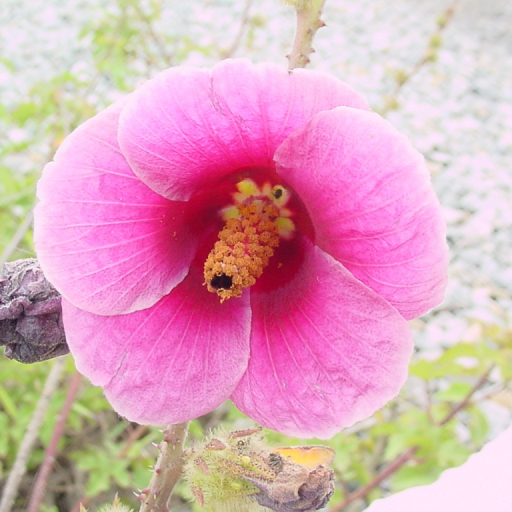
Known as the Striated Rosemallow, this South American beauty looks as if it were hand-painted by a meticulous artist. Originally hailing from the wetlands of Argentina, Brazil, and Uruguay, it is a master of the marshes that brings a dramatic, tropical flair to water-adjacent landscapes. Its delicate, veined petals offer a romantic aesthetic that belies its hardy, moisture-loving nature.
🔍 How to Identify
- 🌸 The Bloom: Large, trumpet-shaped flowers that are typically white or very pale pink. The defining feature is the "striations"—intense magenta or purple veins that radiate from a deep red center.
- 🍃 The Foliage: The leaves are usually heart-shaped or slightly lobed with serrated edges. They often have a soft, velvety texture due to a fine layer of downy hairs.
- 📏 Growth Habit: A tall, multi-stemmed shrubby perennial that can reach heights of 6 to 8 feet, creating a lush, vertical screen of greenery.
🏡 In Your Garden
- 💧 The "Wet Feet" Rule: Unlike many garden plants that rot in soggy soil, Hibiscus striatus thrives in it. It is an ideal candidate for rain gardens, the edges of ponds, or low-lying spots in your yard that stay damp.
- ☀️ Sun & Bloom: To get the best floral show, it needs plenty of direct sunlight. While it can tolerate partial shade, the "striping" on the petals is often more vivid when the plant receives at least six hours of sun.
- ✂️ Pruning Nuance: Because it grows rapidly in the right conditions, a hard prune in late winter or early spring helps maintain a manageable shape and encourages a fresh flush of blooms for the summer.
⚠️ Safety & Toxicity
- 🟢 Status: Generally non-toxic.
- 🐾 Details: This species is considered safe for humans and most common pets. However, the fine hairs on the leaves may cause very mild skin irritation for sensitive individuals. As a general rule, discourage pets from chewing on the foliage to avoid minor stomach upset.
✨ Fun Fact
The intricate veins on the petals aren't just for show; they serve as "nectar guides." These patterns act like landing strips for pollinators, directing bees and hummingbirds straight to the nectar source at the center of the flower.

Detailed Care Instructions
To grow Hibiscus Striatus plant, follow these steps:
- Choose the right location: Select a spot that receives full sun or partial shade. Ensure the area has well-drained soil with a pH level of 6.0-7.0.
- Prepare the soil: Loosen the soil and remove any weeds or debris. Consider adding organic matter like compost or well-rotted manure to improve soil quality.
- Planting: Dig a hole slightly wider and deeper than the plant's root ball. Place the plant in the hole, ensuring the top of the root ball is level with the soil surface. Backfill the hole with soil, gently pressing it to eliminate air pockets.
- Watering: After planting, water the plant thoroughly to help it establish its roots. Keep the soil slightly moist but avoid overwatering, as hibiscus doesn't tolerate waterlogged conditions.
- Mulching: Apply a layer of organic mulch around the base of the plant to retain moisture, suppress weed growth, and regulate soil temperature.
- Fertilizing: Apply a balanced slow-release fertilizer every two to three months during the growing season. Alternatively, use a water-soluble fertilizer every two weeks during active growth. Follow the product instructions for application rates.
- Pruning: Prune Hibiscus Striatus plant to maintain its shape and trigger bushier growth. Prune in early spring before new growth begins, removing dead or diseased branches and cutting back any leggy growth.
- Protect from frost: If you live in a cold climate, cover the hibiscus plant with a frost cloth or bring it indoors during winter to protect it from freezing temperatures.
- Pest and disease control: Monitor the plant for common hibiscus pests such as aphids, mites, and whiteflies. Treat any infestations promptly using organic pest control methods. Watch for signs of diseases like leaf spot or powdery mildew and take appropriate measures to prevent and control them.
- Regular maintenance: Regularly inspect the plant for any issues like yellowing leaves, wilting, or stunted growth. Address any problems promptly to keep the plant healthy.
Remember to check the specific care requirements for Hibiscus Striatus as they may vary slightly from regular hibiscus varieties.

Place in a window with dappled sun or a spot in the middle of a room. Or directly in a window facing west or east.

1. Determine the plant's watering needs based on the amount of sunlight it receives and the humidity of its environment.
2. Choose a watering method that matches the plant's needs, such as watering from the top or bottom.
3. Wait until the top inch of soil is dry before watering the plant again.
4. Use room temperature water and avoid getting water on the leaves or flowers to prevent damage or disease.
5. Water the plant slowly and evenly, making sure the soil is thoroughly moistened but not waterlogged.
6. Adjust watering frequency and amount based on seasonal changes, such as increased water needs during hotter months or decreased water needs during cooler months.
To fertilize this plant, use a balanced fertilizer with a ratio of 10-10-10 or 20-20-20, applied every two weeks during the growing season. Be sure to water the plant before fertilizing and apply the fertilizer to the soil around the base of the plant, avoiding the leaves.
While Hibiscus Striatus is a plant that is relatively easy to care for, choosing the right soil is crucial for its growth and health. It is important to use a well-draining soil that is rich in organic matter. The pH level of the soil should be between 6.0 and 7.0, which is slightly acidic to neutral.
In terms of soil texture, the soil should be loamy and nutrient-rich since Hibiscus Striatus requires a lot of nourishment to produce its beautiful flowers. The soil should also be able to retain moisture without becoming too waterlogged, as this can lead to root rot.
It is a good idea to add compost or other organic amendments to the soil to increase its fertility and nutrient levels. Additionally, adding some sand to the soil will improve drainage and prevent water from sitting in the soil for too long.
Overall, Hibiscus Striatus thrives in a nutrient-rich, well-draining soil that is slightly acidic to neutral. By providing the appropriate soil, you can ensure this stunning plant will flourish and bloom for years to come.
There are several ways to propagate this plant. One method is to take stem cuttings from a healthy, mature plant. Cut a stem that is at least 6 inches long and remove any leaves from the bottom 2-3 inches of the stem. Dip the cut end of the stem in rooting hormone powder, then plant it in a pot with well-draining soil. Keep the soil moist and place the pot in a warm, bright location but out of direct sunlight. Roots should start to form in about 4-6 weeks. Another method is to divide an established plant, carefully dividing the roots and repotting each division in a new pot with fresh soil. Finally, you can propagate this plant by collecting and sowing seeds. Harvest seeds from a mature plant and plant them in pots with well-draining soil. Keep the soil moist and place the pots in a warm, bright location but out of direct sunlight. Seeds should start to germinate in about 1-2 weeks.








