Plant Overview
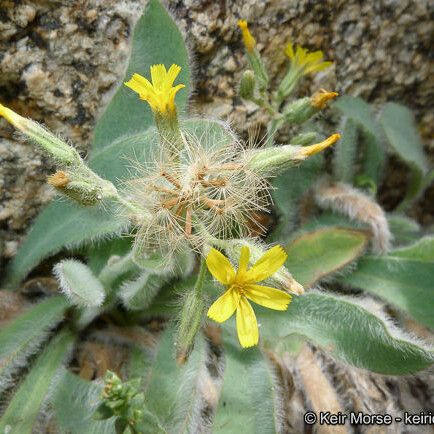
Often called the Shaggy Hawkweed, this plant looks like it’s having a permanent "bad hair day." Native to the rugged, rocky ridges of the Western United States, it is a master of survival in high-altitude environments. Its wild, fuzzy appearance isn't just for show—it’s a clever evolutionary tactic designed to trap moisture and reflect harsh mountain sunlight.
🔍 How to Identify
- ☁️ The "Shag": The most striking feature is the dense coating of long, white-to-yellowish shaggy hairs that cover the leaves and stems, giving it a woolly texture.
- 🌼 Sunny Blooms: It produces small, bright yellow flower heads that resemble miniature dandelions, usually appearing in loose clusters atop slender stalks.
- 🍃 Basal Rosette: Most of the foliage is concentrated at the base of the plant in a flat rosette, helping it stay protected from biting alpine winds.
🏡 In Your Garden
- 🪨 Rock Specialist: This is a "niche" plant for enthusiasts. It thrives in rock gardens or alpine troughs where drainage is perfect. Because of its native habitat, it absolutely hates "wet feet" and rich, mucky soil.
- ☀️ Light & Air: It craves high-intensity light but prefers cooler air temperatures. If you live in a humid or tropical climate, the Shaggy Hawkweed may struggle as its dense hairs can trap too much humidity, leading to fungal issues.
⚠️ Safety & Toxicity
- ✅ Safe Status: Hieracium horridum is generally considered non-toxic to humans, cats, and dogs.
- 🧤 Tactile Irritation: While not poisonous, the dense, bristly hairs can be slightly irritating to very sensitive skin or if a pet decides to take a large bite. It is best enjoyed visually rather than handled frequently.
✨ Fun Fact
🦅 Hawk Vision: The genus name Hieracium comes from the Greek word hierax, meaning hawk. Ancient naturalists, including Pliny the Elder, believed that hawks tore the plant apart and rubbed the milky sap on their eyes to maintain their legendary long-distance eyesight!

Detailed Care Instructions








