Plant Overview
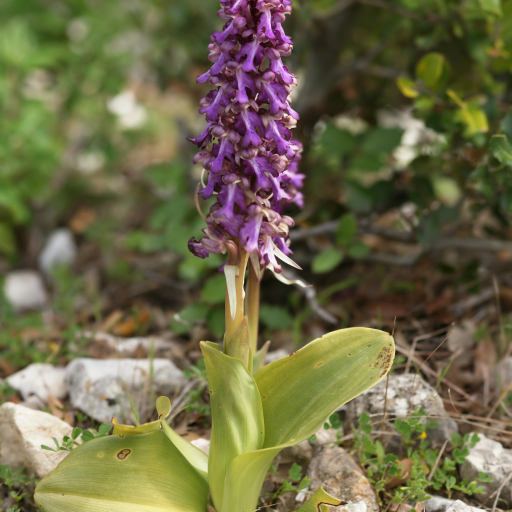
Often called the "Giant Orchid" or "Robert’s Giant Orchid," this Mediterranean titan is a true showstopper that signals the end of winter. It is one of Europe’s largest and most robust wild orchids, frequently blooming as early as January or February while other plants are still dormant. Its imposing height and intricate, violet-hued flowers make it a prized find for hikers and botanical enthusiasts across Southern Europe.
🔍 How to Identify
- 📏 The Towering Spike: True to its name, this orchid can reach heights of up to 30 inches (80 cm), featuring a thick, fleshy stem crowded with dozens of individual blooms.
- 🎭 Intricate Flowers: Each flower has a wide, wavy "lip" (labellum) that is deeply lobed, often resembling a tiny, draped figure in shades of purple, green, and cream.
- 🍃 Glossy Foliage: The base of the plant sits in a rosette of very large, oval, and shiny green leaves that look remarkably healthy even in the middle of winter.
🏡 In Your Garden
- ☀️ Sun and Stone: In its natural habitat, it favors well-drained, alkaline (limestone) soils and open, sunny spots like grasslands or roadside verges.
- ⏳ Hands-Off Approach: If you are lucky enough to have this appear in a wilder part of your property, avoid digging it up; wild orchids have a complex relationship with soil fungi and rarely survive being moved.
⚠️ Safety & Toxicity
- 🛡️ Safe but Sensitive: Himantoglossum robertianum is generally considered non-toxic to humans and pets, but it should never be consumed.
- 🚫 Legal Protection: Because wild orchid populations are vulnerable, this plant is legally protected in many regions. Picking the flowers or uprooting the bulbs can result in heavy fines.
✨ Fun Fact
- 👃 A Sweet Surprise: Despite its somewhat "alien" and bulky appearance, the Giant Orchid produces a surprisingly delicate fragrance that smells remarkably like violets or irises to attract early-emerging bumblebees.

Detailed Care Instructions
To grow Himantoglossum Robertianum, or the Robust Marsh Orchid, you can follow these steps:
- Location: Choose a suitable location for your orchid. This species prefers moist habitats such as marshes, wet meadows, or damp woodlands. Ensure that the location receives partial shade to protect it from excessive sunlight.
- Soil: Himantoglossum Robertianum thrives in well-drained, slightly acidic soils. The soil should also be rich in organic matter. If your soil is heavy or clay-like, consider adding sand or peat moss to improve drainage.
- Planting: Once you have chosen the right location and prepared the soil, you can plant the orchid. These plants are usually grown from bulbs or tubers, which can be planted in the ground during the fall or early spring.
- Watering: Himantoglossum Robertianum prefers consistently moist soil. During dry periods, make sure to water the orchid regularly to keep the soil moist but not waterlogged. Avoid overwatering, as this can cause the roots to rot.
- Fertilization: Orchids generally do not require much fertilization. However, you can apply a balanced orchid or general-purpose fertilizer in early spring to promote healthy growth. Be cautious not to over-fertilize, as this can harm the plant.
- Mulching: Apply a layer of organic mulch around the base of the plant to help retain moisture and suppress weeds. This will also provide organic matter as it decomposes, enriching the soil.
- Pests and diseases: Himantoglossum Robertianum is relatively resistant to pests and diseases. However, keep an eye out for common orchid pests like aphids or snails. Regularly inspect the plants and take appropriate measures if needed.
- Division and propagation: As Himantoglossum Robertianum matures, it will produce offshoots or new bulbs. You can divide these bulbs during the dormant season (fall or early spring) to propagate the plant and expand your collection.
Remember, growing orchids requires patience and attention to their specific needs. It is also advisable to research and understand the particular requirements of Himantoglossum Robertianum to provide the best conditions for its growth.

Place in a window with dappled sun or a spot in the middle of a room. Or directly in a window facing west or east.

To water this particular plant, it is important to monitor the moisture levels of its soil. Overwatering can lead to root rot, so it is important to let the soil dry out partially before watering again. This plant prefers to be watered from the bottom, so use a tray or saucer to place underneath the pot and fill it with water. Allow the roots to soak up the water for about an hour before discarding any excess water. This type of plant also prefers rainwater, so consider collecting rainwater and using it to water the plant. In addition, avoid getting water on the leaves and flowers as it can cause damage.
To fertilize this orchid, first dilute a balanced orchid fertilizer according to its instructions. Apply the fertilizer to the plant's soil during its growing season, and take care to not get any fertilizer on the leaves or sensitive parts of the plant. Do not fertilize during its dormant period. Always water the plant thoroughly before and after fertilizing.
Himantoglossum Robertianum is a terrestrial orchid that requires a specific type of soil to thrive. The recommended soil for this plant should be well-draining and have a high level of organic matter. A mix of potting soil, perlite and sphagnum moss would be ideal. It is important to avoid heavy clay soils that retain too much moisture, as the plant can develop root rot. In addition, the soil should be neutral or slightly acidic, with a pH range of 6 to 7.5. It is also recommended to use a fertilizer with a balanced ratio of N-P-K in a 2:2:2 or 3:3:3 formulation. Overall, the most important aspect of the soil for Himantoglossum Robertianum is its ability to provide good drainage and aeration for the plant's roots.
Himantoglossum Robertianum can be propagated through division of the rhizomes. The rhizomes can be dug up in the fall after the plant has gone dormant. Carefully separate the rhizomes, making sure each division has a healthy root system attached. Replant each division in a new location, making sure to plant them at the same depth as they were previously growing. Water the divisions thoroughly and keep the soil evenly moist while they establish themselves. It may take a year or two for the new plants to reach full maturity and bloom. Alternatively, seeds can be collected and sown in a well-drained soil mixture in the fall. Keep the seedlings moist and in a cool location for the first year before transplanting them into their permanent location.








