Plant Overview
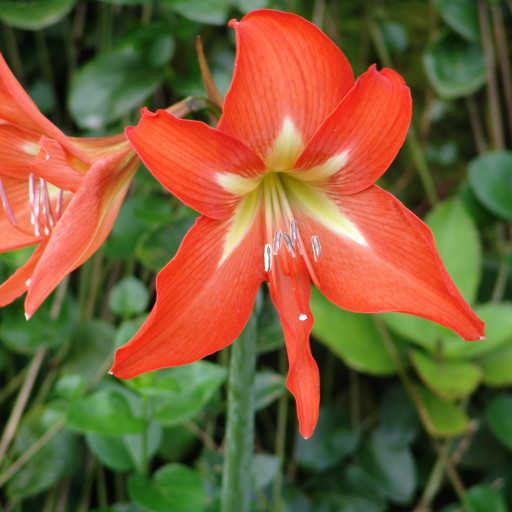
Commonly known as the "Queen Amaryllis" or "Mexican Lily," Hippeastrum reginae is a stunning bulbous perennial that traces its lineage back to the lush, tropical forests of South America. Unlike the common hybrid Amaryllis found in grocery stores, this species carries a wild, regal elegance that has captivated botanists since the 18th century. It is the literal "Queen" of its genus, boasting deep scarlet blooms that seem to glow against their greenery.
🔍 How to Identify
- 🌸 Bloom Structure: Large, funnel-shaped flowers that typically grow in pairs at the top of a tall, thick, and hollow stalk (scape).
- 🎨 The "Star" Center: The petals are a vibrant, velvety red, but the true identifier is the distinct greenish-white or pale yellow "star" marking at the very base of the throat.
- 🍃 Strap-like Foliage: The leaves are long, sword-shaped, and glossy. They often emerge just as the flower begins to fade, focusing the plant's energy on the bloom first.
🏡 In Your Garden
- ⏳ Bulb Placement: This plant is sensitive about its "shoulders." When planting, ensure the top third of the bulb sits above the soil line; burying it too deep is a common cause of rot and "blind" seasons where no flowers appear.
- ☀️ Light Nuance: While it craves brightness to fuel its spectacular display, the "Queen" prefers her sunlight filtered. In harsh, direct afternoon sun, the brilliant red petals can scorch and lose their velvety texture.
- 💧 The Rest Period: To see those royal flowers year after year, the plant requires a dry dormancy. Mimicking its native South American climate by withholding water for a few weeks in the late fall triggers the bulb to "wake up" and produce a flower bud.
⚠️ Safety & Toxicity
- 🐾 Toxic to Pets: Hippeastrum reginae contains lycorine and other alkaloids. If chewed by cats or dogs, it can cause stomach upset, drooling, and in larger quantities, tremors or respiratory distress.
- 👶 Human Caution: The bulb is the most toxic part and can easily be mistaken for an onion by curious toddlers. Keep bulbs stored safely out of reach during the planting season.
✨ Fun Fact
In the Victorian "Language of Flowers," the Amaryllis symbolized radiant beauty and pride. Its specific epithet, Reginae, literally translates from Latin to "of the Queen," a name given to honor Queen Charlotte of England, a famous patron of botany.

Detailed Care Instructions
| Color | Reddish Orange Funnel-Shaped Flowers |
| Soil Ph | 6.0-6.5 |
| Humidity | High |
| Lighting | Full Sun |
| Toxicity | Toxic |
| Soil Type | Rich, Well-Drained Soil (Outdoors); Rich Potting Mix (Indoors) |
| Bloom Time | From January To April |
| Difficulty | Medium |
| Plant Type | Perennial Bulb |
| Mature Size | 1 To 2 Feet Tall; 9- To 12-Inch Spread |
| Native Area | Mexico, Central America, Tropical South America And The West Indies |
| Temperature | 17°C - 25°C |
| Sun Exposure | Full Sun To Part Shade |
| Hardiness Zones | 8 - 11 |
To grow a Hippeastrum Reginae plant, also known as Queen's Lily or Golden Queen, follow these steps:
- Choose the right time to plant: Hippeastrum Reginae is typically planted in spring or early summer when the soil temperature reaches around 60°F (15°C).
- Select a suitable location: Plant the bulbs in a well-draining location that receives bright indirect sunlight for at least 4-6 hours per day. The soil should be loamy and fertile.
- Prepare the planting area: Dig a hole that is about 6-8 inches (15-20 cm) deep. Mix in some compost or organic matter to improve the soil quality and drainage.
- Plant the bulbs: Place the bulbs in the prepared holes, pointed side up, and cover them with soil. Leave the neck of the bulb exposed above the soil surface.
- Water appropriately: Water the bulbs immediately after planting, thoroughly moistening the soil. After that, reduce watering until sprouts emerge. Once the plants start growing, keep the soil consistently moist but not waterlogged. Avoid overwatering as it can cause root rot.
- Fertilize: Feed the plants with a balanced, water-soluble fertilizer every 2-4 weeks during the growing season. Follow the package instructions for proper dilution and application rates.
- Support growth: As the stems grow taller, they may need support to prevent them from bending or breaking. Use stakes or plant rings to provide support and tie the stems loosely as needed.
- Monitor for pests and diseases: Keep an eye out for common pests like aphids or spider mites. Treat any infestations promptly using organic insecticides if necessary. Ensure good airflow around the plants to prevent fungal diseases.
- Provide adequate light: Make sure the plants receive adequate sunlight for proper growth and blooming. If growing indoors, place them near a sunny window or use grow lights to provide sufficient light.
- Allow for a dormant period: After the plant finishes flowering, reduce watering gradually and stop fertilization. Allow the foliage to die back naturally. During the dormant period, which usually occurs in late summer or fall, stop watering and store the bulbs in a cool, dry place for about 6-8 weeks to stimulate flower formation.
- Resume watering and fertilizing: After the dormant period, resume watering the bulbs and provide bright, indirect light to encourage new growth. Repeat the growth cycle annually.
By following these steps, you should be able to grow a beautiful Hippeastrum Reginae plant with its vibrant, showy blooms.

Place in a bright room that is sun drenched almost all day. Or directly in a south-facing window.

To properly water this plant, you should first check the soil moisture level by feeling the top inch of the soil. If it feels dry, it's time to water. Use room temperature or lukewarm water to avoid shocking the roots. Water the base of the plant, avoiding getting the foliage wet, as this can encourage fungal growth. Allow the water to drain out of the pot completely, and never let the plant sit in standing water. Water the plant less frequently during the dormant season, and increase watering as the plant starts to produce new growth. Be sure not to overwater, as this plant can be susceptible to root rot.
To fertilize this plant, first ensure it is in well-draining soil in a pot with drainage holes. Starting in spring, use a balanced fertilizer once a month during the growing season (spring and summer). Dilute the fertilizer to half strength and apply it to damp soil, being careful not to get any on the foliage or bulb. In fall and winter, reduce fertilization to once every two months. Stop fertilizing completely when the plant goes dormant.
The ideal soil for the Hippeastrum Reginae plant should be well-draining and rich in nutrients. Soil that is loamy or sandy with a neutral pH is preferred. It is important to ensure that the soil is not too compacted or heavy, as this can restrict the growth of the plant's roots. Adding organic matter such as compost or peat moss can also improve the soil's fertility and structure. It is recommended to use a high-quality potting soil specifically formulated for flowering plants, or to mix your own soil incorporating the above factors.
To propagate this plant, you will need to start by collecting the seeds. Mature seed pods can be harvested once they have dried out and turned brown. Split the pod open and carefully remove the seeds. Soak the seeds in water for 24 hours before planting.
Fill a small pot or seed tray with a well-draining potting mix, leaving about an inch of space at the top. Plant the seeds about an inch deep and water gently.
Place the pot or tray in a warm, bright spot, and keep the soil moist but not waterlogged. The seeds should germinate within a few weeks.
Once the seedlings have grown a few inches tall, they can be transplanted into larger pots or directly into the ground in a sunny, well-drained spot. Allow them to grow for a year or two before expecting flowers.








